

The Flowering Tree You Can Plant In The Fall For Lovely Spring Shade
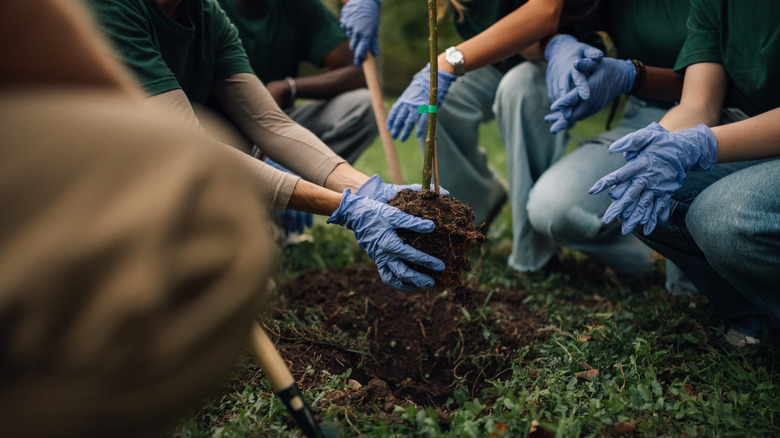
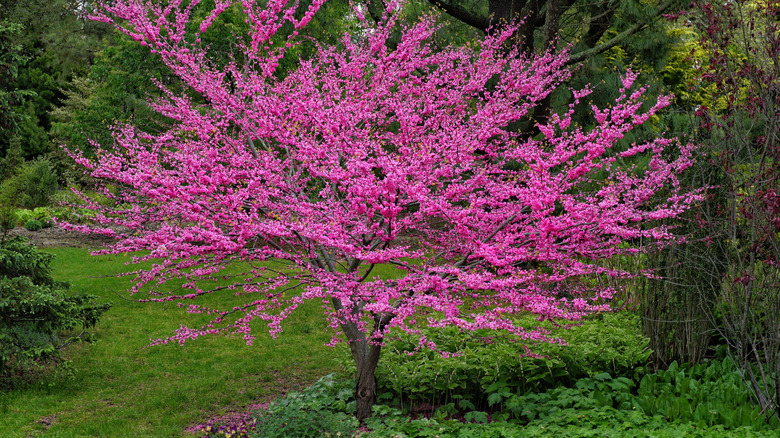
Planting a tree in fall does so much long-term good for your immediate surroundings. It provides a potential home to birds and small mammals, it offers shade once the tree matures enough to provide a sizable canopy, and in some cases, the tree also flowers prodigiously, adding even more beauty to your yard. The Eastern redbud (Cercis canadensis) is one such tree that ticks all the boxes when it comes to beauty, and it's one that can thrive with fall planting. Oklahomans may even recognize it as their state's tree.
As one of the earliest trees to flower each year, the Eastern redbud is often considered — like those eager first robins — a sign that spring is on its way. They're also an excellent source of nectar early in the season for some insects. Interestingly enough, redbuds are members of the pea family (Fabaceae), and after flowering, the tree produces pods that look a lot like peas. It thrives in USDA hardiness zones 4 through 9, which covers most of the United States. It usually doesn't require pruning — other than to remove dead growth or to shape it when young — so it's one of those easy-care plants that are great for beginning gardeners. It'll grow about 30 feet high and wide when mature, growing fastest when young and at a medium rate afterwards. Redbud is also a tree that can be planted in fall, provided it's done well before the first frost of the season. If you think you're falling in love with the idea of this tree, there's a bonus: Its leaves are generally heart-shaped, so there's even more to love.
How to grow and care for Eastern redbud trees
Eastern redbud trees prefer partial shade or full sun, and a moist, well-drained soil. In full sun, they'll flower more and have a better chance at creating a rounded canopy. They will tolerate clay-heavy earth, though loamy soil is best for a garden or yard because of its good drainage capabilities. If desired, use old potting soil to upgrade your garden's clay soil to help improve drainage around the redbud. Plant redbud in spring, or a month before the first frost in fall. Dig a bowl-shaped hole about twice as wide as the root ball and just deep enough to cover the ball. Fall is ideal because it gives the roots a chance to get used to their new home before things freeze for the winter, which in turn makes them better able to withstand the heat of summer next year.
Plant a redbud in its forever home, because it doesn't like having its roots disturbed later on. It's a great choice as the largest attraction in a pollinator garden (especially with its early blooms), or as a standout along the edge of a property line. These early blooms are a favorite of bumblebees, and even the queen among them. Redbud pollen is even used by bees to make "bee bread" — a bed of pollen to feed their young as they hatch. When flowers fade and the leaves start to grow, the leaves begin with a reddish color before turning green. In fall, they turn various shades of yellow, and when they fall, any seed pods growing on your tree become obvious. They look like flat bean or pea pods and start out green, later turning brown. If some stay until winter, they're a food source for wildlife.