

Must-Know Care Tips That'll Help Your Pumpkins Thrive
We may receive a commission on purchases made from links.
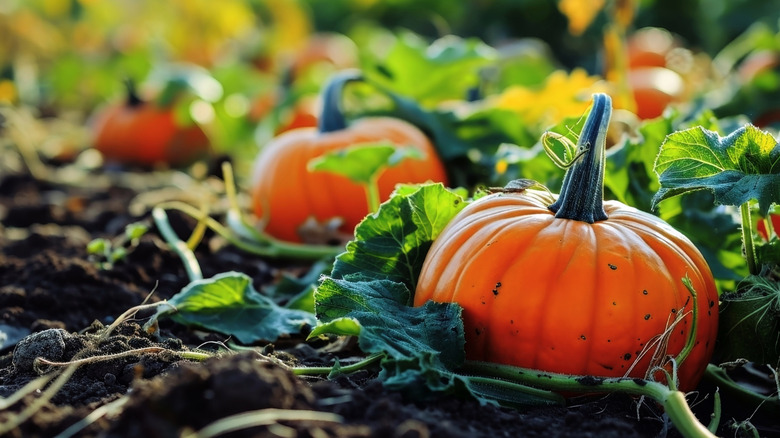
A huge, orange pumpkin is the ultimate "welcome to fall" sign, whether it's stationed by your front door or growing in your backyard. If you love carving jack-o'-lanterns for Halloween or baking pumpkin pies for Thanksgiving, these spectacular squashes are a must-have for your vegetable patch. Though pumpkin vines like having room to spread out, don't let space constraints smash your pumpkin-growing dreams. If your garden space is limited, try growing pumpkins in containers on a balcony or patio. To promote optimal health, be sure the plants receive at least 6 hours of direct sunlight each day, ideally more. This will help them produce the flowers that lead to fruit.
Sunlight isn't all that pumpkins need to thrive, of course. Consistently moist soil with good drainage is also essential, as it helps the plants develop strong roots. This is best achieved by giving your pumpkin patch a thorough watering once or twice a week. Other than this, pumpkin care is largely about timing. Devote a little time to learning about the pumpkin life cycle, and gather information about specific varieties you're growing — or planning to grow in the future. This research can guide you toward the best time to plant your pumpkin seeds. In general, you'll want to sow them early enough that the vines get lots of time in temperatures between 70 and 90 degrees Fahrenheit. This is the range that promotes the most growth. Knowing your variety also helps determine when to harvest and how to use your pumpkins.
Use the right type of fertilizer at the right time
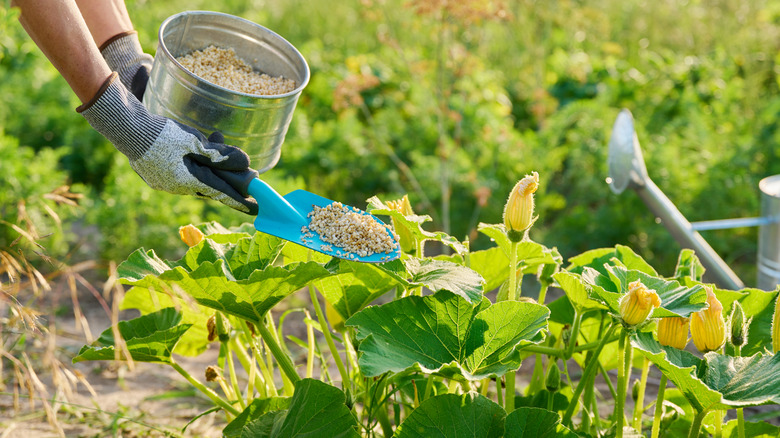
A lot of nutrients go into growing a beautiful pumpkin. That's why fertilization is an important part of growing these gorgeous gourds. Soil rich in organic matter provides a strong foundation for your pumpkin vines. To raise your chances of a top-notch harvest even further, deliver nutrient boosts at key points during the growing season. Generally speaking, pumpkins appreciate nitrogen-rich fertilizer when they're about 12 inches high. Once their vines have begun to crawl through your garden, pivot to a fertilizer with larger percentages of phosphorus and potassium — Farmer's Secret Fruit & Bloom Booster, for example. These nutrients promote fruit and flower formation.
Before applying fertilizer to your garden, perform a soil test. A product such as the MySoil test kit can steer you toward fertilizers with the best nutrient profile for your pumpkin patch. For instance, if your garden is already quite high in phosphorus, you may need a mid-season fertilizer that's only rich in potassium. Soil with too much phosphorus can lead to a zinc imbalance that stunts the growth of young plants. It's a challenging problem to fix, so it's better to prevent it altogether.
Though fertilizing should be the top soil-care priority if you're cultivating pumpkins, don't forget about soil-borne pathogens. Consider sliding a reused plastic lid beneath each pumpkin to block bacteria that cause soft rot. Or, discourage this disease — and hungry squirrels — from ravaging your pumpkins by growing them on a trellis. You can repurpose old mattress springs to make a trellis or even guide your pumpkin vines up a chain-link fence.
Look for signs that your pumpkins are ready to harvest
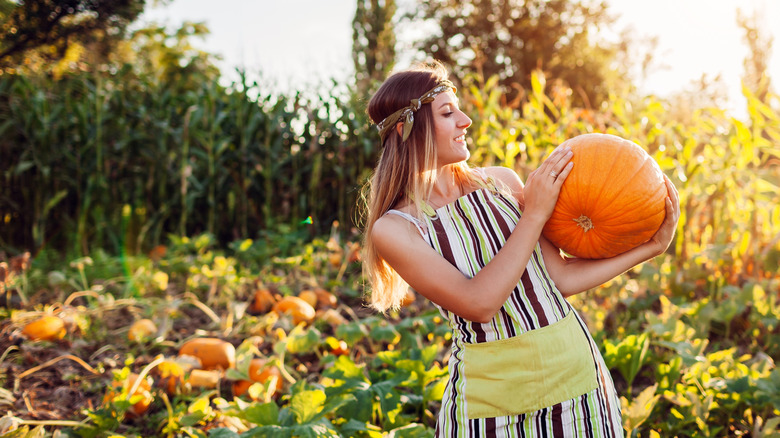
The most exciting part of the pumpkin-growing process happens three to four months after sowing seeds. This is when pumpkins are ready to harvest. The exact amount of time depends on the variety you've planted and local growing conditions. Harvesting pumpkins before they're done growing can compromise their quality, and waiting too long can lead to a mushy mess — so watch for signs it's time to pick.
Fortunately, there are several indicators that a pumpkin is ready to pick. First, take a look at the stem. It should be dry, firm, and somewhat brown. Next, inspect the pumpkin itself. Most types of pumpkins take on a deep, uniform shade of orange when they're mature. Pressing on the pumpkin with a fingernail can also tell you if its growth is complete. A mature pumpkin will have a rind that doesn't dent or break easily. If you suspect that your pumpkin is done growing, tap on it to get a sense of whether it's ripe. A ripe specimen will produce a hollow sound when you knock on it like you would a door. When cutting a pumpkin off its vine, leave a piece of stem that's at least 4 inches long. This will help it last longer.
You may need to pick your pumpkins sooner than planned if frost is slated to visit your pumpkin patch. This is fine as long as they're not terribly underdeveloped because they'll keep ripening after they part with their vines. Frost, however, can harm both the pumpkins and the plants that produced them.