

The Popular Type Of Bean That May Be The Key To Healthier Garden Soil
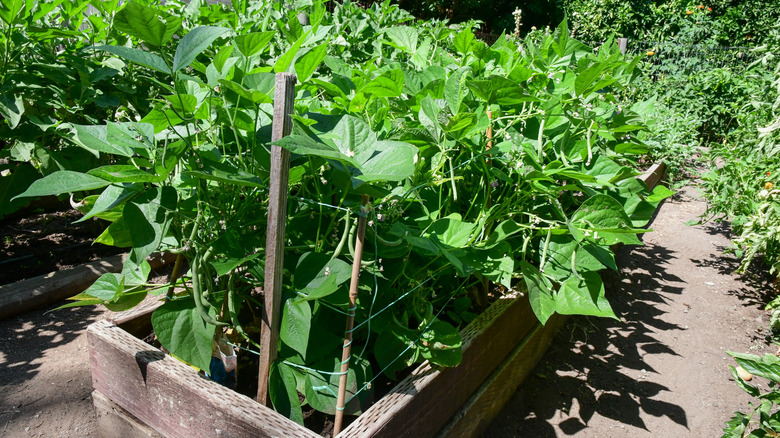
Certain vegetables are extremely generous, giving more to your garden than they take. For instance, legume plants are capable of adding nitrogen to your garden soil, enhancing its fertility. Many legumes double as crops, feeding people and animals around the world. Fava beans (Vicia faba) have fulfilled both roles for thousands of years. Humans have cultivated fava beans since the Bronze Age. Many parts of the plants are safe to eat, from the pods and seeds to the leaves and flowers. The seeds, or beans, are packed with protein, potassium, and other nutrients. Fava beans benefit the soil so much that they're often grown solely as a cover crop. Whether you're seeking a natural way to increase your soil's nitrogen content, a tasty veggie for your dinner table, or both, fava beans are worthy of consideration.
Also known as broad beans or field beans, fava beans bring other benefits to your garden when grown in USDA hardiness zones 2 through 10. When used as a cover crop, they're effective at minimizing weed growth. When used as a food crop, they offer plenty of nutrition. The pods can be nearly a foot long, and some house a half-dozen seeds, which can be eaten fresh, dried for later use, or saved to grow new plants. Fava beans also support a healthy soil microbiome. In return, soil microbes help fava beans with nitrogen fixation. Fava bean roots have nodules that rhizobia bacteria use for transforming air-based nitrogen into ammonia that's taken in by the plants. In the process, the plants gain nitrogen to fuel their growth. Later, when the plants decompose, they return some of this nitrogen to the soil.
Encouraging fava beans to release their nitrogen
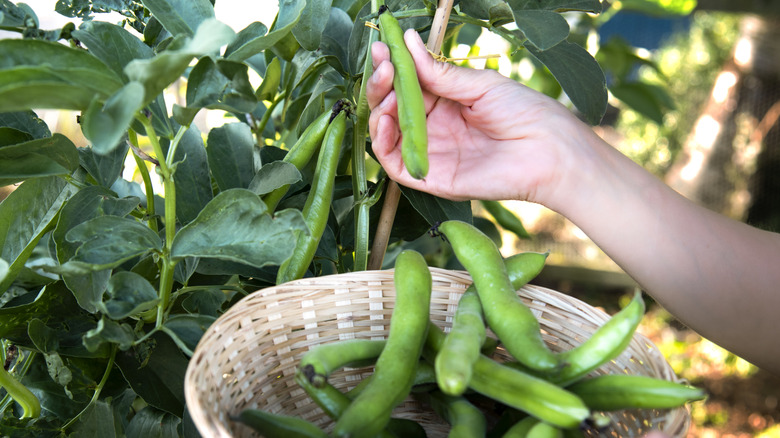
Fava beans are able to raise their soil's nitrogen levels, but they won't do it automatically. If nitrogen fixation is your main reason for cultivating these plants, you'll need to take a few crucial steps to make it happen. Also, make sure you know that your garden soil lacks nitrogen before adding more to the mix. Excess nitrogen can lead to a variety of problems, from reduced harvests to water pollution. If you truly need more nitrogen in your soil, you'll have to cut down your fava bean plants and leave their roots in the soil to decompose. This allows the nitrogen to be released into the soil so other plants can use it. Fava beans will not share their nitrogen with their neighbors while they're trying to grow or reproduce. The best time to boost soil nitrogen is before the plants produce beans. Taking this step immediately after the plants blossom is ideal.
If you prefer to harvest the beans first, that's fine, but the roots will release less nitrogen as they decompose. If you go this route, consider growing other nitrogen-fixing plants and sacrificing some of them for your soil. For example, you can plant fenugreek to enhance soil health in this way. Fava beans are one of your best options for nitrogen boosting, though. They give soil five times more nitrogen than the bush beans many gardeners grow. Or, plant a cover crop that can provide even more nitrogen than fava beans. Alfalfa and sweet clover are two strong alternatives that offer this benefit.