

The US State That's Home To One Of North America's Highest-Quality Japanese Gardens
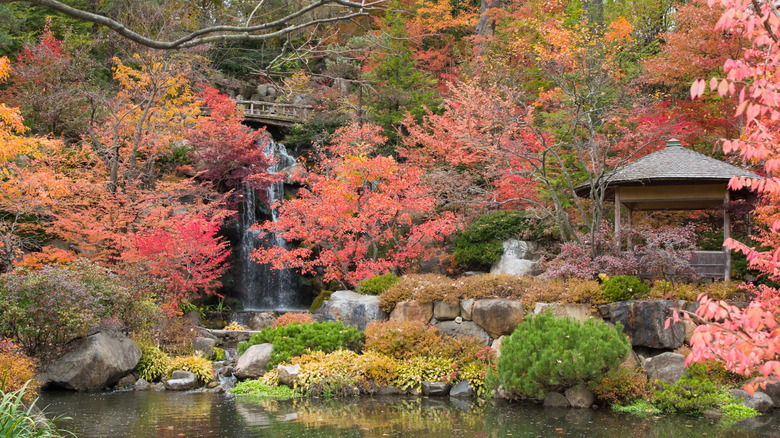
Whether you're seeking a stress-melting escape from everyday life or a peaceful place to ponder something deep, you owe yourself a visit to a traditional Japanese garden. To experience one of the finest examples in the United States, head to northern Illinois and visit Rockford's Anderson Japanese Gardens. Located less than 100 miles from Chicago's lakefront – a must-see Great Lakes destination – Anderson Japanese Gardens is a shining example of a stroll garden (Kaiyu-shiki-teien). Meandering walking paths connect different sites for immersing yourself in nature's mystery and tranquility. In addition to admiring the waterfalls and koi ponds that characterize this style of Japanese garden, you can witness the Upper Midwest's spectacular fall colors in September and October. Anderson Japanese Gardens is open daily, May 1 through October 31.
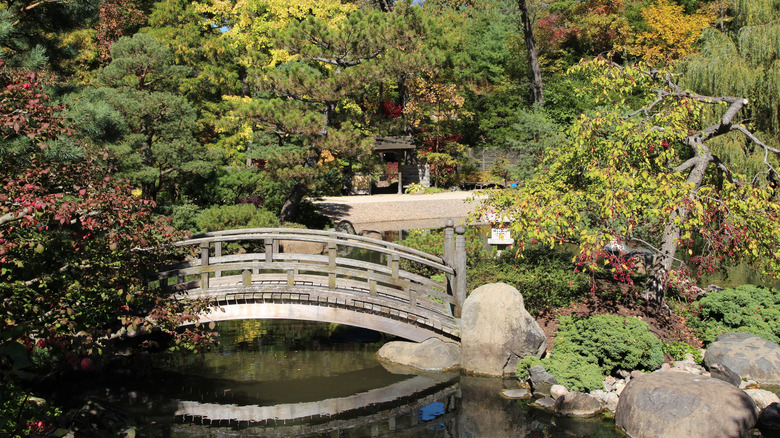
Anderson Japanese Gardens has earned high praise from HGTV and Sukiya Living, a journal dedicated to Japanese gardens and architecture. Every inch of this 12-acre space is filled with intention. The streams are designed to flow gently, encouraging you to slow down, take a deep breath, and experience all that the present moment has to offer. Pine trees are trained to assume sculptural shapes that celebrate both art and science. The rock gardens are raked into intriguing formations that invite contemplation, while the majestic gates and handcrafted bridges summon the spirit of discovery. Benches throughout the garden provide space for relaxing, meditating, or people-watching. Plus, the plants are a gorgeous reminder of how gardening is good for your physical and mental health.
Seasonal festivals, Serenity Walks, and other attractions
Whether you're visiting Anderson Japanese Gardens with a group or exploring the relaxing possibilities of "self-cation" travel, consider attending one of the garden's special events. They range from beginner-friendly tai chi classes to guided Serenity Walks with themes such as gratitude and nature connection. There's even a Japanese Summer Festival that offers a tea ceremony and demonstrations of traditional Japanese archery and calligraphy. Performances by folk dancers, taiko drummers, and koto players round out the celebration.
Another musical treat is Tuesday Evening in the Gardens, a summer concert series that draws touring artists from across the country. If you're craving an intellectual experience, register for an event in Anderson Japanese Gardens' lecture series, which features experts on all kinds of Japanese arts and cultural phenomena, from haiku writing to gyotaku, which involves making paper-and-ink prints of fish.
Though the gardens are closed for the winter, they reopen temporarily for "Illuminated," a chance to see the trees and pagodas festooned with string lights. This December attraction also has food trucks, concerts by local choral ensembles, and fireside readings of "The Night Before Christmas" to enhance the festive spirit. Winter is also the season of pop-up coffee shops where you can enjoy live music, specialty beverages, and snowy garden scenery.
Exploring the gardens' history and architecture
Anderson Japanese Gardens began as a backyard project by Rockford industrialist John R. Anderson. He fell in love with architecture — particularly traditional Japanese designs — in 1966, while visiting a family friend in Japan. Anderson's gardens took root in 1978, when he became enamored of the Portland Japanese Garden during a business trip. Soon after returning home, he hired designer Hoichi Kurisu to transform his family's boggy yard into a serene Japanese garden. In 1998, the Andersons donated the garden to a charitable organization, allowing the public to enjoy its restorative tranquility.
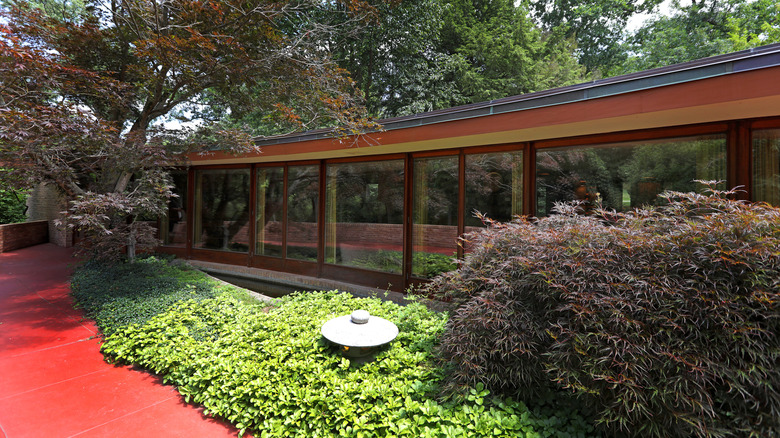
The garden's buildings and other structures are just as impressive as its landscaping. Highlights include a traditional tea house and a Sukiya-style guesthouse constructed by master craftsmen from Tokyo. The guesthouse is inspired by design conventions from 16th-century Japan, while another architectural attraction, the Laurent House, showcases the style of a 20th-century American innovator: Frank Lloyd Wright, who drew inspiration from his trips to Japan. Both the guesthouse and the Laurent House are included in Anderson Japanese Gardens' docent-led tours.
The Laurent House — a meticulously maintained example of midcentury Usonian architecture — is noteworthy because Wright customized it for a resident with disabilities. As resident Kenneth Laurent once remarked, "Every morning for 60 years, I would come out of my bedroom and pause in the doorway, sitting in my wheelchair, to look down the window wall, I'd take in the beauty that Wright designed, seeing both the indoors and outdoors, as if there were no barriers. That scene allowed me to forget about my disabilities and focus on my capabilities."