

The Most Stunning Beaches You've Never Even Heard Of
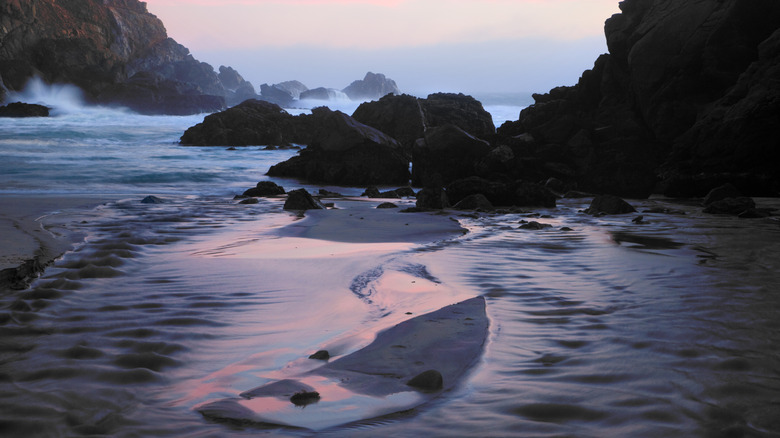
A beach is one of the most unique ecosystems on Earth. This strip of land bordering at least one edge of a body of water — often an ocean — can be the site of a bountiful fishing trip, a sunny beach camping experience in the summer, or a prized surfer spot. Some beaches, however, are worth the trip for the unique experience they provide, especially if they're relatively unknown and not packed with tourists.
Whether it's an unusual color sand, water that gives the beach a fantastical visual aesthetic, unique topography, or a unique aspect to the beach's ecosystem, these destinations offer beachgoers unforgettable views and experiences. In addition, some of the most stunning beaches earn their draw off of their seclusion alone. Often this seclusion stems from how a beach is accessed.
From green sands in Hawaii to dramatic pumice cliffs in Greece, these hidden gems are among the most stunning and isolated seashores in our world. But remember, even such beautiful beaches have unexpected dangers that should be avoided through careful research and preparation.
Playa Del Amor, Marietas Islands, Mexico
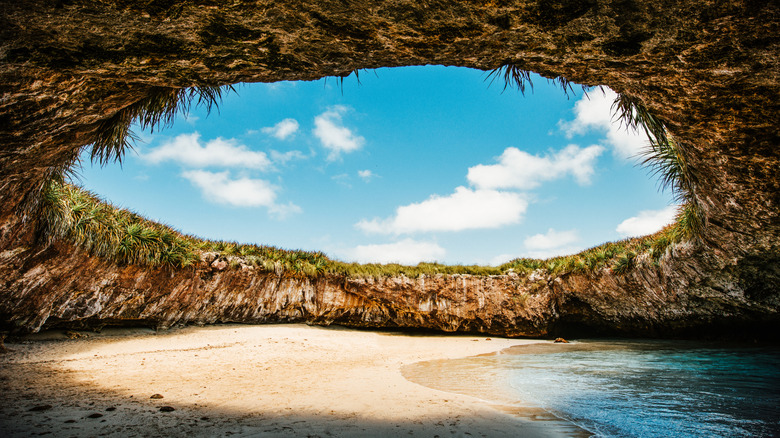
Known to locals as Hidden Beach or Lover's Beach, Playa Del Amor is located within a cove in Islas Marietas or Marietas Islands National Park. The national park — about 5 miles off Mexico's west coast, and about 15 miles west of Puerto Vallerta — is a UNESCO Biosphere Reserve and home to a plethora of marine wildlife including feeding humpback whales, but its legacy does not translate to highly saturated crowds. Any expeditions to the Marietas Islands must be booked with a reservation in advance to adhere to strict regulations on how many visitors can be present at any given time.
Even without the visitor cap, Playa Del Amor, nestled on the north end of one of the larger islands in the archipelago, would be plenty secluded due to the sheer difficulty of access (poor weather or conservation efforts may also temporarily close access). Taking a boat tour from Puerto Vallarta, Nuevo Nayarit, or La Cruz de Huanacaxtle isn't so tough. But once within the park, things kick up a couple of notches. Playa Del Amor can only be accessed via a 40-foot underwater rock tunnel against the current, so strong swimming is a requirement (fins are not allowed, but a snorkeling mask is). You'll then find yourself in this semi-subterranean crescent of pristine beach and turquoise waters occupying the base of an open-roofed cave (it's speculated the roof of the cave collapsed thanks to early 20th century artillery testing nearby). The Hidden Beach certainly lives up to its moniker.
Papakōlea Green Sand Beach, Hawaii
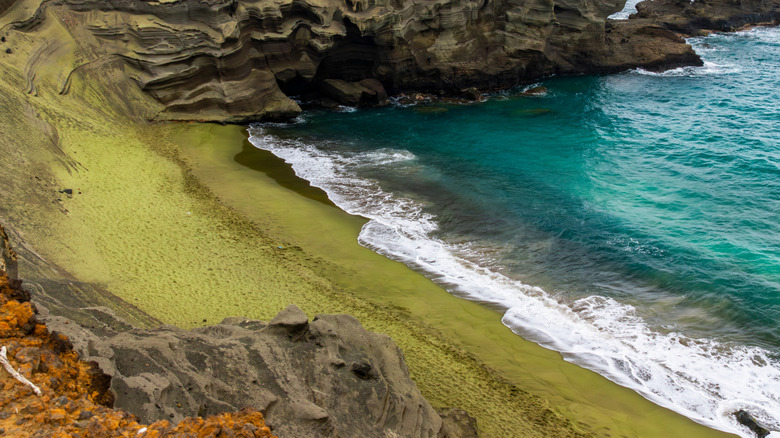
Located on the Hawaii's Big Island, the wonder of Papakōlea Green Sand Beach is all in its name — It is one of a handful of beaches in the world boasting vibrant green sand. The sand gets its hue from the aptly named olivine, a mineral commonly found in the volcanic basalt on or around the Big Island. Because the olivine weighs more than the other composite minerals found in Big Island rocks, it remains behind on the beach as other sand grains make their way to the ocean, providing the beach with its color.
Papakōlea Green Sand Beach is accessible via South Point Road, located between the 69 and 70 mile markers on Highway 11. After driving eight miles towards the ocean, a parking lot awaits those looking to make the two-mile hike to the colorful beach (remember, you'll be making this hike back as well). Upon arriving, the trek down to the verdant shore is quite steep (though a metal staircase helps a bit). It's not difficult, but that isn't to say it's easy, either, so proceed with caution. Those up for the trek would be wise to wear durable shoes. Though you can swim here, the waters are pretty rough. Papakōlea Beach has no lifeguards and no developed accommodations for visitors, which contributes to its seclusion. The green sands of Papakōlea is a must-see experience, but take only memories and photos: Birdwatching and hiking are encouraged, but removing sand from the beach is illegal. Likewise, visit but don't touch or trespass onto any of the eroded structures or ancient and historic sacred sites scattered throughout the area.
Iboih Beach, Pulau Weh, Indonesia
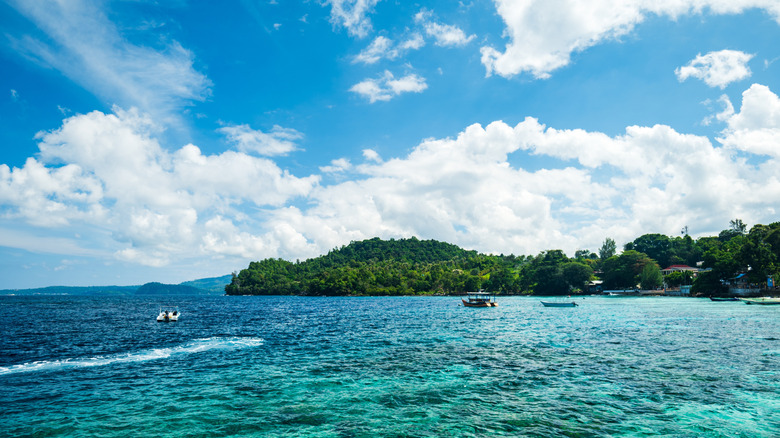
Located on Pulau Weh — Weh Island" in English — Iboih Beach is practically Indonesia's natural aquarium. The numerous types of marine life are on display in the shallow, crystal clear waters along the beach not far from Sabang City. Also called Teupin Layeu, it's a dream location for divers and snorkelers due to the underwater clarity, mellow waves, and gently sloping seafloor around Pulau Weh, along with colorful coral gardens teeming with life (you can rent gear in the village). The island is not frequented amongst tourists, but still boasts substantial infrastructure and reasonable prices. The town of Iboih Village is also home to a 35-acre protected mango forest reserve, which is a great alternative for those looking to experience a walk on the dryer side of nature while still experiencing the tranquil beauty of Iboih.
Iboih Beach can be accessed most easily via the Sultan Iskandar Muda airport in Banda Aceh. Flights to Pulau Weh from mainland Indonesia are available from Jakarta and Medan. From the airport, a speedboat or ferry can be taken from the Ulue-lue port to the island port of Sabang. A minibus provides transport from Sabang to Iboih. The multi-stage transportation to Iboih is part of what makes Iboih Beach such a secluded gem of Indonesia.
Pfeiffer Beach, California
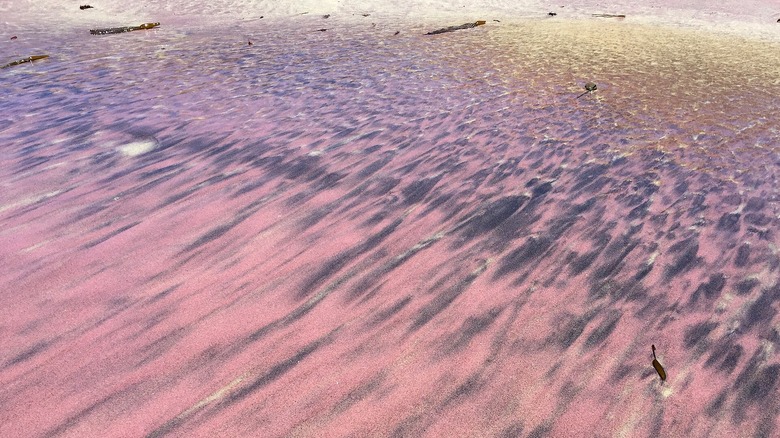
California is known for its iconic beaches in both northern and southern California, but the Central Coast is home to many of the state's hidden gems. There's nothing wrong with the iconic Malibu coastline, the Santa Monica Pier, or the Santa Cruz Beach Boardwalk, but what can be seen at Pfeiffer Beach can only be found in the U.S. at one other beach — over 3,000 miles away on Plum Island in Massachusetts: purple sand.
Pfeiffer Beach is one of the few beaches in the world with purple-tinted sand, and the rock formations offshore create one of the most dynamic coastal views on Big Sur. The purple sand is due to the erosion of manganese garnets in the surrounding formations, The waves tend to sort the minerals and create purple patterns over more common golden sands that range from a light terracotta to a deep, rich plum. And while there aren't many amenities, the views of dramatic rock formations, a keyhole arch, and the sands themselves are worth the visit.
Pfeiffer Beach can be normally be accessed via Highway 1 in Big Sur, but it's easy to miss. A narrow, unmarked road entitled Sycamore Canyon Road is a straight shot to Pfeiffer Big Sur State Park. You can camp at the state park, and when you're tired of colorful sand, the park features hiking and almost 1,400 acres of pine and oak forests, meadows, and desert scrub.
After paying the entrance fee at the station, Pfeiffer Beach can be accessed via a parking area within the state park, which is about a five minute walk from the vermillion and violet alluvium. Currently, however, Highway 1 is closed due to a landslide, with no estimates for reopening. Check the park's website for updates and alternate routes.
Vlychada Beach, Santorini
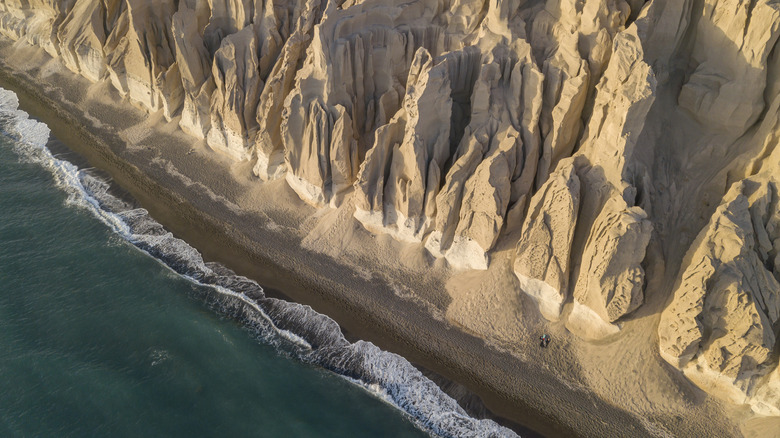
Santorini is home to some of the most beautiful beaches in Greece, and it seems everyone knows it. Red Beach, for example, is an iconic Santorini spot and certainly worth navigating the crowd, but it is anything but secluded. When looking for a less crowded location in close proximity, the beauty of Vlychada Beach — about a mile to the east of Red Beach on Santorini's southern coast — is second to none. The quiet beach's defining trait are the adjacent cliffs of white pumice (a lightweight volcanic rock), which provide a sheer contrast to its dark, pebbly shore. The small port at one end of the beach is home to a few taverns and similar establishments, which help to maintain the quieter, lower-key atmosphere of Vlychada Beach while still providing amenities.
Adding to the calm are gentle waters with plenty of shallow, sloping access. This means kids can play and parents can relax on umbrella-covered lounge chairs. Those seeking more activity might consider horseback riding. Vlychada Beach is also easy to get to as there is full road access to the beach complete with a parking lot. For those looking to avoid getting behind the wheel, buses run regularly to Vlychada Beach from Fira, the capitol of Santorini.
Zlatni rat, Croatia
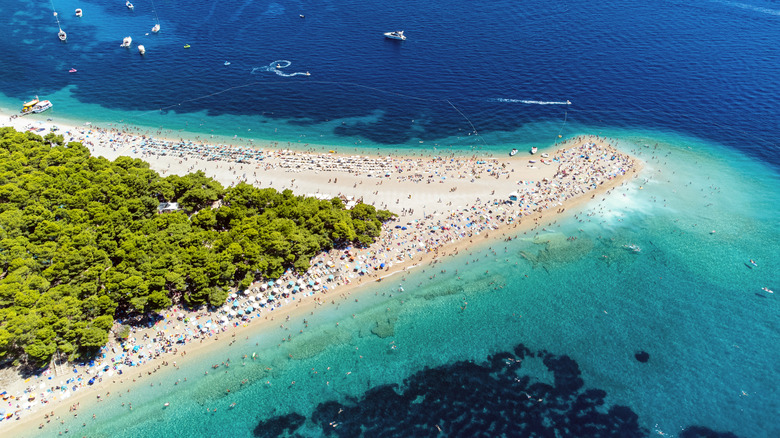
Zlatni rat is a beach in Bol, on the island of Brac in Croatia. Zlatni rat — also referred to as the Golden Horn — is comprised of long pebble beaches flanked by crystal-clear shallow aquamarine waters dropping quickly to deeper seas. The beach is home to many family-friendly activities including paddleboarding, pedal boats and kayaks. For those looking to take a dip in a more controlled environment, waterparks are also nearby.
The most stunning attraction of Zlatni rat, however, is also its most unique feature — the changing shape of the beach. The beach is made primarily of pebbles, and a combination of waves and wind from multiple directions can displace those pebbles and change the shape of the beach. Oceanographer Dr. Ivica Vilibić from the Ruđer Bošković Institute explained on Croatians Online that beached is shaped in a way that when seasonal winds and waves hit one section of the beach, another part is simultaneously protected and vice versa, creating a sort of undulating erosion and building "moving" the beach east or west with the winds. In addition, it appears the beach is actually getting longer, contrary to many eroding and at-risk beaches around the world. Croatia protects the entire beach as a geomorphological monument. While the phenomenon is natural, the pine groves were deliberately planted by the local government to offer shade.
The most common way to get to Zlatni rat is taking a ferry from the city of Split on mainland Croatia. The ferry to Brac Island docks in Supetar, and Bol can be reached from Supetar via ground transport. Alternatively, walking from Bol takes about 30 minutes.
Black Sands Beach, California
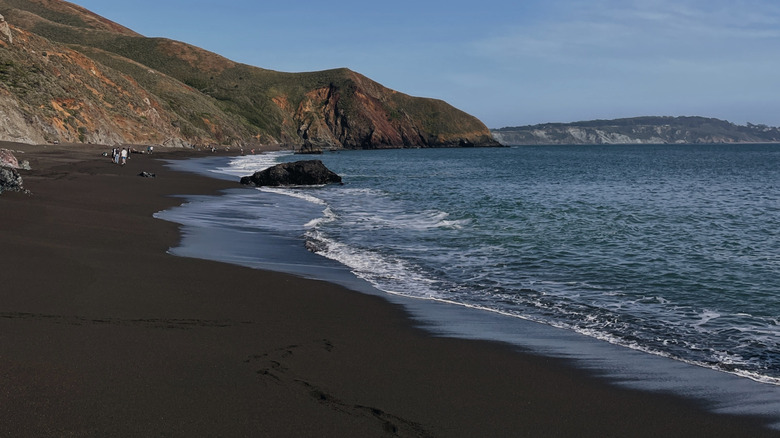
Northern California's Marin County is home to Black Sands Beach, named for its color due to the high amount of dark volcanic rock amongst the grains of sand, eroded out of the surrounding, unusual pillow basalt. Aside from some of Lake Superior's Minnesota beaches, Black Sands Beach is the only other beach on the U.S. mainland featuring the mesmerizing and sought-after black sand.
Unlike many of the world's beaches boasting black sand, Marin County's Black Sands Beach is relatively secluded, due in part to a frequently missed single-lane access road and brief but steep hiking trail access (no strollers on this one). The beach is accessible via Upper Fisherman's Trail, which spans just over a quarter mile. However, due to the steepness of Upper Fisherman's Trail, dropping almost 300 feet over slippery gravel, it takes the average person about 20-30 minutes to traverse it. The parking lot for the trail only has room for about a dozen cars, so an early start is recommended for those looking to make the trip. Once at the beach, your primary activity is going to be admiring the sands and views as you wander the beach. Swimming is not recommended, and there are no facilities, apart from a pit toilet at the trailhead. You'll want to bring your own water and food (pack out anything you pack in). Geocachers will want to visit to add this EarthCache to their collection.
Playa de las Catedrales, Galicia, Spain
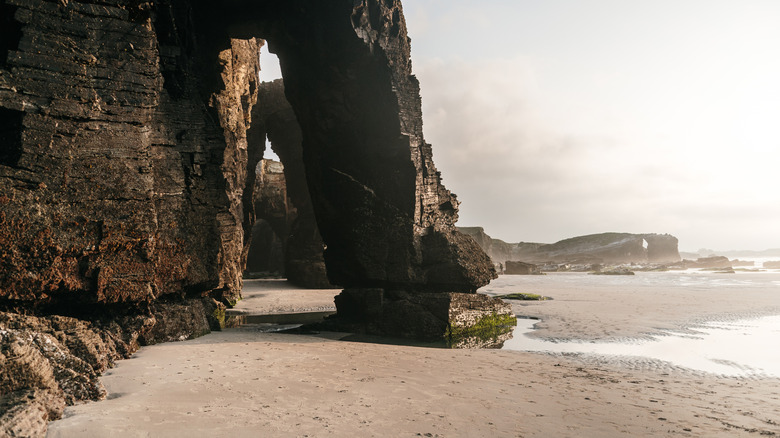
Located in Galicia on the northwestern portion of coastal Spain, Playa de las Catedrales is known for its striking rock formations. Towering natural arches and caves are the defining characteristics of Playa de las Catedrales, but they can only be seen during low tide. The rock formations are referred to as Las Catedrales or Praia das Catedrais — which translates to The Cathedrals — due to the imposing arches and have been declared a natural monument. The sporadic nature of these natural wonders may be a key factor in why such a stunning natural occurrence, while receiving plenty of nature fans, has not become a happening tourist spot.
Another part of Playa de las Cagedrales being one of the most stunning little-known beaches is that aside from its views, there isn't much in the way of activities. However, the sea caves and towering arches are must-see locations. Since visits must be made in advance with a reservation, get the most out of Playa de las Catedrales by hiking to see its beautiful views from multiple vantage points. Just make sure to plan your visit around low tide (and shoulder season is best for even more privacy and solitude).
Sandspit Beach, California
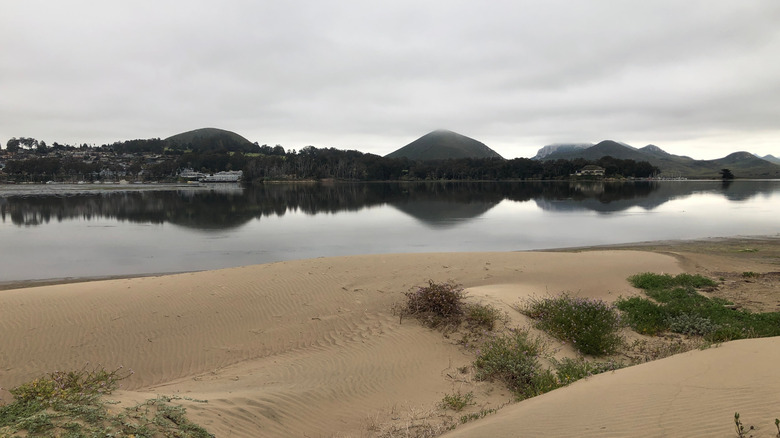
Another gem of California's Central Coast, Sandspit Beach is the pride of Morro Bay and located in Montaña de Oro State Parkabout 35 miles southeast of Hearst Castle. The beach is adjacent to Morro Rock, and its rolling sand dunes are teeming with a variety of wildlife. Sandspit Beach is undeveloped, so whatever is needed for the trip in terms of food, hydration, and comfort should be packed in advance. From Sandspit Beach, savor gorgeous views of Morro Rock and the large, powerful waves that make Morro Bay one of the most beautiful surf spots in North America. Lifeguards on duty during summer months can fill you in on surf conditions and any safety precautions needed to take a dip in the ocean that day.
Of course, getting to Sandspit Beach is an experience all on its own: The beach is completely separated from the mainland by the water of Morro Bay! Throughout Sandspit Beach's four mile span, there is no bridge or other means of crossing. This means that getting to the beach is a trial by water, via boat, kayak, or good old hands and feet. While you wander the beach and watch the waves, keep an eye out for the occasional sea lion also soaking up rays along the shore.
Pink Beach, Komodo National Park, Indonesia
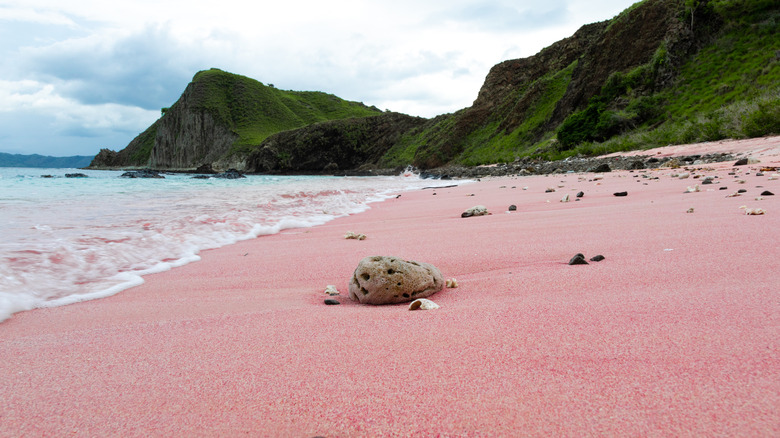
Of all the pink sand beaches in the world, Pink Beach in Komodo National Park, Indonesia is arguably the most pink of them all, and definitely one of the marine national parks you should explore. The home of the Komodo dragon is also home to glorious beaches. Pink Beach tops the list as not only the most beautiful beach in Komodo National Park, but the pinkest, too.
While most beaches with striking hues are a result of some type of geological development, Pink Beach's color comes from marine microfauna called Foraminifera. Foraminifera live in the coral reefs of Pink Beach and emit a red substance that pigments their coral habitats. Over time, this coral breaks off and mixes with white sand via the shifting tides which gives the beach its eye-catching color. It's not a large beach, but even on perfect days, it's not overly crowded and even many people who live in Southeast Asia are surprised and struck by the beauty of the vibrant sand.
Komodo National Park can be accessed via boat from the town of Labuan Bajo (you'll need to hire a guide to wander the island, as it's a UNESCO World Heritage site). While Pink Beach is not suitable for an overnight stay, snorkeling among the coral is a must for those looking to make an all-day excursion, and swimming is considered quite safe.
Rodeo Beach
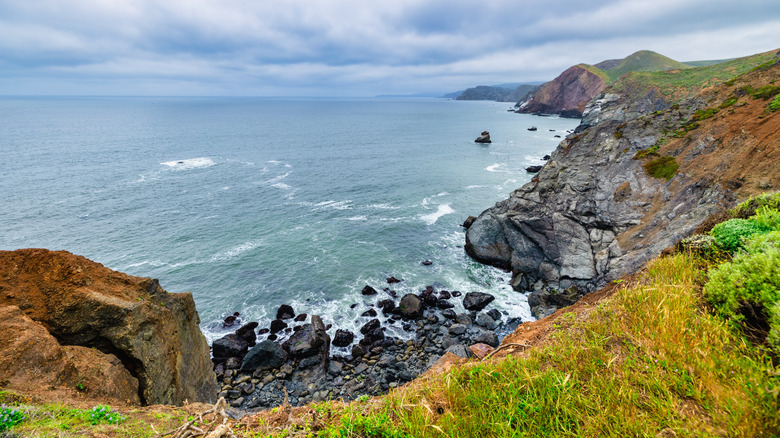
Like Black Sands Beach, Rodeo Beach is in Marin County, but that is where the similarities between the two end. Located three miles northwest of the San Francisco Bay Area's famous Golden Gate Bridge, Rodeo Beach is comprised primarily of green and red radiolarian chert pebbles, bordered by a lagoon, and sheltered by cliffs on both sides. It's a sort of enclosed space that feels very private.
All of these factors contribute to Rodeo Beach's seclusion — its rocky shore is not ideal for a family picnic, but the adjacent picnic tables are ideal for that, of course. Those looking to fly a kite or peacefully stare out at the roaring Pacific will find themselves right at home. Surfing conditions are also maintained year-round, though summer is most optimal – but shark attacks are a non-zero possibility as Rodeo Beach, so wave riding comes at one's own risk, since there are various creatures to be aware of in California's oceans. Sharks aside, the strong currents at Rodeo Beach are unexpected dangers enough to avoid swimming in the area, and a good reason to know what a riptide is. Semi-precious stones such as black agate, jasper, and carnelian can be found amongst the beach's sand and pebbles, but because it's a national park, are not to be removed from the environment. The beauty of this relatively unknown beach, compared with many on the list, is that there are restrooms and beach showers at the northern end of the small beach, and you can access it via city bus from San Francisco on certain days of the year.