

Fall Soil Additions That'll Create A Thriving Garden Come Spring
We may receive a commission on purchases made from links.
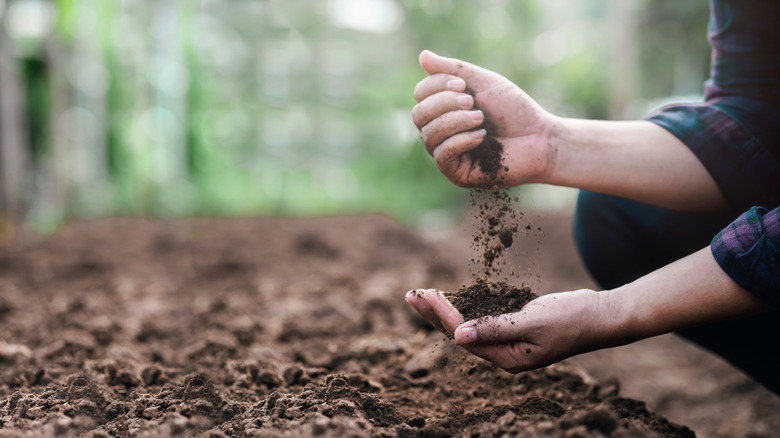
The end of gardening season comes with its own tasks — you don't just harvest what's left of your crops and walk away. It's essential to look into the best soil additions for your dirt so that it's ready for next year's crops in the spring. Your soil requires nutrients, and now is the perfect time to give it what it needs. This will come in the form of adding minerals and other amendments to replenish any nutrients your garden soil is lacking.
However, the first step is to test your soil. You can go to your local gardening center and get a testing kit if you want to do it yourself, or pick one up online, like the comprehensive test kit from My Soil. These tests will help you identify some of the missing minerals from your soil, but for more accurate results, you may want to go through your local county extension office.
When taking a soil sample, you'll want to get below the surface soil, dig down with your trowel about six inches, and take a one-inch slice of soil. Take a few samples from different areas of your garden and mix them in a clean dish. Seal it all in a plastic bag, put your information on it, and drop it off at the extension office. This test will tell you how much nitrogen, phosphorus, and potassium (NPK) are in your soil, so you know what you need more of.
Adding NPK to your garden

If you find your garden is low in nitrogen, adding manure is probably your best bet. Nitrogen helps the leaves of your plants. While there are other nitrogen-rich supplements you can add to your garden, like blood meal, manure is the only one that releases nitrogen slowly, making it ideal for fall and early winter implementation. Blood meal and other natural amendments are great for a quick nitrogen boost come spring.
Roots, fruit, and flowers require phosphorus for strong growth. If your soil is lacking in this element, you can work to replenish it with rock phosphate powder. This treatment will last for over three years, so you won't need to worry about it every year. Other common phosphate amendments include bone meal and wood ash. Both of these release more quickly, so you'll need to replenish each season if low phosphorus is a naturally recurring issue in your soil.
Finally, you'll need to look at potassium levels, which help get water flowing through your plants so they can produce flowers and fruit, and protect themselves from disease. Greensand and granite dust are what you'll want to add in this case, which will help your plant grow stronger stems and avoid stunted growth. You can also substitute wood ash.
Your soil's alkalinity and acidity matter too
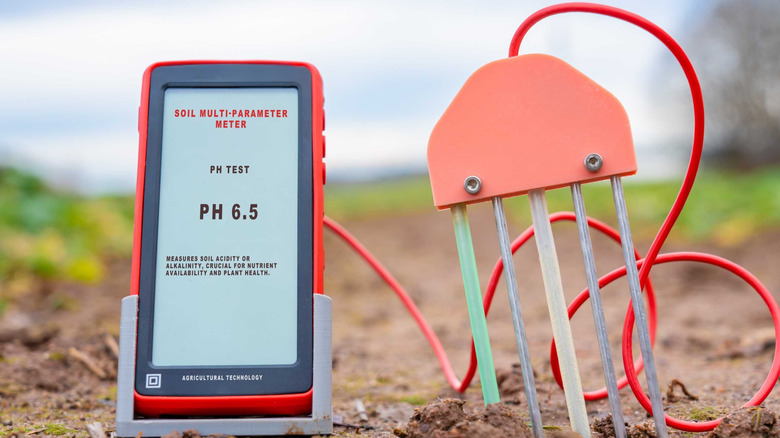
Though there are fancy machines you can get to test your soil's acidity (many plants thrive best in slightly acidic or slightly alkaline soils, while others seek balanced, neutral pH levels), there are also a couple of helpful DIY tests. Both require a bowl and two tablespoons of soil. In one, add a half cup of vinegar. If it fizzes, even a little, that means the soil is alkaline (the stronger the fizz, the higher the pH). In the other bowl, add enough distilled water to make the soil moist, then a half cup of baking soda. If this fizzes, your soil is acidic (the stronger the fizz, the lower the pH). If you get no fizzing at all, then your soil is neutral, at a pH of 7. To adjust your soil's pH, finely ground limestone or bonemeal will help balance acidic soil, while ground sulfur will help balance alkaline soil.
Finally, you can add mulch or compost to prepare for fall and winter. Green compost is good for adding nitrogen, while brown compost adds carbon. If you don't have a supply of the right compost on hand, there are easy ways to compost in a short time. Then, on top of that, it's time for some mulch, which serves a number of purposes in your garden. Think of this as your soil's insulation, protecting all the good stuff you just added, keeping moisture in, and suppressing weeds that might be germinating over the winter. You can shred fallen leaves from your own lawn as an affordable option (it's that easy to turn leaves into fuel for your garden), or use straw or wood mulch, which you can purchase.