

The Colorful Annual Plant That'll Brighten Up Your Fall Garden
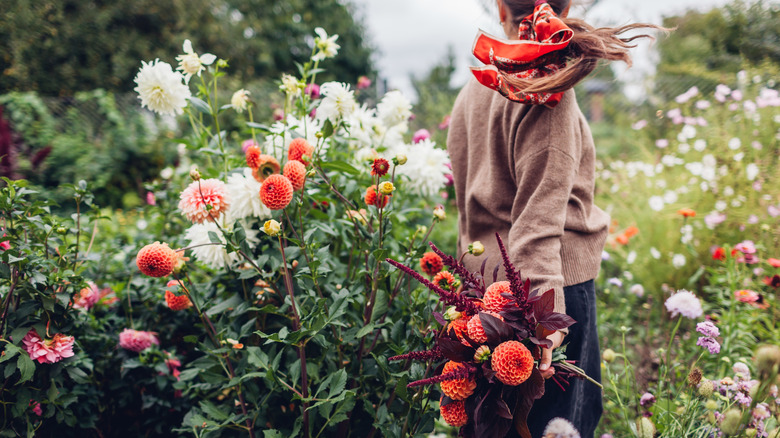
One of the wonderful things about fall is the incredible display of color outdoors. Some foliage slowly cycles from greens through golds, reds, and browns; pumpkin spice could be considered a color as much as a flavor, and even gardens show off new seasonal blooms, with different plants taking center stage as summer blossoms fade. One glorious, gold-to-crimson flower that's a head turner is the heirloom amaranth variety called Love Lies Bleeding (Amaranthus caudatus). It's a show stopper, as was Elton John's song of the same name during his concerts in the late 1970s.
The long-lasting, old fashioned, Love Lies Bleeding blooms offer slender, foot-long splays of color from summer until the first frost, so it'll stick around through the fall. This particular amaranth is suitable for USDA plant hardiness zones 2a through 11b, and it prefers full sunlight. It's also drought tolerant. The plant itself has wide green leaves and grows 3 to 5 feet tall. It's most striking when the tassel- or tail-like strands of flowers cascade downwards against the green backdrop of the foliage.
This is a worthy plant to set towards the back of the garden of ground-cover plants, for cascading from a hanging basket, or over a retaining wall. The flowers are also sturdy enough for both fresh and dried arrangements, so you could clip some to mix in with your autumn porch displays. The leaves and seeds are even edible and tasty, and as an added bonus, this amaranth is one of those low-maintenance plants that are great for beginning gardeners.
Caring for Amaranthus caudatus
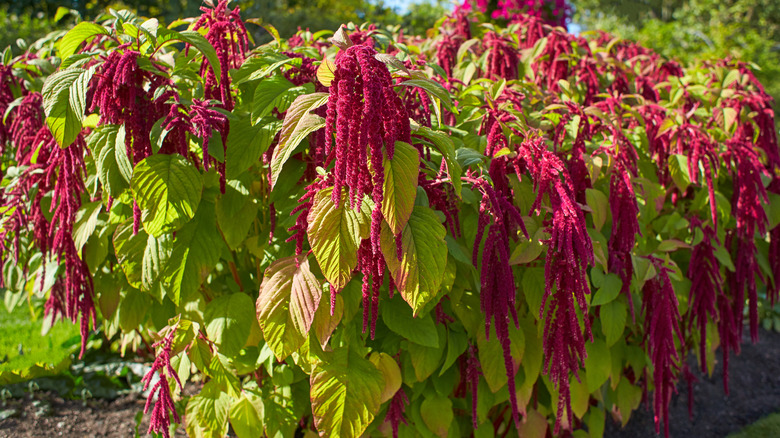
Besides the name Love Lies Bleeding, amaranthus caudatus is sometimes called foxtail amaranth, tassel flower, or velvet flower. To grow this amaranth from seed, find an area that gets sun at least 6 hours per day, then sow the seeds at least 3 inches apart in spring when there's no longer any chance of frost. If your area gets really hot in summer, the plant appreciates some afternoon shade. If too much direct sun is an issue, another amaranth variety, the globe amaranth (Gomphrena globosa), is a heat-loving flower you can grow from seed and forget to water.
You can also start foxtail amaranth seeds indoors ahead of time, sowing them about an inch apart in a potting mix. In either situation, keep the soil moist until the plant is well-established, but make sure the soil drains well. Transplant seedlings to about 2 feet apart when they're strong enough to handle the process, choosing a spot with well-drained, rich soil.
This amaranth takes about 3 months to go from seed to a blooming, flowering plant. Planting it among sunflowers could create a striking contrast among these late summer, early autumn flowers. Since birds enjoy the seeds of both sunflowers and amaranth, both are plants that could attract more songbirds to your garden if you leave the blooms intact for a while after they're spent. Leaving the seed heads on either one will help them re-sow themselves for next year, too. Alternatively, harvest seeds and leaves for your own dinner table. The leaves make tasty greens and can be sautéed, boiled, or steamed. The seeds can be heated and popped like popcorn for a crunchy salad topping, or ground into a gluten-free flour.