

Suppress Weeds In Your Garden Paths With The Help Of A Common Kitchen Staple
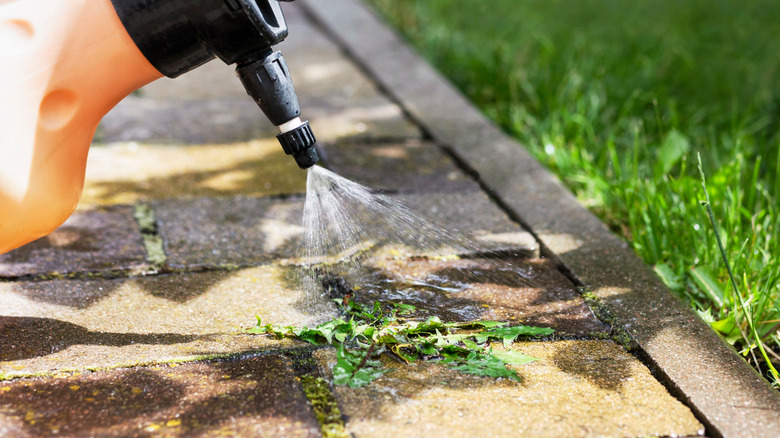
If you're sick of combating weeds in your garden paths and walkways, you're not alone: Weeds always seem to be sprouting through bricks, pushing between gravel, or creeping through mulch. One of the more popular methods to defeat weeds is sheet mulching: Laying down cardboard, landscape fabric, or thick paper in overlapping layers across the area where you want to cut light and water off to halt weed growth. You can even use newspapers as a weed deterrent (if you still have any). These then gets layered over with other organics — leaves, mulch, or soil — in what's known as the lasagna method. It turns out, in a pinch, you can reach for a simple kitchen staple for that first protective layer: parchment paper. Layering the non-stick paper (more commonly used in baking and steaming) over bare soil is a simple weed-killing trick before adding gravel landscaping or mulch.
Gardeners are becoming aware of the role that parchment paper can play as a weed barrier. The substance is easy to work with and doesn't require any specialized tools or advanced gardening knowledge. It functions similarly to landscape fabric, in that it suppresses weeds, blocks plants from tunneling to the surface, and provides an even space to layer your mulch. The key difference is that landscape fabric is designed as a porous mesh, allowing water to seep through. Parchment paper, by contrast, has a water-resistant silicone coating which slows or halts water absorption into the soil. For this reason, it's best to use parchment alongside walkways, paths, and any area where you intend to eliminate any future plant growth, rather than around plants you want to keep.
How to use parchment paper in your garden
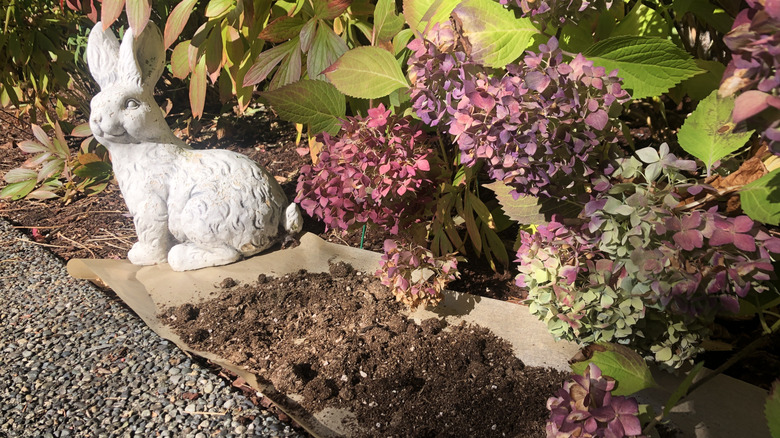
Transforming ordinary parchment paper into an effective weed barrier is as simple as it sounds. To begin, clear the area of existing weeds, rocks, or debris, and rake your soil until it's smooth and relatively level. Roll out sheets of parchment paper onto the dirt, overlapping each sheet by an inch or more to ensure that there are no gaps for weeds to sneak through. If you're laying parchment down on uneven ground, or facing environmental hassles such as wind, dampen your paper with a bit of water to make the sheets stick together (the coating will keep it from falling apart). You can even throw down an extra layer of craft paper for a sturdier barrier, if you wish. A few kinds of parchment paper are uncoated and fully biodegradable. In that case, there's no danger of harming your soil by using too much, and it will behave more like traditional cardboard sheet mulching (though much thinner).
Once the parchment paper is in place, add the upper layers. This could mean spreading the best mulch for your garden, gravel, pavers, or other materials over top. If everything goes according to plan, the parchment paper should keep the area weed-free for months at a time before disintegrating into the soil, if biodegradable. With coated paper, you may need to replace the parchment with a fresh set each season, though it's a small price to pay for a pathway free of weeds and other detritus. Speaking of price: One caveat is that parchment paper is relatively pricey compared with cardboard or newspaper, so this might be considered more of an as-needed fix.