

Why Late Fall Is A Great Time To Plant An Apple Tree In Your Yard
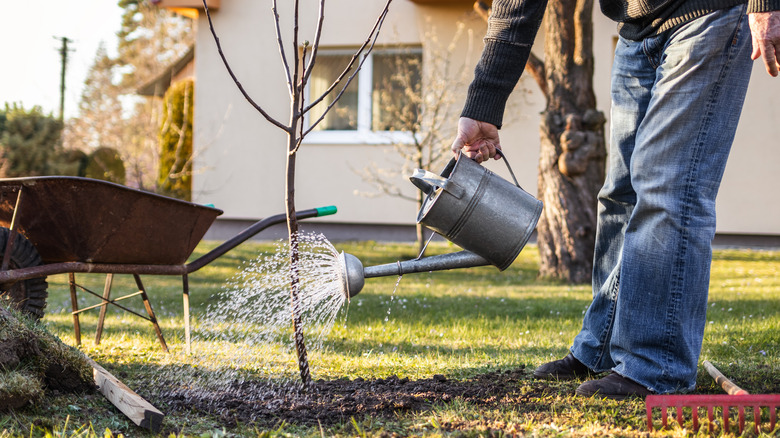
Apple picking isn't the only thing you should be doing with apple trees this fall. If you live in a USDA hardiness zone of seven or higher, fall is the ideal time to plant an apple tree in your yard. These trees bring fragrant spring blooms, homegrown fruit, birds, pollinators, shade in the summer, and foliage in the autumn. As the Chinese proverb goes, "The best time to plant a tree is 20 years ago. The second-best time is now."
If you're in the right zone for fall apple tree planting, that means winters aren't so harsh that the ground will freeze solid. Cool, mild winters reduce transplant shock, which is when the tree struggles to adjust after being planted in its forever home. Fall planting also provides ample time for the tree's roots to establish a deep and sturdy footing before the spring, when it will focus on growing its trunk, limbs, and leaves. Furthermore, fall planting is beneficial because it avoids the extreme conditions of too cold, too hot, and too dry that would stunt the tree's development. Mild winter areas also tend to have steady fall rains, which encourage the apple tree's roots to dig deep without the need for surface irrigation.
No matter when you plant your apple tree, it will take anywhere from seven to 10 years before it begins to produce fruit in earnest. Some varieties, like dwarf or semi-dwarf trees, will produce fruit faster than standard apple trees. Factors that speed or slow down the tree's maturation include timing of planting, drainage, climate, soil conditions, diseases, watering, and tree care.
How to plant an apple tree
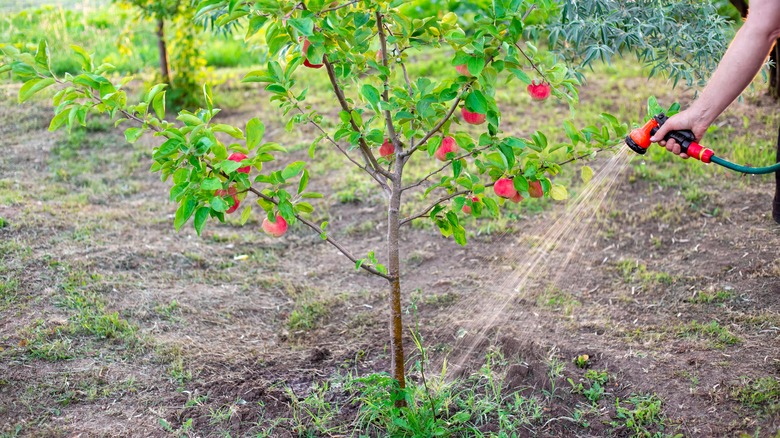
Once you've found an ideal spot for your apple tree, dig a hole about twice the root ball's size. Then, inspect the root ball and prune any dead roots, combing out and trimming any that are long or tangled. This will discourage girdling, which occurs when the roots encircle and constrict the tree trunk, stunting its growth. Water regularly, deeply, and slowly while the ground is unfrozen. Cage the tree well, too; nothing is sadder than a snapped apple sapling, robbed of its long and productive life. Come spring, your apple tree will have a head start on spring thanks to the root establishment it achieved during the fall and winter.
Cultivating grocery store-grade apples isn't easy, so be prepared for your apples to look a little more rustic once they get to their fruit-bearing age. Diseases, pests, and weather events can ruin a good crop. Selecting the right variety for your soil, sunlight, and climate is crucial to setting your orchard up for success. If you're well into your backyard orcharding hobby and aren't getting much fruit, run through the possible reasons why your fruit trees are struggling. We also recommend contacting a local nursery or extension office to determine which varieties are well-established in your area. Otherwise, by keeping a close eye on your budding apple tree and fighting off the pests that attack them, you can usually get a haul good enough for snacking apples, apple sauce, or apple pie.