

An Overlooked Colorful Perennial You'll Want To Add To Your Fall Garden
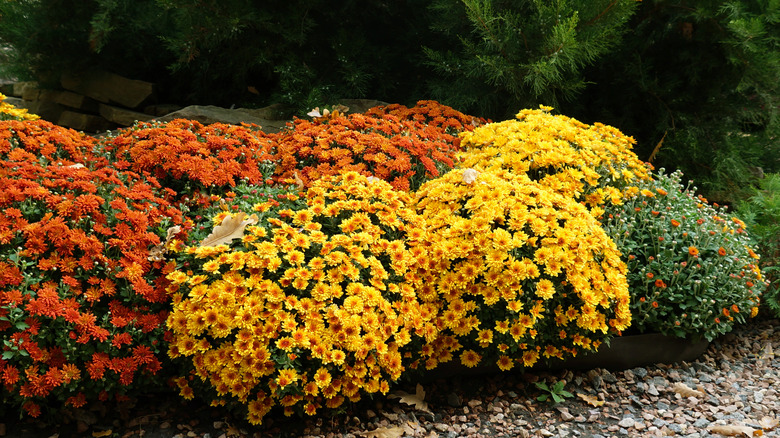
Every autumn, mums take center stage. You see them everywhere: They fill market shelves and porches, and the best varieties of mums brighten up any fall garden bed. And while their neat, rounded shapes and classic fall shades certainly scream "seasonal," after a while, the mum mania can start to feel a bit routine. They're dependable, yes, but they don't exactly surprise you. If your garden is craving something unexpected to shake up the usual fall lineup, there's a lesser-known perennial waiting in the wings. Meet the Japanese anemone (Eriocapitella hupehensis), a graceful plant that spends the summer building leafy mounds before unveiling elegant blooms just when you thought the flower show was winding down.
What makes Japanese anemones stand out so much is their ability to extend the beauty of your garden long after summer's stars have faded. Instead of dense domes of color, you get airy clusters of 2 to 3-inch blossoms perched on tall, slender stems that dance in the autumn breeze. Their palette, which comes in soft pinks, snowy whites, and deep purples, feels fresh and romantic compared to the fiery tones we typically associate with fall. Even better, they're not one-week wonders. These plants can keep the show going for six to eight weeks, carrying color well into the season. It's worth knowing that Japanese anemones do require some care: You'll need to give make sure they're planted in well-drained soil, for example, and they do best in partial to full sun. Aside from that, though, they're not too hard to look after. Add in their ability to attract pollinators while resisting deer and rabbits, and you've got a perennial that's as practical as it is beautiful. Just be warned — like mums, Japanese anemones are toxic to pets.
How to care for Japanese anemones
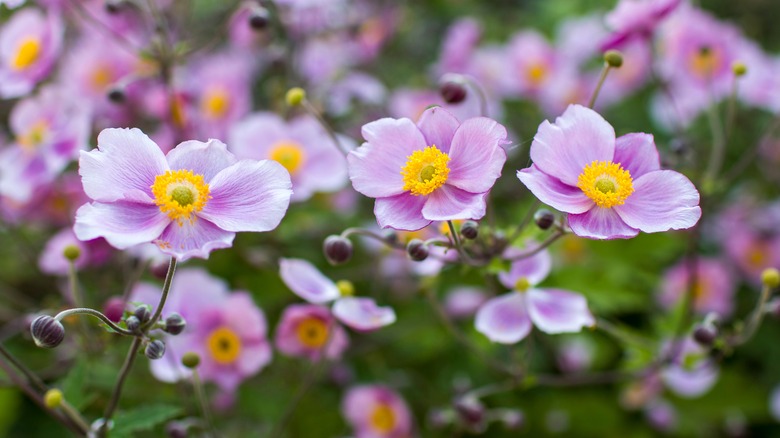
When they're young, make sure to water your Japanese anemones to help their roots establish. After that, you just need to make sure their soil is kept consistently moist. A layer of mulch works wonders for conserving moisture and keeping weeds from stealing the show. Snip off spent blooms if you want to stretch the season, though the seedheads bring their own kind of fall interest. In colder climates, trim your plants back after the frost and tuck them in with a blanket of mulch until spring. Every few years, divide a clump to keep them vigorous. With just a little care, these perennials will reward you with an encore performance every fall.
If you're not sure where your Japanese anemones should live, it's worth knowing that these plants can slip into almost any style of garden. Imagine them swaying at the edge of a border with a soft veil of color. They're just as at home tucked into a shady nook under the trees, or paired with other late-blooming favorites — like this shining, drought-tolerant perennial — creating a layered, textured display. For smaller spaces, compact types like Curtain Call or Fantasy deliver a big punch of flowers without the towering stems, making them perfect for patios or even container displays. Love fresh-cut bouquets? Their airy stems and delicate blooms hold up beautifully in vases, too. If you've ever thought about a moon garden, those crisp white blossoms practically glow at twilight. And now that you have a new fall bloom to enjoy, don't forget to transform those fallen leaves into fuel for your garden.