

For A Vibrant Spring Garden, Consider Planting This Colorful Flower During Fall
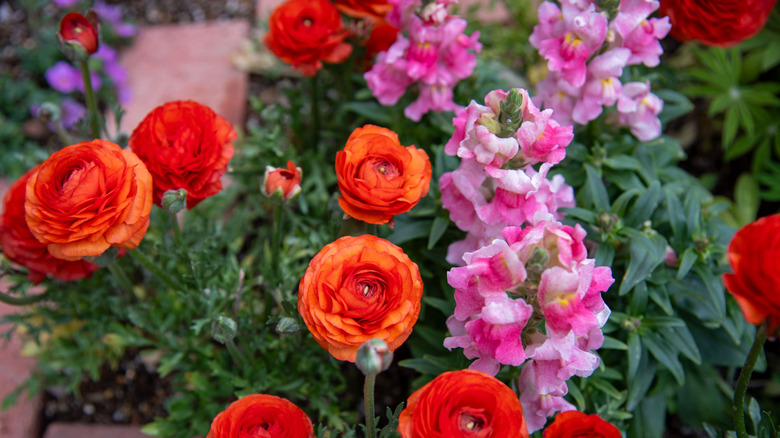
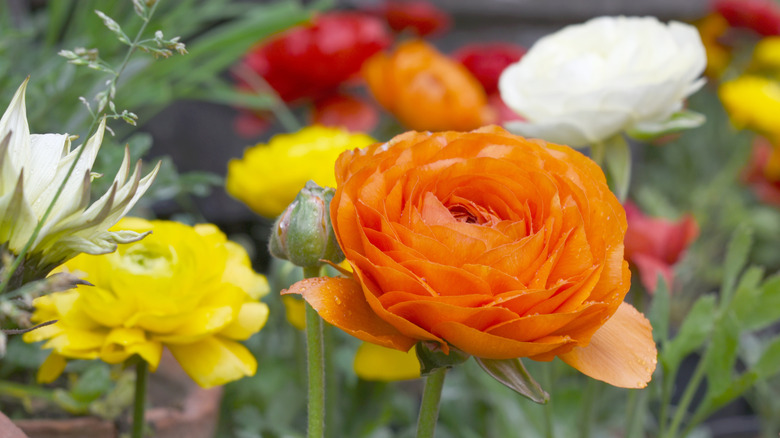
When it comes to fall gardening, you might be thinking about choosing a mum variety for your garden or grabbing some marigolds, but this is also the season for planting certain spring flowers. Many spring-blooming plants are best planted in the fall, and one of the loveliest options is the ranunculus. You may be most familiar with the ranunculus genus in the form of buttercups, but these flowers actually come in many different varieties. Some have multiple layers of delicate petals, and the colors can range from pastel white and pink to vibrant red and orange. They also come in different sizes, from long-stemmed kinds perfect for cut flowers to shorter ones, which make cute garden borders or container plants.
Ranunculus corms can be planted in early fall or late winter to early spring, depending on your climate. In USDA zones south of zone 6, the winter is mild enough for ranunculus plants to be grown as perennials. They can be planted in early fall and may even begin blooming in late winter. If you live in zone 6 or further north, you'll want to grow your ranunculus flowers as annuals or in containers. Plant them in late winter, after the worst of the cold has passed, for spring and summer flowers.
How to plant ranunculus flowers
To give your ranunculus plants the best start possible, make sure to select large, healthy corms. The corm is the source of stored energy for the plant, so large corms tend to grow larger, healthier plants. Smaller corms typically produce smaller, more delicate plants. Ranunculus corms are often dormant and dried when they arrive, so pre-soaking them before planting is recommended. Let the corms sit in a bowl of lukewarm water for up to four hours, running a light trickle from the faucet to prevent the water from stagnating. The corms should be noticeably thicker afterwards.
Next, prepare your planting site or containers. Ranunculus plants thrive in full sun and loose soil that allows for good airflow. Mix in compost to enrich the soil, or use rich potting soil if your plants will be in containers. For potted ranunculus flowers, remember that the adult plants will grow much larger than the corms, so choose your containers carefully. In addition to being large enough, make sure the containers have drainage holes and test them for cracks using the thud method.
Finally, plant your corms 3 to 6 inches apart. Spacing is important for proper air flow, as crowded ranunculus plants are prone to powdery mildew. Corms can be planted at 2 to 3 inches deep. Make sure they're oriented with the claw-shaped end facing down. You should begin to see growth quickly, and most corms start blooming roughly 90 days later after planting. If you're planting in early to mid-fall, that means you should start seeing flowers in late winter and continuing into spring.