

Plant This Vibrant Perennial In Your Fall Garden For Late-Winter Blooms
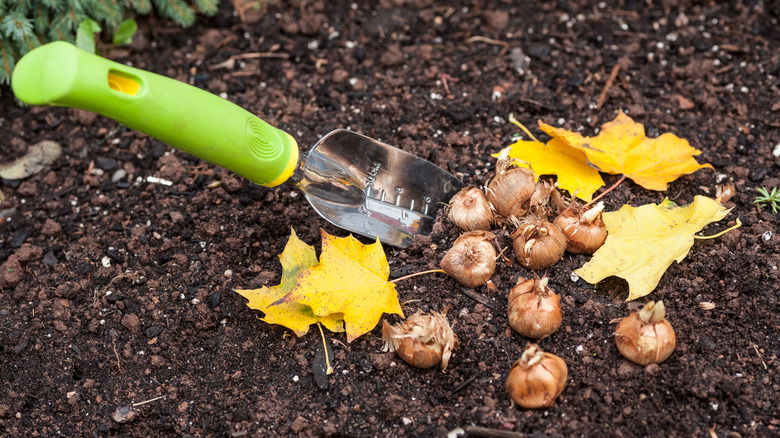
In fall, cooler temperatures offer the chance to tackle all sorts of yard work you might have put off when the weather was too hot. Meanwhile, in the garden, you may be focused on harvesting the fruits of your earlier labors. While you're probably not thinking about spring after summer just ended, now is exactly the time to think about the flower bulbs you'd like to plant for next year.
Fall is the best time of year to plant spring-blooming flowers, because the colder weather helps dormant plants develop their roots before springtime. Crocuses, however, can actually bloom as early as late winter. These perky perennials are some of the first flowering plants to pop up each year, often showing their colors from February and into March. They're small, at less than 6 inches high or wide, which makes them perfect for mass planting along a pathway, as a garden border, or even on your lawn.
The word "crocus" was once the Middle English term for "saffron plant." This is because saffron comes from the dried stigmas of Crocus sativus, which has glorious, deep orange stigmas inside its blooms. That particular variety derives from more than 3,000 years of cultivating carried out specifically to obtain the spice, which has a harvesting window of just a few weeks. Saffron is also sometimes used as a clothing dye.
How to plant crocus bulbs
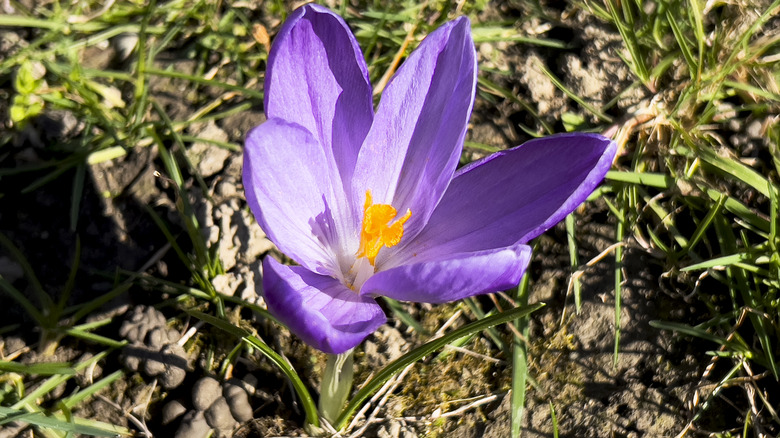
The ideal time to plant crocus bulbs — which are technically corms — is around September or October in northern regions of the U.S., or from October to November if you live in the south. It's vital to get them in the ground six to eight weeks before the hard frost comes, but you'll also need to make sure the soil is cooler than 60 degrees Fahrenheit when you plant them. Crocuses grow well in USDA hardiness zones 3 through 8, and they enjoy full sun or doppled shade. They also require well-draining soil, as the corms can easily rot. The flower petals come in shades of purple and white along with striped versions, offering a welcome display of color when the landscape is mostly drab in late winter. They're easy to sow and grow, making them a fuss-free plant that's great for beginning gardeners.
Space your crocus corms a few inches apart from one another if you're planting a number of them in the same area, such as along a path, or the visual effect will be lost due to their low height. Dig each hole about 2 to 3 inches deep, then bury the crocus corms in them, pointy side up. Water the area well after planting, then hold off for the rest of the season. Once they bloom in spring, they'll require a moderate amount of watering, especially if it hasn't rained for quite a while. Don't remove the foliage after the flowers bloom; let the grass-like growth die off naturally, at which point you can remove it or let it decompose naturally.
For another fragrant bloom that also signifies spring, consider planting hyacinths. These pleasant-smelling plants deter squirrels, so they make a nice addition to any garden that's beset by these cute yet cantankerous critters.