

How To Protect The Trees In Your Yard From Frost
We may receive a commission on purchases made from links.
Whether the Old Farmer's Almanac's winter weather forecast calls for a mild, moderate, or severe conditions, odds are there will be frost and likely a freeze at some point during the season for most areas of the country. When the inevitable cold snap comes, those heading outdoors will take pains to dress warmly for a winter hike. Around the house, they may take steps to protect the late season vegetables in their garden and drip water so the pipes don't freeze. What is often overlooked, however, is protecting the trees in your yard from frost. To make sure trees are not damaged from freezing conditions, you should help both the trees and the soil around them stay warm. This is particularly important for young trees still getting established.
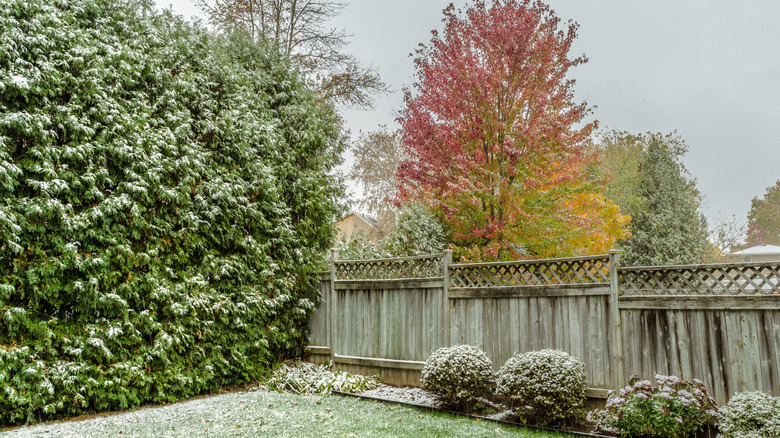
Although most people assume it is frost or snow contacting the leaves and branches of trees that cause the most harm, in reality, that can often benefit a tree in severe cold conditions. With the exception of extremely heavy snow buildups, which can cause limbs to snap and break, trees benefit from having a layer of frost or snow, as it helps insulate them from colder air temperatures. Additionally, the dry air that typically accompanies the high pressure systems that are cold fronts can make trees more apt to be damaged by dropping temperatures. This applies to tissue within not just the leaves, trunk, and branches, but also the roots. With that in mind, it's worth it to keep trees and soil watered and warm to limit the damage done by frost and freezes.
Ways to keep trees warm when the temperature drops
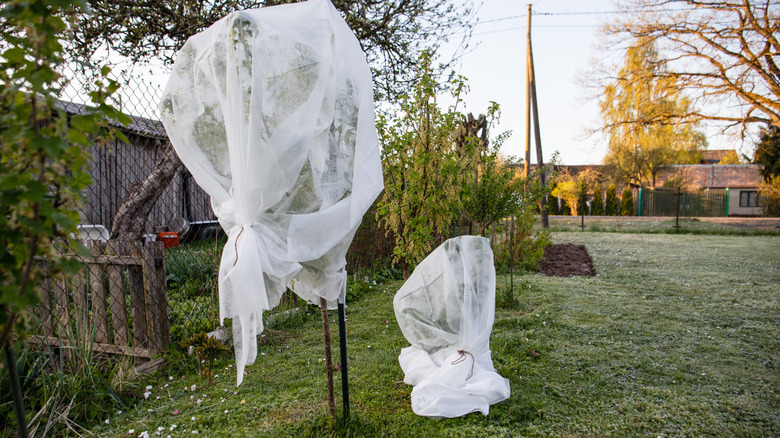
When it comes to protecting trees, most people think first of the limbs and leaves. For trees that are young or small enough, it is possible to wrap the canopy with material such as burlap or breathable fabric. This can be done by loosely laying the material over the tree and securing it with twine or bungee cord wrapped around the outside. Extra large frost covers, like the 84-inch tree jacket from AgFabric can be slipped over small trees. This can both insulate the tree and help avoid a heavy buildup of early snow, which could snap branches. Burlap or tree guards wrapped around the tree trunk also add insulation, sun, and wind protection. It is important to remove these covers when temperatures rise, as they can trap too much heat, which can damage the tree.
As important as covering the tops of trees is, it is even more important to take care of the soil surrounding them. There are several ways to ensure the soil stays warm. The most important of these is to make sure the soil is well watered, as moist soil will absorb and retain heat better than dry ground. Even if you're not watering your lawn, you should water around trees both before and after a frost or freeze. It helps to remove any grass, turf, or weeds from around the base of the tree, as this will help the ground absorb heat. While watering and removing weeds, check for and fill any cracks in the soil you see. You can also insulate the ground by adding a layer of mulch. Usually 2 to 4 inches of wood mulch will do the trick, leaving a 6-inch donut uncovered around the tree so roots can breathe.