

The Best Method For Pruning Or Deadheading Mums In Fall
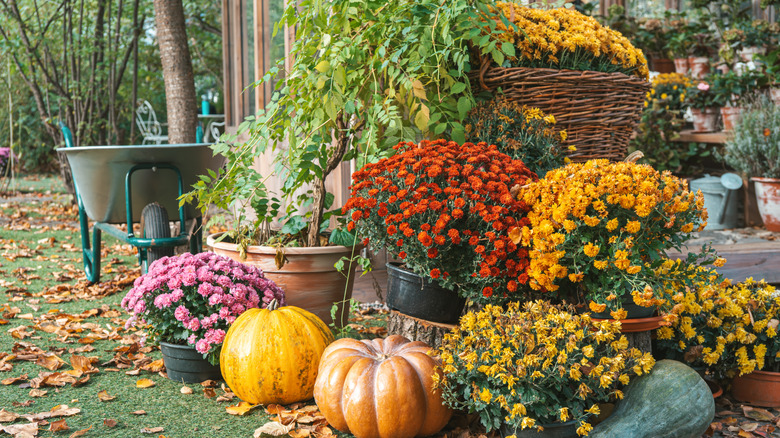
If there's one plant that could be the official flower of fall, it's the chrysanthemum, better known as mums. It's a nearly fuss-free plant for beginning gardeners too. In pots, these colorful, prolific plants are a staple at garden centers and even grocery stores starting in late summer. Both potted and in-the-ground mums produce mounds of color thanks to their numerous blooms, but the blooms don't last forever. Fortunately, pruning or deadheading spent blooms with shears is one way to keep the color coming during autumn, allowing the plant to focus its energy on active growth. Removing the old blooms also makes the plant more showy, as the buds that haven't yet bloomed have room to expand.
Frequent deadheading is the way to go, as it'll take only moments of your time in each instance while ensuring the plant always looks its best. As with just about all plant maintenance, pruning and deadheading should be done with care to keep the plant at its healthiest. And if you keep your mums in pots to display them on the patio or porch steps, repotting may be the key to helping your mums thrive, as they're often rootbound in their original nursery pots.
It also important to note that the timing for deadheading mums that have been growing in a garden all year can be a bit different than dealing with potted mums — including ones you've purchased this year with intent to plant since they could be at different phases of growth. Growers generally sell mums that are about to reach their maximum blooming stage, so there's a fair chance you'll need to deadhead some spent blooms on your new mums fairly soon. Though you could simply pinch the spent blooms off with your fingers, it's healthiest for the plant if you use sharp shears rather than just tearing the stems off below the blooms.
How to care for your mums in fall
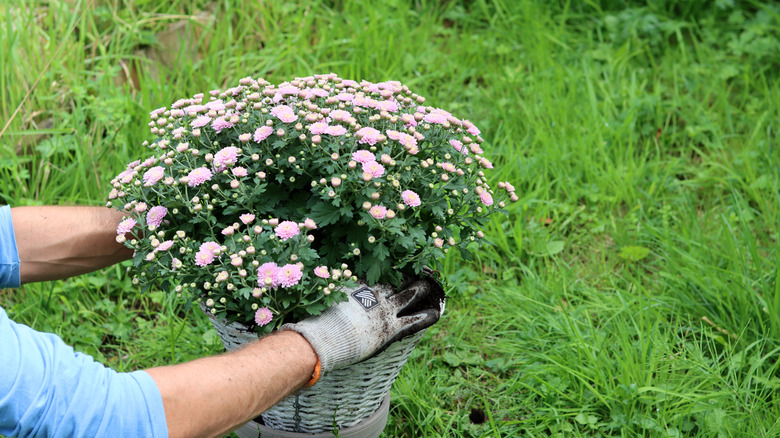
If you've recently pruned other plants, sanitizing those shears first will help prevent the spread of plant problems. Sanitize them by dipping them in a mixture of 1 part bleach to 9 parts water. Snip off blooms that are dead or mostly withered and brown, cutting the stem well below the flower, above the next set of leaves. Removing old blooms encourages the plant to grow new ones.
Next, put the spent blooms in a bucket so you don't have to pick them up later. Add them to the compost pile or yard waste bag. Both potted and planted mums need about 6 full hours of sunlight each day to thrive, so keep them in a sunny location. Feel free to move potted mums to sunnier spots as the days grow shorter.
Mums you've purchased this year are usually already pruned by the grower, so there's no need to do it again this year, even at the end of the growing season. For mums already established in the garden, prune or cut back their dried stems in spring by bending the stems an inch or two from the ground. If they're brittle and dead, they'll snap off; if they're still springy, they could perk back up and should be left intact. And if you're looking for an additional splash of fall color that benefits pollinators, add some goldenrod alongside your mums.