

The Overlooked Alaska National Park That's A Great Spot For Your Next Winter Adventure
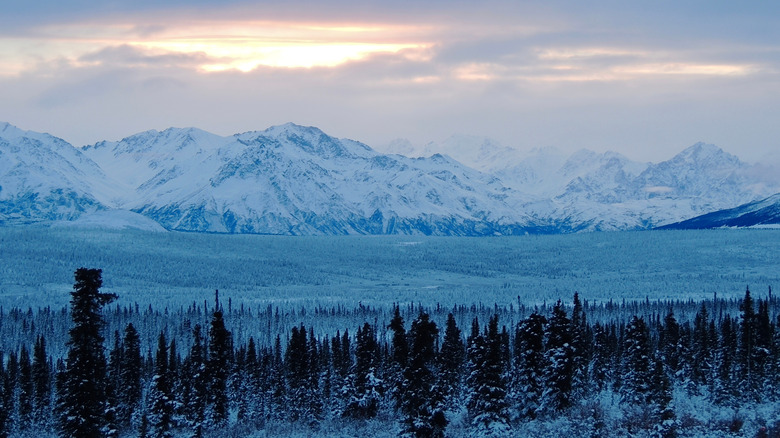
Winter in Alaska isn't for the faint of heart, but traveling to the remote Wrangell-St. Elias National Park and Preserve offers a wondrous adventure of mountainous snowscapes, glaciers, copious wildlife watching, dramatic lighting, snowshoeing, and cross-country skiing. The cherry on top would be catching a magical display of the northern lights at night. This 13 million-acre national park (billed as the country's largest) isn't the most accessible (even in the summer), so adventuring here during the winter makes for an even more remote experience. But the rewards are as unique as they are beautiful.
Winter temperatures in the awe-inspiring Wrangel-Saint Elias National Park range from -50 degrees Fahrenheit at night to 7 above during the daylight hours. Speaking of daylight, it's not much, but the effect is stunning. Taking a winter holiday to this wonderland will provide a photographer's dreamworld of almost constant alpenglow. This is because the sun barely peaks above the horizon for its short 5-6 hours of average daylight in december.
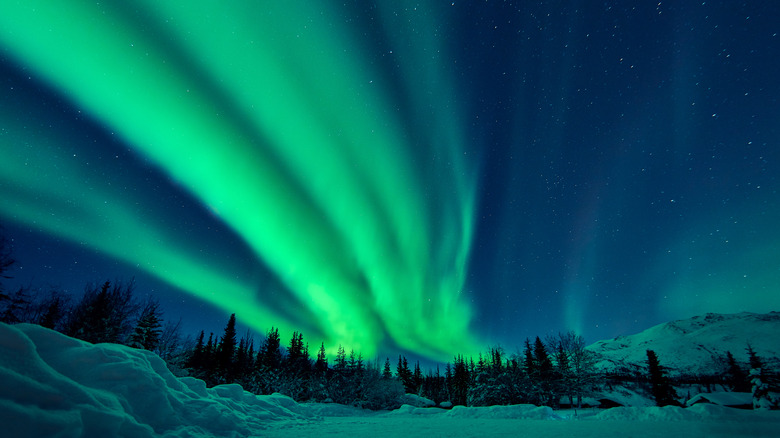
The Aurora Borealis, or northern lights, is another perk of visiting in the winter. While stunning images of glaciers, mountains, and snowcapped evergreens are abundant in the park, keep the camera out after the sun goes behind the mountains. If the skies are clear, getting perfect pictures of the aurora borealis dancing across the night skies is a bucket-list-worthy experience.
Plan ahead to safely enjoy extreme winter conditions
Visiting Wrangell-St. Elias National Park in the winter will provide a pristine, raw, and solitary experience. The trade-off for feeling like you have the nation's largest national park to yourself is that amenities are limited. What is provided in the winter are two occasionally maintained roads — Nabesna and McCarthy — and that's about it. The visitor centers and ranger stations will be closed, so it is best to be ready to build and survive in a snow shelter should you get stranded.
For a memorable winter visit to the Wrangells, be prepared to spend time in the cold. Besides hand warmers, parkas, and emergency sources of heat, bring cross-country skis or snowshoes to wander snowy trails like the Valdez or Boreal Forest Trail near Copper Center. Other trails can be accessed by way of the Nabesna Road. All trails are available to hikers, snowshoers, and skiers. Snowmachines are legal anywhere in the park as long as they don't negatively impact natural resources or wildlife. Animal trapping is also legal, so stick to the trails.
The other benefit of visiting this park in the off-season is having a chance to spot wildlife. Dall's sheep, mountain goats, caribou, wolves, foxes, snowshoe hares, and moose might all be spotted in this wild place. Taking a top-quality wildlife camera and a tripod might be on the shopping list for maximizing your time in the winter wonderland of Wrangell-St.Elias National Park (and thanks to recent legislation, most photographers don't need to worry about permitting). By preparing for all scenarios and conditions, visiting this overlooked park in the winter will provide an incredible experience that many people never get to see.