

What To Know Before Planting Potatoes In Your Fall Garden
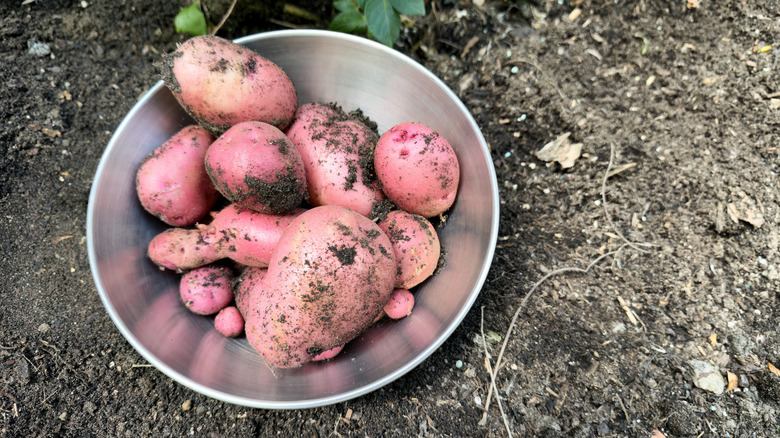
Potatoes might not be the flashiest crop in the garden, but these versatile spuds can be roasted, mashed, or baked, making them both practical and delicious. While planting potatoes in early spring can deliver a payoff in summer, potatoes, just like some other cool-season vegetables, can be planted in late summer or early fall for harvest in late fall or early winter. All you need to do is make sure your spuds have enough time to mature before the first frost.
If you manage to do this, the fall can do wonders for your potatoes. For gardeners who missed the spring planting window — or those who just want to try for a second harvest — this is a low-stress, high-reward way to keep your produce growing in regions like the Mid-Atlantic, the Lower Atlantic, the Gulf Coast, and the coastal Pacific. Cooler temperatures are also perfect for tuber formation, allowing plants to flourish while weeds remain low, and you can maximize yield without many of the pests that cause headaches in spring.
How to plant potatoes for a fall harvest
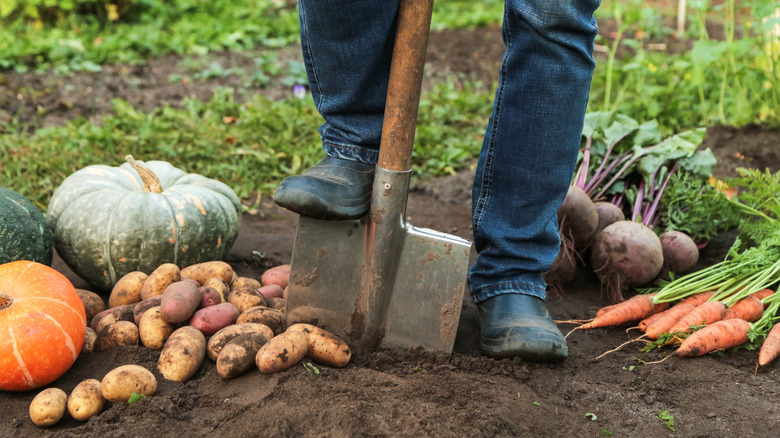
The first step to success when it comes to growing potatoes in fall is choosing the right seed potato. For fall planting, short-season or mid-season varieties like Yukon Gold, Purple Viking, and Dark Red Norland are the MVPs, as they'll grow their tubers before the frost tries to crash the party. Timing matters, so aim to get your seeds in the ground in that late summer window when soil temperatures are 45 degrees Fahrenheit or warmer, giving your plants enough time to bulk up underground before the first freeze.
Next, give your potatoes a happy home. One of the biggest mistakes beginner gardeners make is putting a garden in the wrong place. Pick a spot with well-draining soil that receives at least six to eight hours of direct sunlight. If heavy clay is a problem, loosen things up by mixing in some compost or peat moss. Next, dig a shallow hole or trench about 4 inches deep and sprinkle in some organic fertilizer for a nutrient boost. Place each seed potato eye-side up, spacing them about 1 foot apart, then gently cover them with soil. Keep things just a touch damp until the green shoots peek through. Avoid soggy soil, so your seeds don't rot before they even get started.
Once your potato plants are up and growing, lay down 2 to 4 inches of straw or mulch to protect them from sunburn and frost. Keep an eye on the thermometer: Potatoes don't do well below 28 degrees Fahrenheit, so plan to harvest before temperatures get too cold. And if you're still feeling that gardening bug, carrots are another crop you can plant in September and harvest in fall.