

What To Do If You Spot An Invasive Species In A National Park
Invasive species can spread rapidly, causing significant damage to the native ecosystem. If you spot an invasive plant, such as an ornamental grass species, on your own property, you can remove it or work to control its spread. What should you do if you find an invasive species on property other than your own? Of course, if the land is private, you can inform the owner so they can take care of it. National parks are a different story, though. They are a type of public land owned by the federal government. One of the functions they serve is the preservation of the native ecosystem, and invasive species can be quite harmful to these parks.
If you spot an invasive species at a national park, the first thing you should do is document it. These parks can be enormous, so simply knowing that an invasive species is present somewhere won't be of much help to the rangers. Write down where you saw it in as much detail as you can. Providing GPS coordinates is ideal, but even noting which trail you were on and roughly where you were on it is also helpful. Be sure to include the name of the plant and take pictures so rangers can see details like its size and exact location.
Once you've documented the plant, give the information to the park rangers. Some parks may ask you to use a specific app or program, such as iNaturalist, to make your report. If you're unsure of what to do, stop by a ranger station to ask for guidance.
Why removing invasive species yourself is not recommended
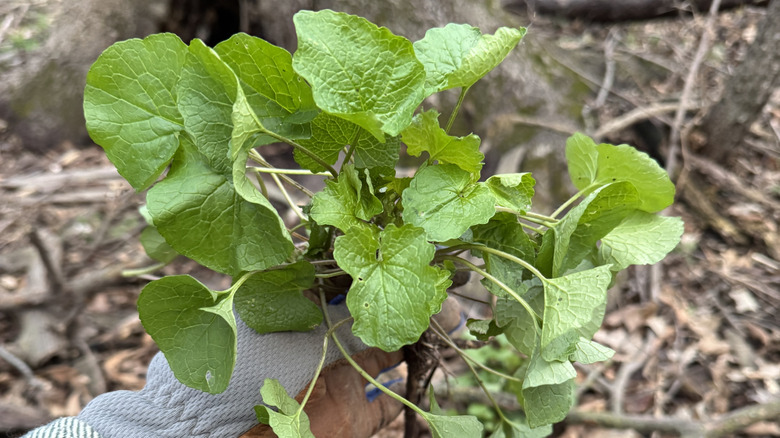
Walking away from an invasive species may be frustrating, but it's best not to try to remove it yourself. Firstly, it's illegal. The laws in national parks differ from those elsewhere, and it is against the rules to dig up, pick, or otherwise remove plants. Breaking these rules may result in a fine or even jail time. There are also other reasons you should avoid removing the plant yourself, aside from possibly facing legal consequences.
Many national parks have teams of workers, known as Invasive Plant Management Teams (IPMT), to control the spread of invasive plants. They monitor areas for invading flora, remove it, and restore the area afterward. When it comes to removal, these teams employ different strategies to eradicate them, depending on the specific plant and its location. The reason for implementing special strategies is that pulling up a plant doesn't always work and can sometimes make things worse. For example, the beautiful but invasive comfrey has deep roots, and it regrows easily if any roots are left in the ground. If you take matters into your own hands, the IPMT won't know to monitor these areas for new growth, and the spread could quickly get out of hand.
Finally, pulling up invasive species yourself may be interfering with research. Some national parks collect data on invasive species, such as the number and types of plants, their distribution, and the effectiveness of control methods. There are even research projects looking at the relationships between invasive plants and native ones. While one missing plant may not seem significant, hundreds of millions of people visit national parks each year, making the potential for research interference substantial.