

How To Prepare Your Compost Bins For Winter
We may receive a commission on purchases made from links.
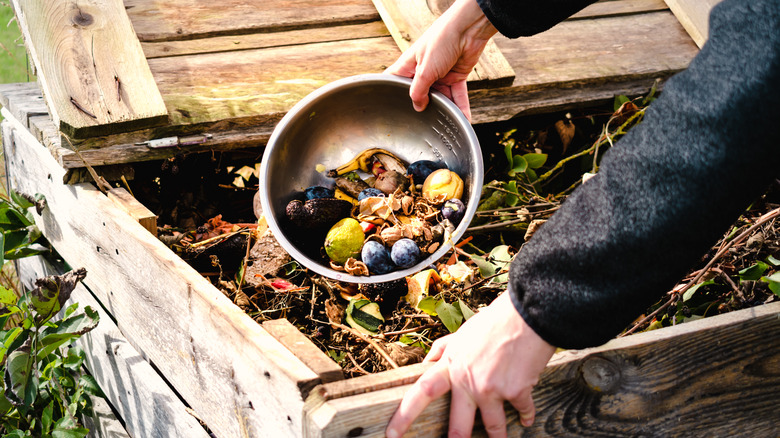
Winter pauses plant growth, but it doesn't stop microbes from breaking down the organic material you put in your compost bin in the fall. Though microbes slow their processes as temperatures drop, they're still willing to go to work on fruit peels, cardboard, grass clippings, and other compostable materials. You can lend them a hand by preparing your compost bin for the cold season. After removing finished compost to make room for new stuff for the microbes to munch, take a few steps to prevent your compost pile from freezing, which is the only cold weather impact that will make the decomposition process grind to a halt. When winter's over and temperatures rise, the microbes will pick up the pace again.
Whether you've built a budget-friendly composter from scrap wood or purchased a product such as the Vevor 43-gallon dual-chamber composting tumbler, your pile of decomposing matter will benefit from insulation if your yard experiences frigid winter weather. Help out your bin's microorganisms by adding insulation to their home. Straw bales and bags of fallen leaves work well for this purpose. Use these to build a wall around the exterior of the bin, or line the bin's interior with about a foot of wood chips, sawdust, or leaves. Preventing the pile from freezing not only helps keep essential microorganisms alive all winter, it can keep compost helpers such as pill bugs and earthworms warm enough to survive, too. Finally mind what you add to the pile in the winter, just as you do the rest of the year, avoiding things that you should never try to compost.
More ways to keep your compost bin warm in the winter
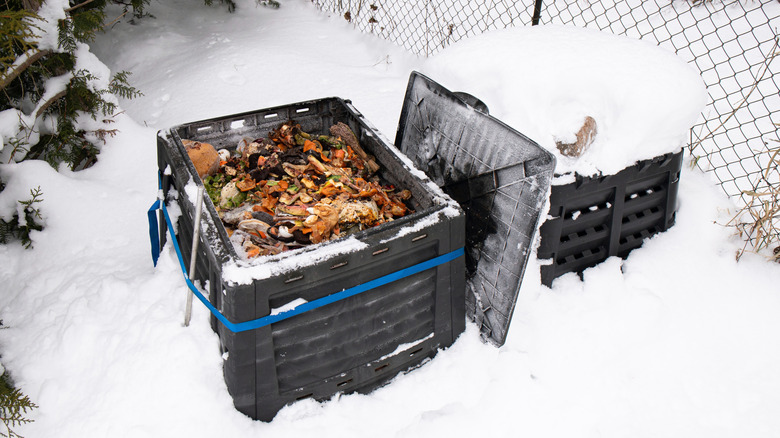
Though insulating each compost bin goes a long way in keeping the microbes inside healthy, taking a few other measures to support these creatures is wise. First, make sure you're adding about three times as many carbon-rich "brown" compostables to the pile as nitrogen-rich "green" items. Green materials such as vegetable skins and coffee grounds are probably easy to find in your house. Consider setting aside dried leaves and pine needles during fall clean-up to ensure you have plenty of carbon for the pile throughout the winter. You could even save dead flowers for your compost pile and its carbon stockpile. These carbon-packed materials are also good at encouraging air to move through the pile. The microorganisms that are best for powering the composting process need oxygen to survive, and getting the carbon-to-nitrogen ratio right creates an environment where they can thrive. It also helps cut down odors.
Second, reduce how often you turn or tumble your compost pile when cold weather arrives, and consider minimal turns. This helps it retain the warmth its compost-making residents need. If you live somewhere where winter gets very cold for an extended period, wait until spring to mix the pile's contents.
Finally, when adding new materials to a winter compost pile, cut them up so they'll decompose faster. You should also spritz the pile with water if it's starting to look parched. Without enough moisture, its microbes will struggle to move around or reproduce. That said, the pile's moisture needs should be lower in the winter since the bacteria that are most active the rest of the year are moving slowly and using less water than usual. If it's soggy instead of damp, soak up extra water with additional cardboard or leaves.