

The Must-Plant Herb That'll Help Keep Your Soil Happy And Prevent Erosion
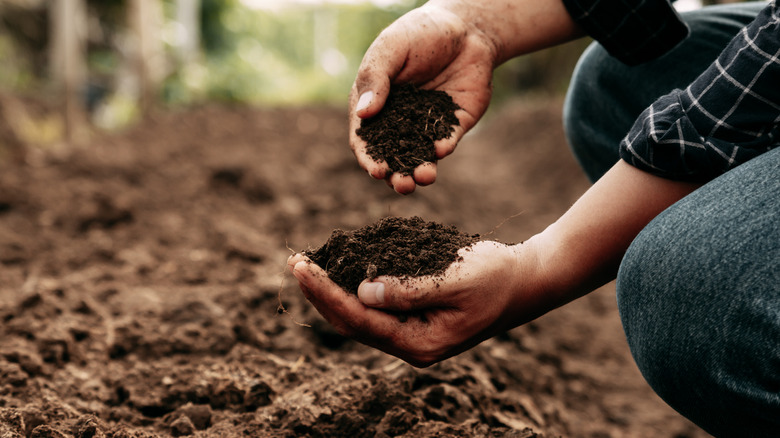
If your soil is eroding and unhealthy, the surprising solution may be found in a common kitchen herb — rosemary. One reason rosemary benefits soil is because of its extensive root systems, which can help secure the soil and prevent erosion. This can be especially helpful for sloped areas of your yard. The root systems help improve the drainage around the plant, which can help reduce runoff. Rosemary can also increase the nutritional value of your soil and deter weeds due to its capability to increase the number of soil nematodes (microscopic worms) around it. The nematodes, not the rosemary itself, are actually responsible for the soil benefits. They eat bacteria and fungi and release nutrients that are good for your plants.
Rosemary also helps keep bugs out of your garden, and its flowers serve as a strong attractor for pollinators, such as bees, butterflies, and hummingbirds. It's also a fantastic companion plant to dozens of fruits, vegetables, herbs, and flowers. When planning your herb garden, just be careful not to plant rosemary with tomatoes, basil, mint, pumpkins, or cucumbers, as they have incompatible watering needs and compete too much for resources.
Rosemary is also known for being one of the medicinal plants that people grow in gardens. It has long been used to support the immune system, improve digestive health, relieve pain, and improve cognitive function. And, of course, it's most well-known for its culinary uses, as it adds flavor and aroma to a number of dishes. For all of its soil-boosting and culinary benefits, rosemary is surprisingly easy to grow.
How to grow and harvest rosemary
While rosemary seeds are those you could consider starting indoors before spring officially begins if you live in a colder climate, it's a relatively easy herb to plant and grow outside in most environments. The best time to plant rosemary is in the spring, taking care to plant late enough that there is no risk of freezing or frost. You will want to put your rosemary plants in full sun and in dry, well-draining soil. If you are looking to maximize its usefulness as a companion plant and pest deterrent, plant it with your other vegetables (just not basil, mint, tomatoes, pumpkins, or cucumbers). As previously mentioned, planting rosemary on slopes where erosion is an issue is a great idea.
Maintaining this plant once it is grown is quite easy, as long as you planted it in the proper conditions. As rosemary prefers drier soil, you will want to be careful not to overwater your rosemary. Also, refrain from over-fertilizing your rosemary, as you will reduce the aromas produced by the leaves, and they won't carry as much flavor. If you want to feed it, you can lightly apply compost around the herb every spring.
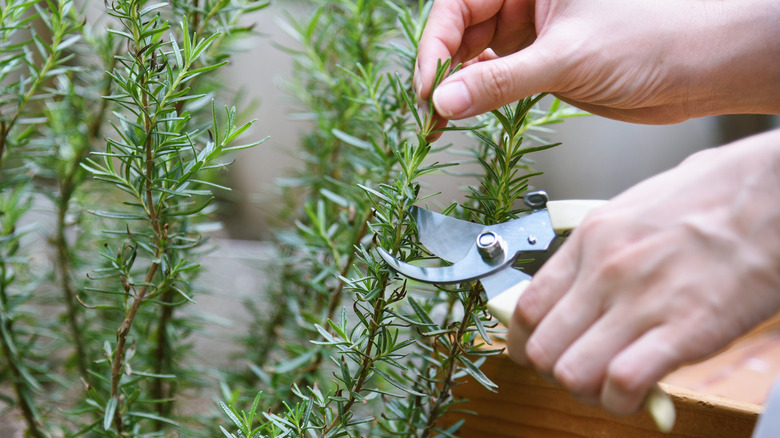
You should begin to harvest your rosemary once it reaches about 12 inches tall. Make sure to use sharp scissors and harvest in the morning, which will provide the best leaves. You should cut right above a node, which will encourage more and bushier growth from your rosemary. Never harvest more than a third of the plant, as you don't want to stunt the growth of your rosemary.