

Think Twice Before Pruning These Plants During The Winter Months
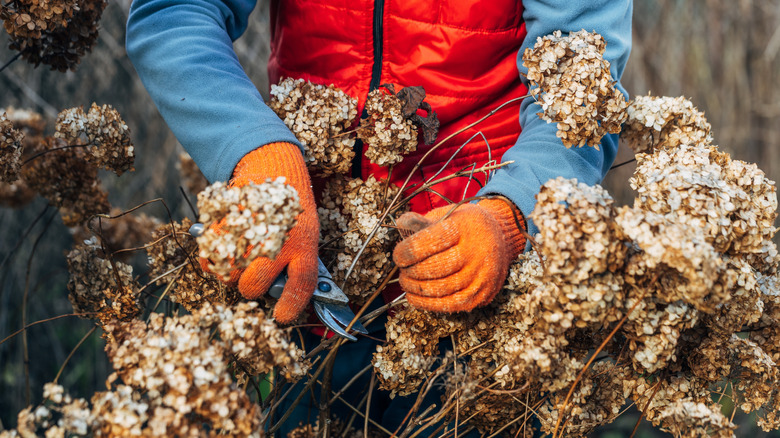
Pruning your shrubs and trees seems like a sensible use of your time during the winter months. When they're bereft of the leaves that so thickly adorned them during the summer, and while much of the rest of your garden is lying dormant, it seems like the obvious thing to do. However, while there are plenty of common plants that benefit from a good prune during the colder months, there are many others to which pruning in the winter can actually do more harm than good.
At this time of year, certain trees are gearing up for new growth. This means that sap flow is high, which in turn means that pruning can lead to serious bleeding. What's more, for plants whose flower buds grow on the previous season's growth, pruning risks destroying any chances of flowering altogether — a lesson you'd probably prefer not to learn the hard way. Finally, not all members of the same plant family are likely to flower at the same time of year, nor with the same cadence. This makes understanding the particular varieties you have in your garden — and the times at which they should be pruned — absolutely critical.
Oakleaf hydrangea (Hydrangea quercifolia)
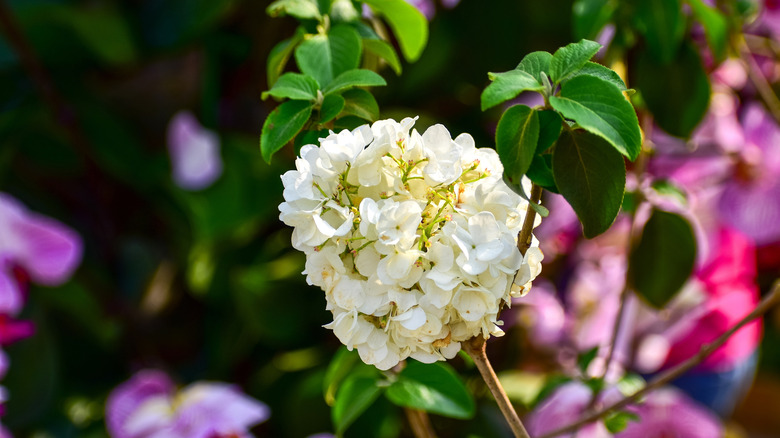
An untimely prune is one of the most common causes for hydrangeas not blooming. This is especially true for oakleaf hydrangeas (Hydrangea quercifolia), which develop the buds for next year's growth below its most recent flowers. In other words, those faded flowers and leggy stems that are so tempting to lop off with a pair of snips are, in fact, critical to protecting next year's bloom, especially in areas that experience bitter winters.
Even if you experience relatively mild winters, it's still worth holding off on pruning during the winter. In fact, regardless of your climate, not pruning when it's cold is one of the top winter care tips for hydrangeas. While the new growth may be able to survive a milder winter climate, they're unlikely to develop into flowers next year if you accidentally chop them off. Oakleaf hydrangeas are particularly intolerant to cold exposure and thrive in USDA hardiness zones 5 through 9. This hydrangea type blooms on growth established in the previous season, so accidental amputation of new growth is easily done.
The best thing you can do for your hydrangea is to prune them in summer, immediately after they've finished flowering. This affords you the chance to remove any dead or damaged wood, cut the bush back, and shape it to your liking — all before those precious new buds begin to form. And if you do experience particularly bitter winters, be sure to leave those spent flowerheads in place. When the temperatures start to drop, just add some mulch to the flower bed to protect it from the worst of the frosts, and then leave well alone!
Lavender (Lavandula spp.)
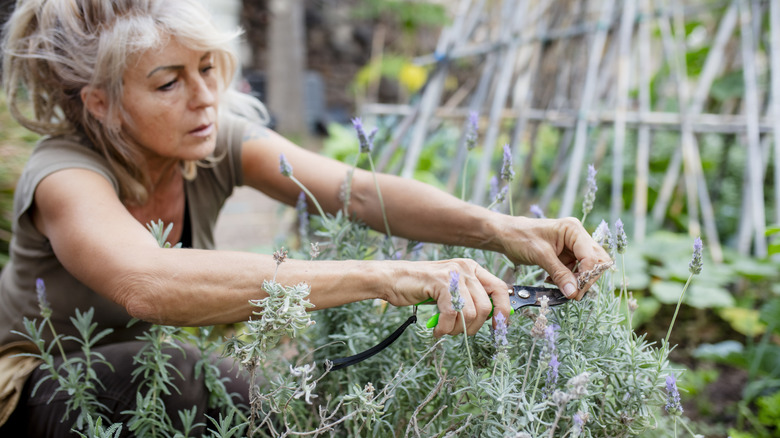
Lavender (Lavandula spp.) is one of several sweet smelling flowers that make your garden smell like heaven, so it's not surprising they're so popular. What trips up many home horticulturalists with this particular herb is when it should be pruned. The answer? Not during the winter.
In the colder months, lavender becomes dormant. During this stage, its foliage can change color, losing its summertime luster, which can lead uninitiated lavender lovers to reach for the pruning shears. If this temptation sounds familiar, don't do it. This dormant stage is a natural part of the lavender's lifecycle, one during which growth slows almost to a halt. As one of the many perennials that won't leave your garden once established, it generally springs happily back to life once the weather begins to warm, but only if left alone. If you prune it during the winter, you risk damaging it by exposing it to the cold at a time when it's unable to grow and repair itself.
If you have hardy lavenders like English lavender (Lavandula angustifolia) in zones 5 through 9, or less-hardy lavenders in warmer zones 6-11 like Spanish lavender (Lavandula stoechas), you should prune these in late summer — either towards the end of August or at the beginning of September — once your plant has finished flowering. Doing so while the plant is still active gives it chance to harden off the pruned areas ahead of its dormant phase, ensuring it's in ship-shape to cope with woeful winter weather.
Damask roses (Rosa damascena)
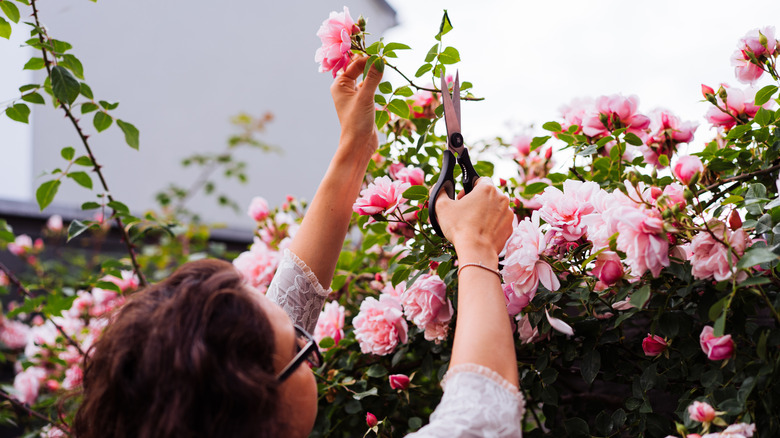
Infusing the atmosphere with an intoxicating, complex perfume, Damask roses (Rosa damascena) are unsurprisingly popular. They can also be quite easy to grow thanks to their natural hardiness and cold tolerance, thriving in hardiness zones 4 through 9. And did you know that certain varieties bloom more than once throughout the year, often adding several flushes of color to your landscape?
In order to get the best out of your roses, it's important to prune them at the right time. The general guidance is to prune summer-flowering Damask varieties once the flowers begin to fade — usually around late July. Since these roses flower on old growth, it's important not to leave it any later, as you can risk reducing the rose's visual impact the next season. Ideally, you should only prune to remove dead or damaged wood, and to limit leggy growth. Similarly to late-pruning, hard-pruning can also reduce the plant's impact in the next flowering season.
If you have an autumn-flowering Damask rose, lucky you! These beautiful roses often flower in the summer and again in the autumn, extending the season in which they shower your garden with color. Just know that this cadence of flowering necessitates a slightly different pruning approach than its summer-flowering cousin. Like summer-flowering roses, avoid pruning autumn Damasks in the thick of winter, but for a different reason: Pruning encourages the plant to grow new shoots, which may struggle to cope with hard winter frosts. Instead, wait for late winter after the last frost, or early spring. By avoiding the worst of the cold, timing your prune before new growth begins, and ensuring that you don't over-prune your plant, you can continue to enjoy multiple flourishes of scent and spectacular color from this popular rose.
Rosemary (Salvia rosmarinus)
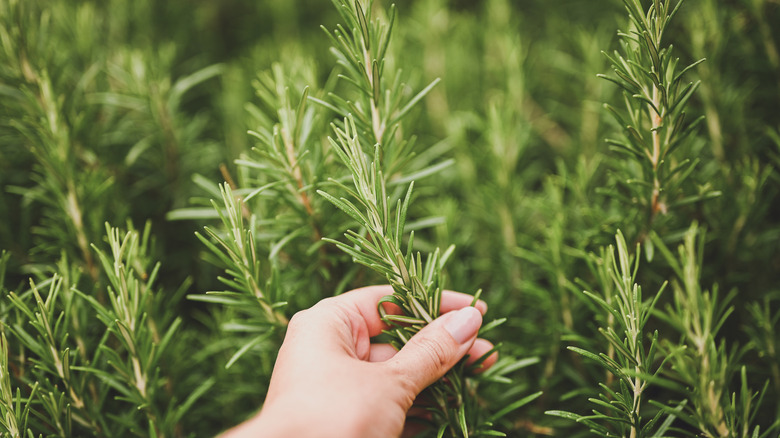
Other than ticks and mosquitoes, who doesn't absolutely adore the smell of rosemary (Salvia rosmarinus)? In fact, the benefits of this prolific and hardy herb are many. Not only can you use rosemary to repel bugs in your garden, but you can also cook with it, admire its verdant growth, and enjoy its distinct, aromatic smell season after season. However, in order to keep it flourishing for years to come, it's important to know how, and when, to prune it.
Much of the country will grow rosemary in pots as an annual. But for those lucky enough to live in zones 8 through 10, rosemary will thrive as a shrubby, low-growing bush. Left unpruned, and in their plight for more sunshine, rosemary plants can become woody and bare at the base. However, they also don't stand up well to heavy pruning, which means that a light and regular regimen with your sharpest shears is key to ensuring healthy, bushy growth. As for when to prune, it depends.
If the winters in your area are relatively mild, then a winter prune can actually help ensure abundant new growth come springtime. However, if you live in an area that experiences bitter bouts of cold weather, then consider pruning your plant either in the spring or early summer, once the plant's flowers have started fading. Whenever rosemary is pruned, it will begin to shoot new growth, which needs time to harden off. If this new growth is exposed to severe cold and frost, it's unlikely to survive.
Jasmine (Jasminum spp.)
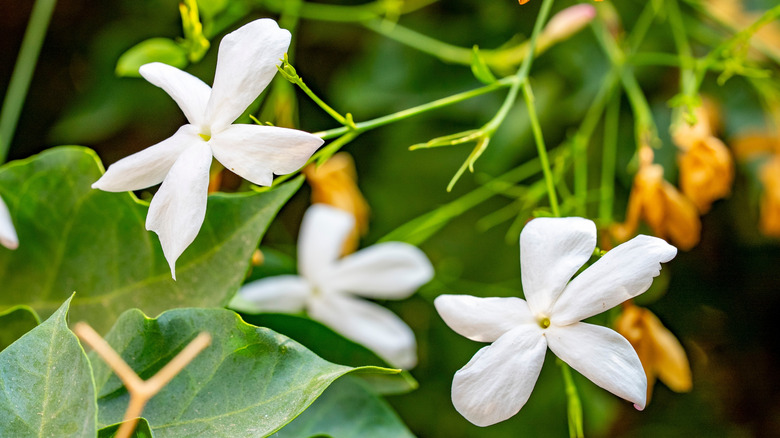
With their undeniably uplifting natural scent and gorgeous displays of white, yellow, cream and (sometimes) pale pink flowers, jasmine (Jasminum spp.) is another plant that deserves special care and attention when it comes to pruning. And, as with a number of other plant families, the way in which you prune depends largely on which variety you're working with.
Broadly speaking, jasmine can be split into two species: winter- and summer-flowering. Winter-flowering jasmine (Jasminum nudiflorum) flourishes in zones 6-10 and can bring bright pops of color to your garden in the otherwise sparse months between November and March. Summer-flowering jasmine (Jasminum officinale) blooms at its best in the warmer months, usually from June and, depending on your climate (it likes zones 7-10), all the way through to early autumn.
So, when should you prune them? Well, in both cases, the best time to prune is immediately after your jasmine has finished flowering. For summer varieties, this is usually late summer or early autumn. Timing it this way ensures that any new growth has time to mature ahead of the bitter winter months. For winter-flowering varieties, early spring is usually the best time.While the rest of spring and the ensuing summer months are unlikely to kill off new growth on winter-growing varieties, waiting longer than necessary to prune your jasmine risks accidentally chopping away next year's flower buds.
Birch trees (Betula spp.)
Regardless of the type of tree you have in your garden, if it's deciduous, it's usually best to prune them when they're in their dormant phase. This natural stage in their lifecycle is the time at which they're least active, which is important to remember if you hope to minimize damage from pruning.
While many species of tree can usually stand up to the test of your sharpest tools, if they're not dormant, then they are likely to bleed sap — some more than others. This is not usually harmful. However, significant bleeding can cause a number of knock-on issues. For one, the deliciously syrupy sap is a boon to insects like bees, butterflies, wasps, and beetles, which can wreak further damage upon your tree. And since the sap is effectively the tree's lifeblood, if caused to bleed heavily and for a sustained period of time, bleeding can eventually lead to death.
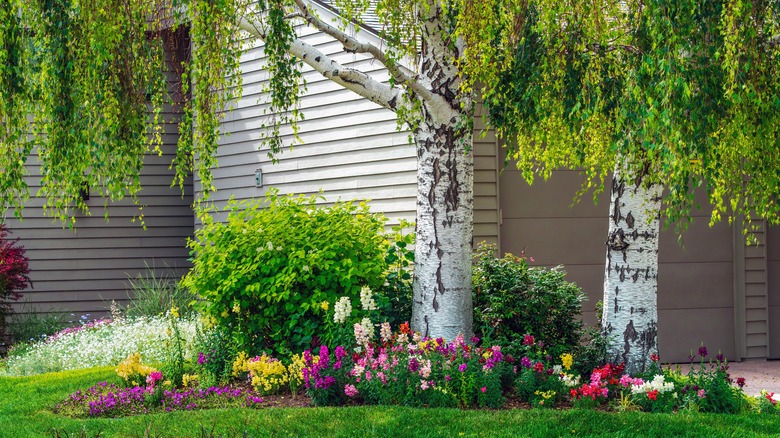
With this in mind — plus the fact that birch trees (Betula spp.) are especially well-known for their heavy bleeding tendencies — it's very important to time your pruning properly. Specifically, aim to prune your birch tree between late summer and before the middle of winter. Once late winter sets in, birches begin preparing for new growth. This means that sap flow is high, making pruning at this time a decidedly risky business. It's also worth noting that hard pruning generally isn't recommended for birch trees. In generally, you're just looking to remove diseased or damaged branches, or individual branches creating issues or hazards.
Magnolias (Magnolia grandiflora)
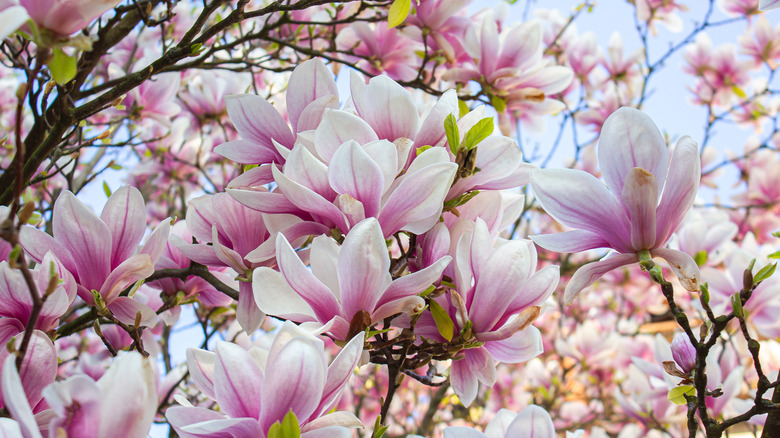
Magnolias come in both deciduous and evergreen varieties, but what both have in common is that they should not be pruned during the winter. The time at which you prune yours depends on the specific species and the way in which it grows. Evergreen varieties like the southern magnolia (Magnolia grandiflora), for example, should be pruned during the spring as new growth starts, while deciduous types should be trimmed in late summer. And if you have a wall-trained magnolia, aim to prune it in the summer once it's finished flowering.
In all cases, pruning too early can cause you to accidentally remove next season's growth. Really, the only real need to prune a magnolia, especially plants that are mature and well-established, is to cut back and remove any dead, damaged, or infected wood. The only (sort-of) exception is with wall-trained magnolias, which occasionally need a "training" trim to encourage them to grow upwards, not outwards.
Clematis (Clematis spp.)
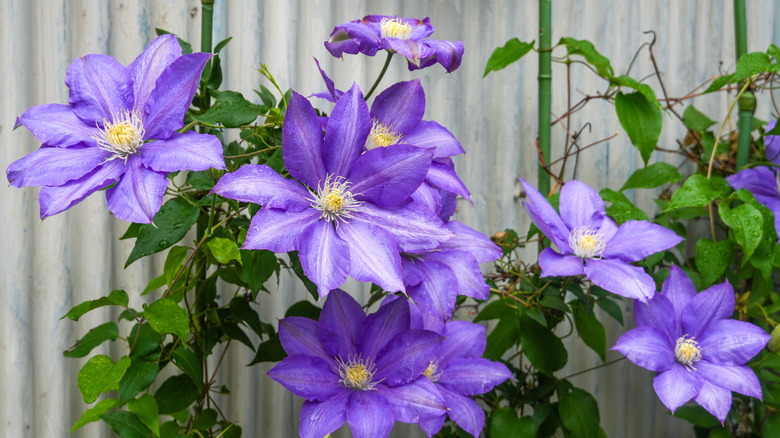
If you have one of the dozens of clematis species (Clematis spp.) growing in your garden, who can blame you? Grown for their large, pollinator-friendly flowers, certain varieties are also easy to grow. Being perennial, they'll only continue to add their vibrant personality to your garden for years to come. But depending on which group of clematis a particular plant belongs to, you'll need to adjust your pruning regimen accordingly.
There are three groups of clematis, defined by when (and how often) they flower. Group 1 are spring bloomers; group 2 clematis bloom twice, once during the spring and again in the summer; and group 3 bloom during the autumn months.
If your plants belong to group 1, avoid late-winter pruning, since you'll likely remove the new flower buds before they have a chance to show their beautiful colors. Instead, prune group 1 clematis during the summer, once it's finished blooming.
With group 2 clematis, you'll need to prune it twice. The first should be a light prune in February or March, the main goal being to remove any diseased, dead, or damaged wood. Your second prune should be in early summer, after the plant's first bloom. This time, aim to trim stems back to the buds that are growing roughly midway down the stems, which will encourage repeat blooming.
Finally, if you have fall-blooming (group 3) clematis, it's best to cut these back significantly (down to the lowest healthy set of buds) in February or March, once the risk of frost has passed. This extensive style of pruning may seem harsh, but group 3 clematis are known to pick up where they left off. By trimming back last year's growth and encouraging lower buds to bloom, you can prevent your clematis from becoming too top-heavy.
Azaleas (Rhododendron spp.)
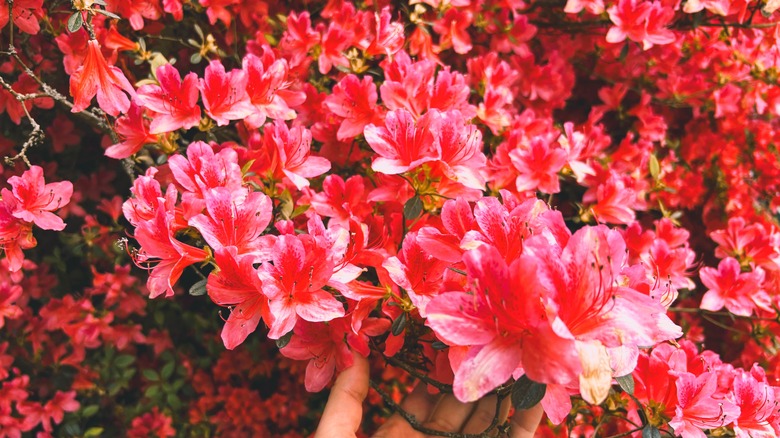
Azaleas (a type of rhododendron) are revered the world over for the breathtaking display of color that their flowers provide. For anyone hoping to welcome wildlife into their garden, they're also one of the best plants for attracting hummingbirds, and for gardeners who are working on a time budget, younger plants are fantastic since they don't typically require much pruning. In the U.S., azaleas tend to thrive in zones 3 to 9.
However, if you're fortunate enough to have a mature, well-established azalea in your yard, the occasional prune can be prudent, especially if you hope to keep it in fine blooming form for future seasons. Just try to avoid pruning it in late fall and definitely not during the winter. Ideally, you should prune azaleas immediately after they've finished blooming, which is usually late spring or early summer. Not only does this allow your plant plenty of time to develop new buds for next year's flowering season, but it also gives that new growth time to harden off before the icy winds of winter begin to blow.
Sweet cherry trees (Prunus avium)
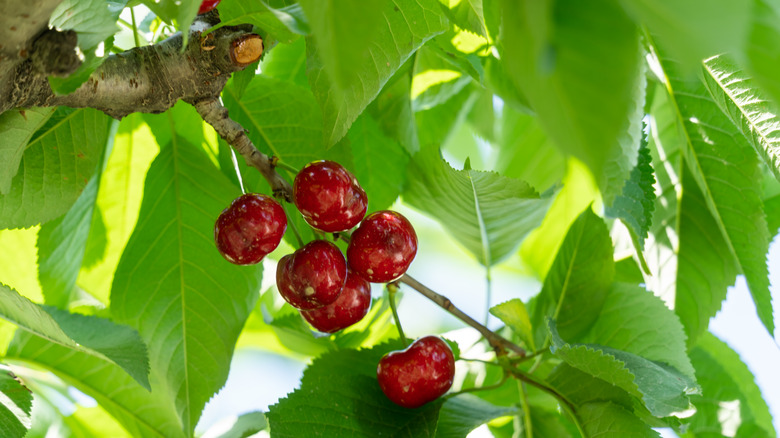
The general rule of thumb for fruit trees is to prune them when they're dormant, which is usually during the winter. The logic is that, by pruning back branches while a tree is dormant, you can help it to focus its energy on fewer, healthier branches when it wakes up in the spring, thus increasing productivity. Unfortunately, this rule is far from hard and fast, and not all trees appreciate a winter pruning, including sweet cherry trees which grow well in zones 3 to 8.
Known otherwise, and rather ironically, as Prunus avium, the sweet cherry tree is highly susceptible to bacterial and fungal ailments like silver leaf disease. Not only is this particular disease more prevalent in the colder months, but it's easily transmitted to sweet cherry trees by entering the wounds caused by pruning. In other words, you should avoid pruning sweet cherry trees in the winter at all costs.
Instead, aim to prune them in late summer, after the fruit buds have produced and dropped. Timing here is key to ensure you don't accidentally diminish the current season's crop, since pruning while the buds are still present can cause the tree to re-divert its energy from fruit-making to healing. In general a late summer pruning is geared toward basic diseased and damaged limbs. If a dormant hard pruning is necessary, aim for very late, post-freeze winter or early spring (the same time you'd do sour cherries or immature trees).
Lilacs (Syringa vulgaris)
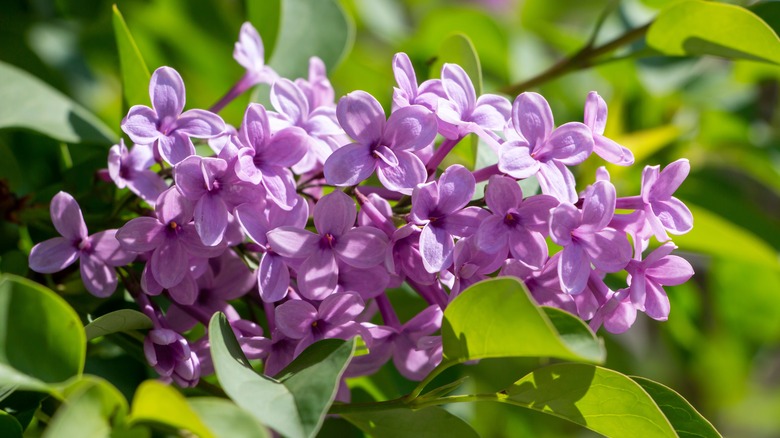
As well as being one of many plants you shouldn't prune in the fall, common lilacs (Syringa vulgaris) should also be removed from your winter pruning plans. Lilacs grow flowers on the previous season's growth, and once they finish flowering in late spring, they waste little time in growing next year's flower buds. Come winter, these buds are already in place. Crucially, they've also had enough time to harden themselves against the elemental onslaught of winter.
What this all means is that pruning your lilacs poses two significant risks. The first is that you could end up chopping off the plant's flower buds, thus rendering it flowerless come spring. The second is that, not having had an entire summer and autumn to harden off, any new growth that shoots as a result of your pruning may not be able to withstand the winter. Instead, prune your lilacs just after they've finished flowering in the late spring, then leave them to their own devices.
Honeysuckle (Lonicera spp.)
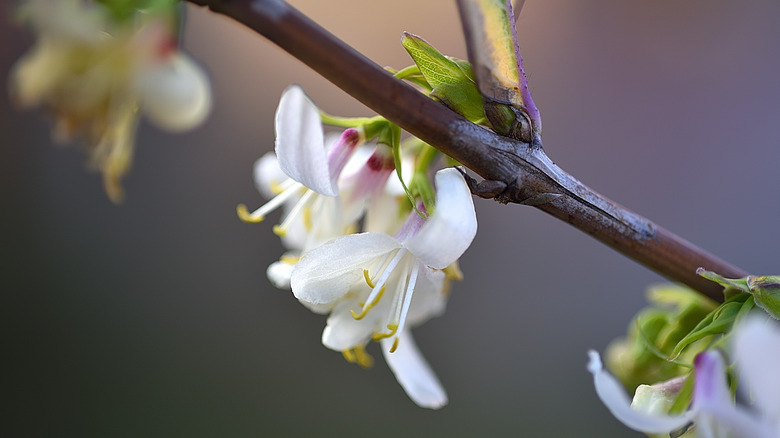
Honeysuckle (Lonicera spp.) is another plant whose flower buds form on the previous season's growth. This means that pruning at the wrong time of year can prevent the shrub from flowering the following season.
To determine precisely when you should prune your honeysuckle, you first need to work out which type of honeysuckle is growing in your garden. If it's a summer-flowering variety like Lonicera periclymenum in zones 5 through 9, then aim for late summer, shortly after flowering. Unless it's grown bullishly and is beginning to overpower your garden, you should only need to trim a summer-flowering honeysuckle lightly, if at all. Over-pruning can affect the following season's flower yield, so only go heavy with your shears if you feel your bush needs putting back in its place.
For winter-flowering honeysuckles (Lonicera fragrantissima) in zones 4 to 8, you'll be pleased to know that they rarely need pruning. Like summer-flowering varieties, the only exception is when the plant becomes unruly. In any case, the flowering season usually runs from December though to March, so aim for early spring.