

Genius Ways You Should Be Using Olive Oil In Your Garden
We may receive a commission on purchases made from links.
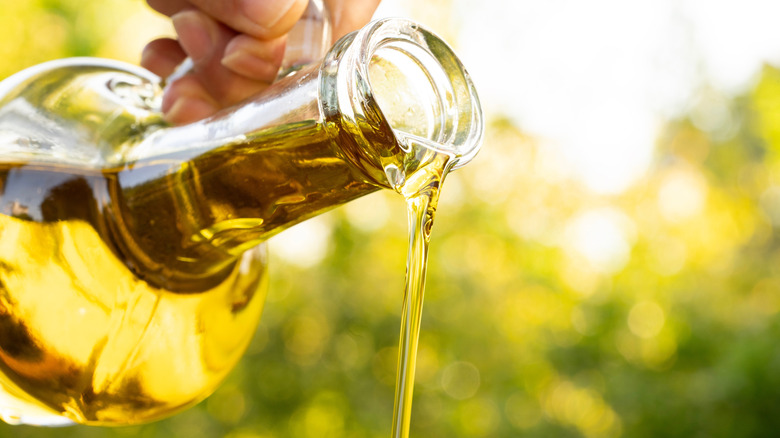
Most households have a bottle or two of olive oil floating around in their cupboards. This is especially true for those who love to cook, as olive oil's uses in the realm of food are seemingly endless. You probably also know that olive oil has a number of extra-culinary uses, like loosening earwax, moisturizing your skin, and even as an alternative to shaving cream (although we'd advise the latter as a last resort only). But did you know that it can also serve you in a number of nifty ways in the garden?
For example, it could potentially help you condition your soil, and if you're tearing your hair out over an invasion of plant-eating pests, it can be mixed with a number of other staple household ingredients to make a simple and surprisingly effective insecticide. Other uses include polishing your garden furniture, restoring old pots, and silencing squeaky hinges on swings and garden gates. And if you have a herb patch that's growing far more prolifically than you ever thought it would, you can even use olive oil to preserve such an embarrassment of herbaceous riches.
This is reassuring to know, especially if you have an abundance of olive oil bottles gathering dust in the cupboard. Whether you accidentally doubled up during your last grocery haul or have ditched oil from your cooking altogether, don't do away with them just yet. You might just be surprised at how useful they could be the next time you go out in your garden.
Use olive oil to condition your soil
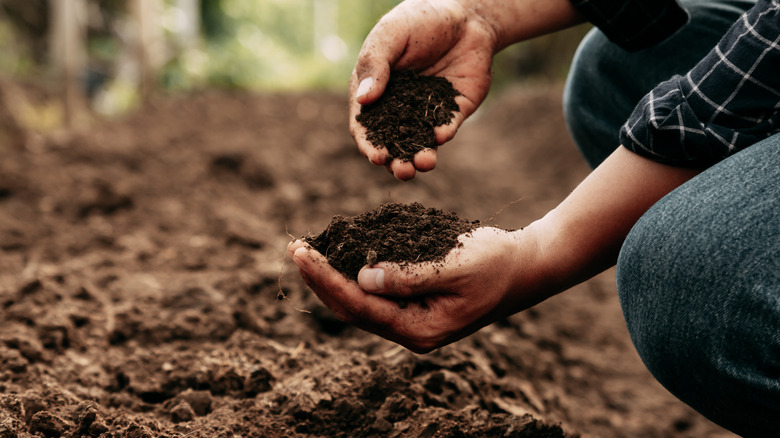
Failing to prepare your soil is one of the most common mistakes gardeners make. One way to ensure that it's ready to use is to condition it properly. This process involves adding a dedicated conditioner to your soil, which effectively "amends" your substrate, improving its structure, helping aeration, and increasing its ability to retain water and nutrients.
Studies have shown that by-products from olive mills, known as "olive cake," can improve water retention and productivity of soil, particularly substrates that are sandy or otherwise dry. Now, this isn't to say that you can simply substitute soil conditioner for olive oil and expect your flowers to thrive. Those studies are based on the use of agricultural waste, which is a very different product from the bottle of oil currently gathering dust in your cupboard. However, anecdotal evidence suggests that a small application of straight-up olive oil may help your soil retain more moisture. The bonus of using olive oil is that its fatty acids can help to break down any organic matter present in your soil, thus helping to release nutrients and make them more accessible to your plants.
Polish your wooden garden furniture
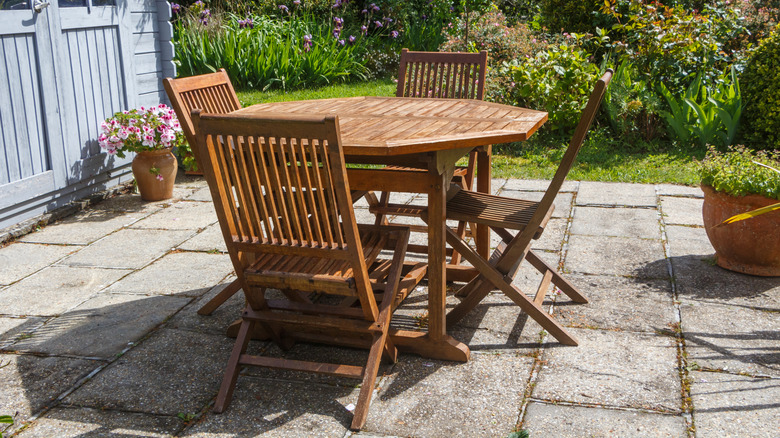
There are many unique outdoor seating ideas with which to elevate your outdoor space, and wood is perhaps the best for blending your patio with the natural surroundings of your garden. The only drawback is that it requires a certain amount of maintenance, especially in areas with lots of rain. In fact, even the most robustly built wooden furniture can eventually find itself at the mercy of ailments like rot. Hot and sunny climates that experience very little rain can also have an adverse effect on wooden furniture, leading to issues like drying and cracking.
Fortunately, there are many products that you can buy to protect your furniture against the worst of the weather. But before you go and spend your hard-earned money, why not consider a simple application of olive oil? In fact, this humble household product has many benefits when used to polish wood. Its fatty acids act as a moisturizer, penetrating the wood and helping to prevent it from drying out. In turn, this can help keep it more supple and less likely to crack and splinter as it ages. It can also minimize scratches, working as a filler for smaller surface imperfections.
Other benefits include being eco-friendly, safe to use, and, crucially, highly cost-effective since you probably already have lots of it on hand. Just be warned that olive oil can go rancid in exposed outdoor areas. This means that, while it's a good short-term solution for cleaning and protecting your wooden furniture, other purpose-made products should be considered for protection in the long term.
Lubricate and keep your garden tools rust-free
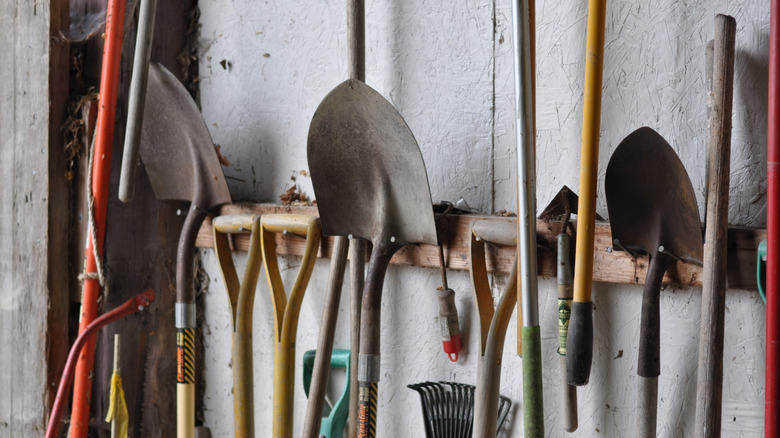
Did you know that you can use olive oil to keep your garden tools clean? It works by creating a thin, hydrophobic layer that keeps out moisture. This, in turn, prevents rust and tarnish from forming. It's especially effective if used on tools that have been thoroughly cleaned and dried first, and that are stored in a dry environment. Just know that, since olive oil tends to degrade quite quickly — being an organic product — you may need to regularly reapply it.
To keep your tools in ship shape, all you need to do is apply a small amount of oil to a clean cloth. Similarly to how you treated your wooden furniture, if you have any tools with wooden handles, be sure to give those a rubdown, too.
Use olive oil to make a homemade insecticide
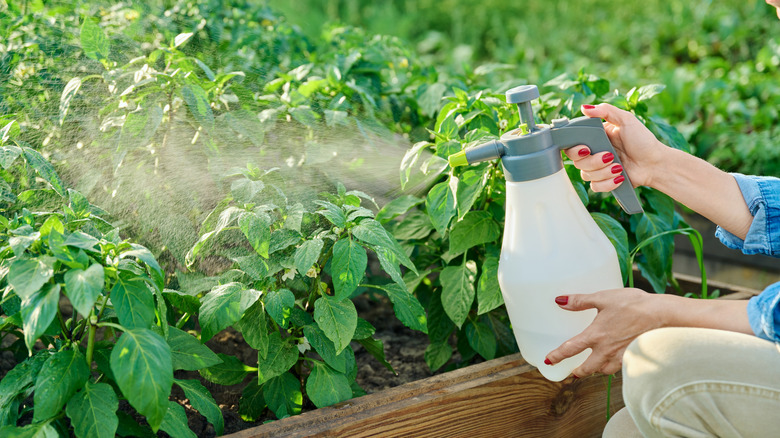
There's nothing worse for a gardener than carefully curating a colorful planting scheme and seeing it come to life, only to suddenly find it crawling with an unwanted invasion of pests. The only thing that could top that is finding your plants crawling with pests and not having a bottle of neem oil on hand. Don't worry, though — it's easy to whip up a homemade insecticide with just a few household ingredients.
The first thing you'll need is (you guessed it) olive oil. Simply add a tablespoon of the good stuff to 4 cups of water, plus a sprinkling of dish soap. Bugs like aphids are especially vulnerable to this solution, as the oil makes it difficult for these soft-bodied insects to move and feed.
You can also use a similar solution to combat leaf miner. This time, mix together 1 teaspoon of dishwashing liquid, 2 teaspoons of olive oil, and a liter of water. Spray the solution over the affected leaves, being careful not to overdo it or spray their undersides. This can clog up the plant's pores, affecting its ability to photosynthesize and transpire. You should also avoid placing the plant in direct sunlight after spraying — the last thing you want to do is fry your leaves in olive oil.
Loosen zips and seized hose attachments
After going to the effort of diligently covering your garden furniture ahead of the winter, there's nothing more frustrating when you come to use it again than finding that the zippers have snagged. Fortunately, once again, olive oil is ready and waiting to come to your rescue. It works as a natural grease, helping to free up snagged zippers on outdoor sofa cushions and covers. What's more, when used, it has the added benefit of adding a hydrophobic layer to the metal parts, helping to prevent rust.
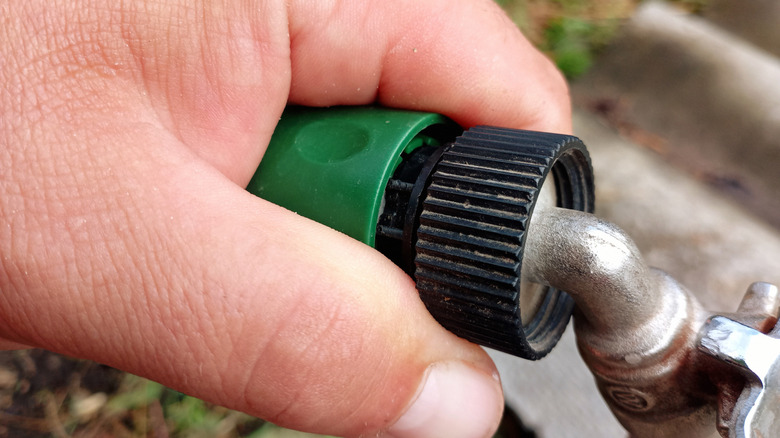
Olive oil's lubricating applications don't stop at zippers, either. If you have hose nozzles and sprinklers that you regularly use, or which tend to seize and stick when not taken apart for a while, you can apply it to the threads as a lubricant. This will make changing and removing hose attachments easier.
Make your leaves shine
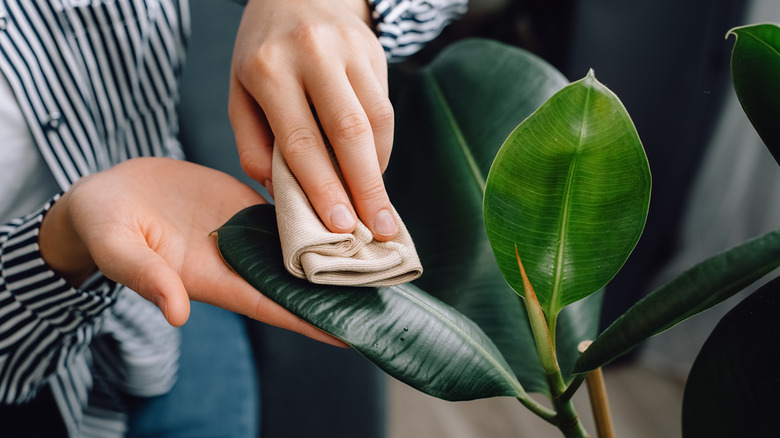
Whether you're making your patio pretty ahead of guests arriving or simply want to show your luscious-leaved plants that you care, a very light coating of olive oil can be used to both clean their leaves and make them shine. Before you do this, it's important to note that you shouldn't use olive oil straight from the bottle. Instead, you should dilute it with water, and even then, you should avoid applying it to the backs of the leaves.
Even when diluted, using olive oil on the backs of your plants' leaves risks clogging up the plant's stomata (their pores), which can render them unable to photosynthesize. You should also avoid using this solution on plants that receive a lot of sun. Save this treatment for plants that tend to sit in the shade. Otherwise, you'll risk scorching the leaves.
Silence squeaky hinges
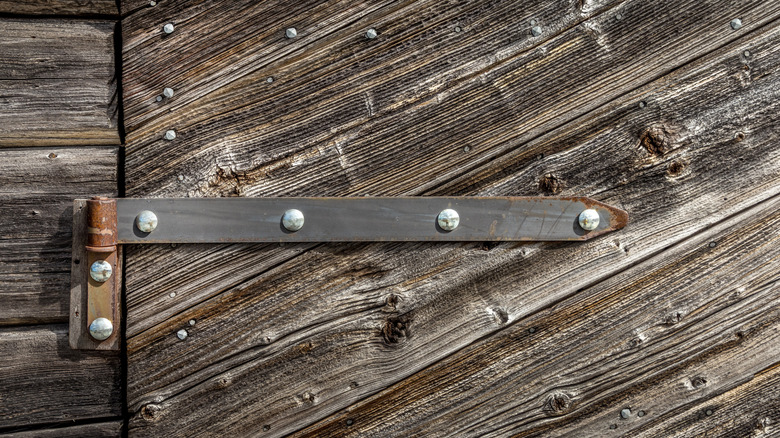
If you can't bear the incessant squeak of your gate every time your courier delivers a parcel, or your kids refuse to do anything else in the garden than play on the squeaky swing, then don't worry. Olive oil can provide a useful, short-term fix while you wait for a bottle of WD-40 to arrive. And hopefully, when it does, you won't even hear the courier coming!
In fact, olive oil can be applied to any hinge or swivel that's giving you a headache in the garden, including gates, swings, sheds, and storage box doors — you name it. All you need to do is apply a few drops of olive oil to the affected areas, and then listen as those squeaks and creaks disappear blissfully into the ether. Just be sure to clean the hinges first and thoroughly dry them; the last thing you want to do is accidentally lock in grime and moisture and exacerbate the problem.
Trap and prevent mosquitoes from reproducing
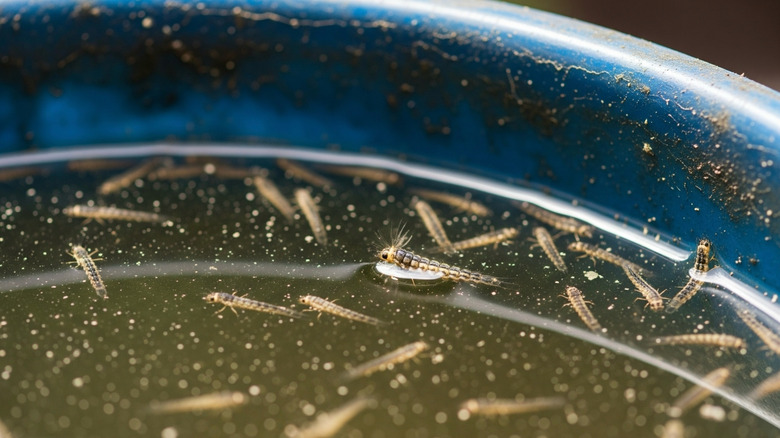
While it's hard to know why these harbingers of itchy ankles seem to swarm you and nobody else, what's certain is their reason for being there. The reason mosquitoes are swarming your yard is almost always because they've found a source of standing water. And it doesn't matter where it is, either. It could be in a rainwater butt, a pond, a bird bath, or even in your gutters. They're not particularly fussy about where it is; provided that the water is still, mosquitoes will gladly lay their eggs in it, thus perpetuating an already annoying problem.
If you're unable to remove the water from your garden, don't worry. There are a couple of ways in which olive oil could solve the problem. The first involves adding a few drops to any pools of standing water. Doing so reduces the water's surface tension, making it impossible for mosquito larvae to reach the surface and preventing new hatches from reaching any food beneath it. Just try to avoid adding oil to bodies of water that either house or provide bathing and drinking water to wildlife. If you have a pond, for example, a better solution would be to add a filter or bubbler to keep the water moving.
Alternatively, you can make a DIY mosquito trap. This is arguably the better solution — not only does it prevent larvae from feeding or reaching the surface, but, being an attractive source of standing water, it actively entices mosquitoes to land in it. Simply fill a bucket of water, add some olive oil, and let it do its thing. Not only will the oil-slicked water prevent eggs from hatching, but the mosquitoes will get stuck as they land on the surface. That's two birds (or mosquitoes) with one, well, bucket.
Clean your terracotta pots
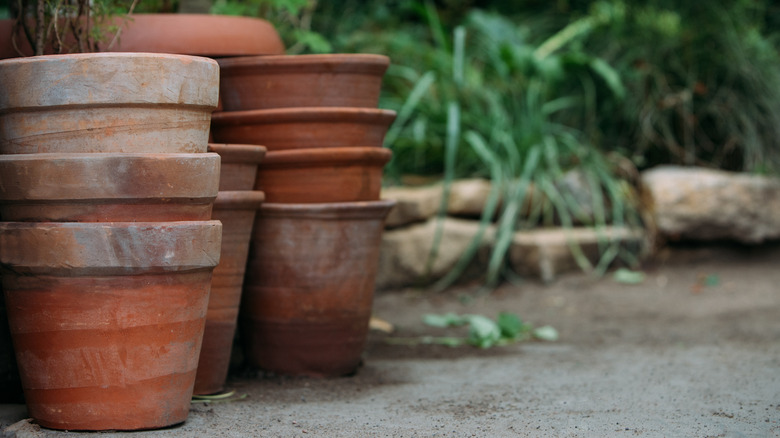
If properly maintained, terracotta pots can continue to add their rustic beauty to your garden for years to come. However, during their lifetime, they do have a tendency to collect and hold onto grime, which can lead to them losing their rich, russet luster. Fortunately, they can easily be restored with the help of humble olive oil. First, give your pots a thorough clean to remove any excess dirt and grime that's built up over the years. Give them a chance to dry, then wipe them down with an olive oil-soaked cloth.
In addition to restoring some of their original beauty, this coat of oil will also provide a useful layer of protection. Anybody who has worked with terracotta pots before will know that they are particularly prone to cracking, especially in the winter months. Terracotta absorbs moisture very easily, and when the temperatures drop to freezing, that moisture expands and causes the clay to crack. By wiping down your pots with oil, you'll effectively waterproof them. If your pots are stored under shelter and away from the worst of the rain, a quick lick of olive oil could be the difference between using and replacing your favorite garden pots.
Finally, if you've recently purchased a new stack of terracotta pots only to find that the store's price stickers won't peel away in one piece, then good news. A few minutes spent soaking in olive oil should cause the adhesive on the label to break down, making it much easier to remove without leaving ugly bits of paper behind.
Keep your herbs fresh after harvesting
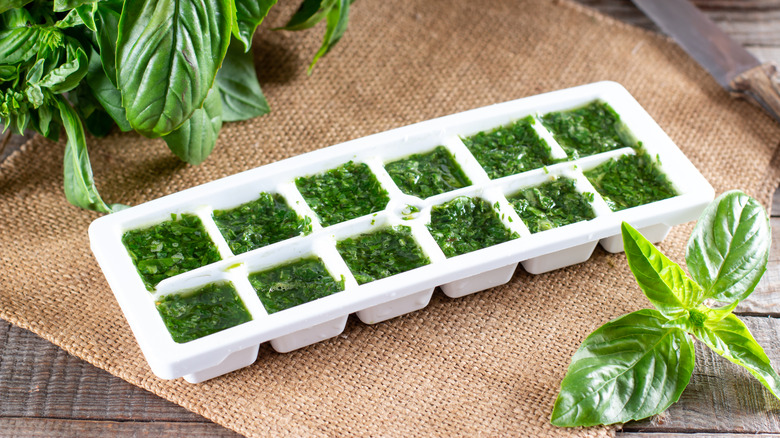
Planting herbs is one of the most rewarding things you can do in your garden. Not only are there many herbs that can help keep mosquitoes away from your patio, but most can also be picked and used in your home cooking. However, if you find yourself with a bumper crop and don't have the time or freezer space to cook and store enough meals to use it all, what then? In that case, consider freezing your herbs in olive oil.
Doing so couldn't be simpler. Just wash and dry your herbs, chop them up into the sizes you'd usually use in your cooking, and then decant them into an ice cube tray. Fill each cell about ⅔ of the way full, top each one up with olive oil, and stick the tray into the freezer. Once the cubes are frozen solid, you can pop them out of the tray and store them in a freezer-safe bag.
Whenever you need fresh herbs, you can reach into the freezer. Since they're frozen in olive oil, they can be thrown straight into the pan. Just make sure that you label the bag so you know what herbs are in it. Once they're chopped and suspended in oil, it's surprisingly tricky to tell herbs apart.
Use olive oil to trap earwigs
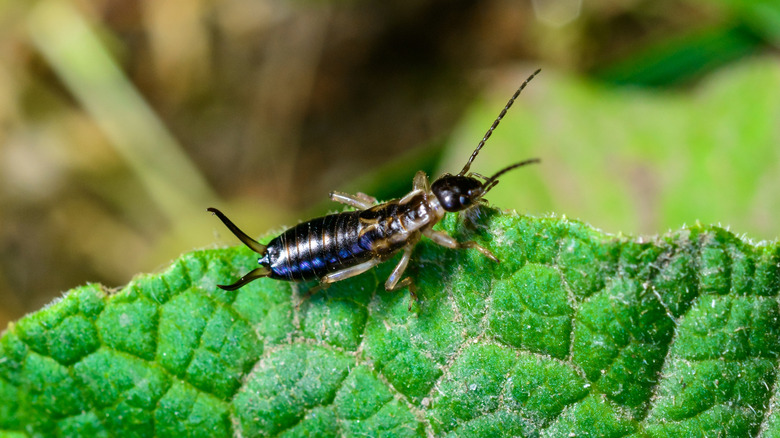
Before you try this genius use for olive oil, it's important to note why you should reconsider killing earwigs. In many cases, their presence should actually be encouraged. Firstly, earwigs are quite happy to feed on nuisance insects like aphids, which can altogether eliminate your need to whip up that olive oil insecticide that you read about earlier. As for earwig species that prefer a plant-based diet, they actually prefer plants that are already decaying. This is why you'll often find them crawling in, around, and underneath your mulch. Sure, they're not very pleasant to look at. But by helping to break down organic matter into smaller pieces, earwigs speed up the process by which nutrients are returned to your soil.
Where things become tricky is when your garden is devoid of decaying matter. In this case, plant-eating earwigs will simply turn to the living plants to provide them with sustenance. This is where an olive oil trap can come in handy, especially if they're finding their way into your edible plants and vegetables.
Simply pour into a tub equal parts oil and soy sauce, and then bury it so that the opening is about level with the surface of the soil. Earwigs will find the solution irresistible — so much so that even if you're unsure whether earwigs are the problem, it won't be long before you find out.