

How To Easily Identify Tree Root Damage From Frozen Soil
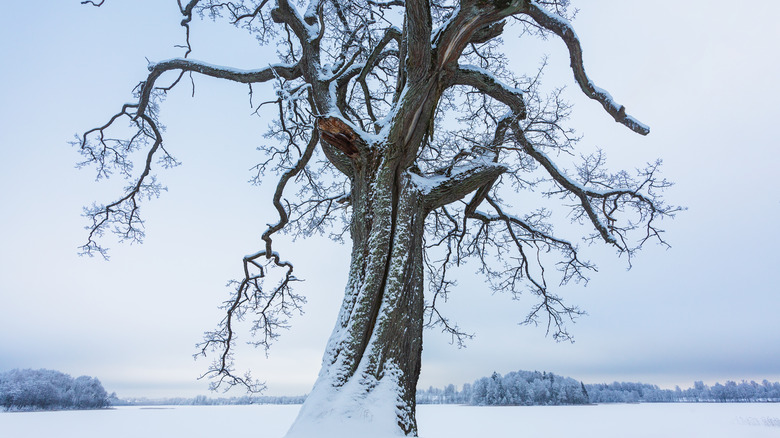
A tree blanketed in snow is certainly one of the most beautiful aspects of a winter wonderland. But beneath the surface, that tree may be fighting against the harmful effects of freezing temperatures. Tree roots continue to grow during the winter, though that growth slows down quite a bit. Because they're underground, roots are better protected from freezing winter conditions than the branches and leaves. Once soil temperatures fall below 15 degrees Fahrenheit, however, even they'll be at risk of damage from the cold.
Although the root of the problem (pun intended) is taking place where we can't see it, there are some signs of root damage from frozen soil that will be visible above ground. If, after the snow melts, you notice exposed roots or soil erosion, that could be an indicator of winter-induced damage. A tree that appears to be leaning more than usual is also an early warning sign. However, some symptoms may not be noticeable until much later. If your tree isn't producing new leaves or growing new branches when spring arrives, this may be an indication that the roots sustained some trauma over the winter. Since injured roots can't adequately supply the tree with nutrients, you may also notice leaves browning and dying off earlier, especially near the topmost branches.
How to save your tree from frost damage
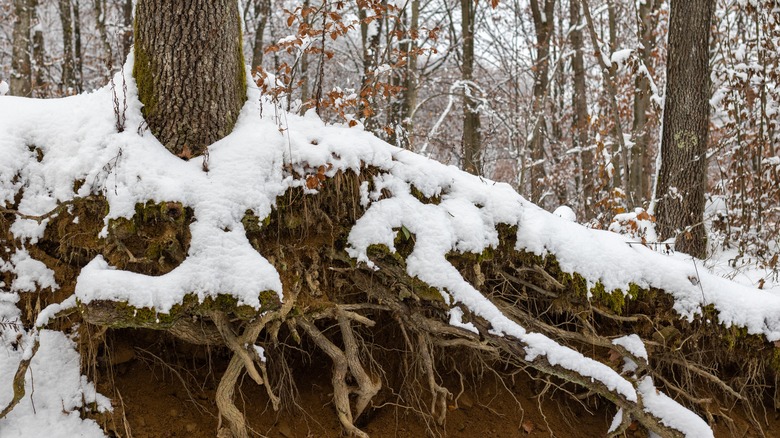
If the damage from frozen soil is too extensive, the tree may not survive — for that reason, it's always helpful to know how to tell if a tree is dead. If you notice the problem early on, however, there are steps you can take to minimize the impact and save your tree. This includes extensive watering to restore some of the moisture lost during the winter, using a good fertilizer, and pruning to encourage regrowth. When in doubt, contact an arborist who can offer professional guidance on rehabilitation or help diagnose trees that are too far gone to save.
Although certain trees, such as oaks and pines, are naturally better at withstanding freezing temperatures, there are a few things you can do to protect your tree's roots before a heavy freeze. In the fall, make sure your tree is well-watered, as healthy, hydrated trees are better able to handle the cold. Apply a thick layer of mulch at the base of the tree to provide extra insulation and further protect it from fluctuating temperatures. (Just be sure to avoid this crucial mulching mistake; mulch near the base of the tree should be flat and not mounded to keep the tree strong and facilitate healthy root growth.) During the winter months, avoid using salt to thaw ice near the roots, as this can harm the tree. And remember that you should never shake a snow-covered tree, as this can weaken it while it's already vulnerable. Instead, use a broom to remove any unwanted snow lingering on the branches.