

Protect Your Plants From Frost With The Help Of A Camping Staple
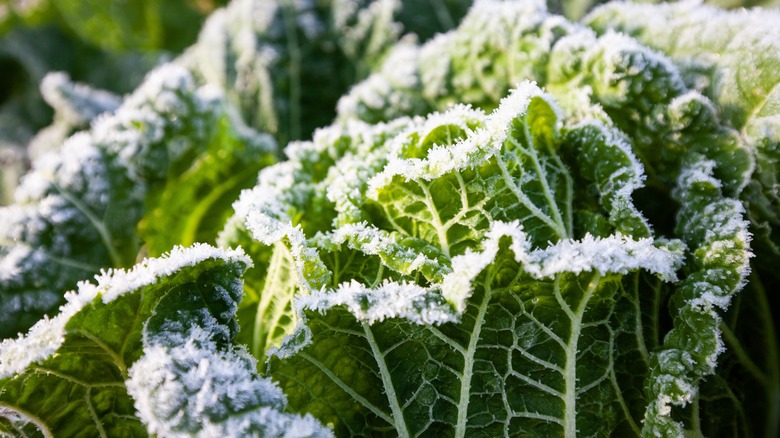
The right sleeping bag is one of those pieces of gear that's essential for a winter camping trip; but did you know it can also work double-duty by defending your plants from frost? We're always on the lookout for creative ways to defend our garden from the elements for as long as possible — like this clever milk jug hack, which can act as a temporary mini greenhouse and protect smaller plants and crops during frosty nights. But repurposing your sleeping bag for plant duty during the late fall or early spring — when temperatures are just starting to dip — is one of those tricks that just makes sense.
That's because the aspects of a sleeping bag that keep you warm and cozy outdoors are the same ones that are going to shield your plants from freezing over, too. Unlike a regular blanket, sleeping bags contain insulation with little air pockets inside that enable them to trap your body heat, which keeps you nice and snug. Similarly, sleeping bags placed on plants trap the warm air around them, as well as in the soil. This not only keeps plants warmer longer, but also slows the rate at which temperatures around the plant drop, which in turn means less shock and damage to plants' leaf and stem tissues.
How to use your sleeping bag to prep your plants for frost
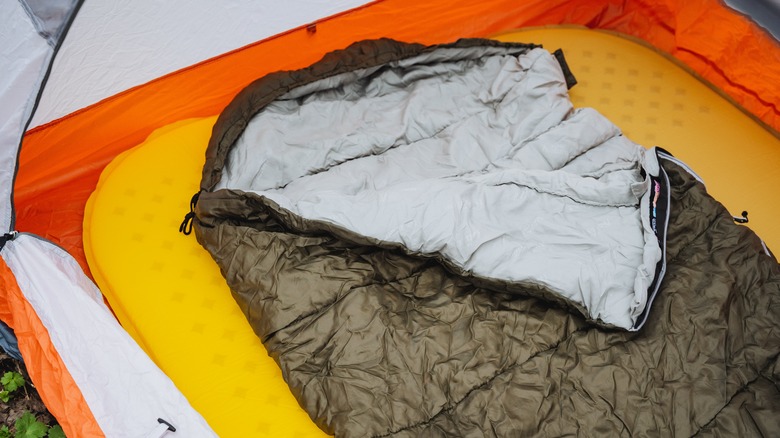
Using sleeping bags to protect your plants from frost is pretty straightforward; you'll just need a sleeping bag — and possibly a few stakes, rocks, and plastic sheets. Start by fluffing your sleeping bag to redistribute the insulation so that it's better able to trap heat. Drape the sleeping bag loosely over the plants so that they are completely covered all the way to the ground, but not wrapped too tightly. You might want to use stakes to hold up the sleeping bag so it doesn't squash your more delicate plants. Adding rocks or other heavy objects to the edges is a good idea for keeping the sleeping bag in place if you're concerned about heavy wind. If you don't want your sleeping bag damaged by the elements, you can protect it by covering it with plastic sheets.
Using a sleeping bag to protect your plants from the cold should be done in late fall and early spring, when there is a danger of damage from frost. When temperatures drop below 28 degrees F, this method won't be effective. And it should never be used during heavy snow. If unexpected frost or snow do lay claim to your garden, you can try rescuing your snowy garden by giving plants a little water to help them recover; just don't overcompensate by loading on the water or fertilizer, which can overwhelm already stressed-out plants. Leaving the sleeping bag on top of your plants when temperatures are over 50 degrees F is also not recommended. So, be sure to remove it when the temperatures start to rise.