

If You're Looking For A Speedy-Growing Ground Cover, This Should Be Your Go-To Plant
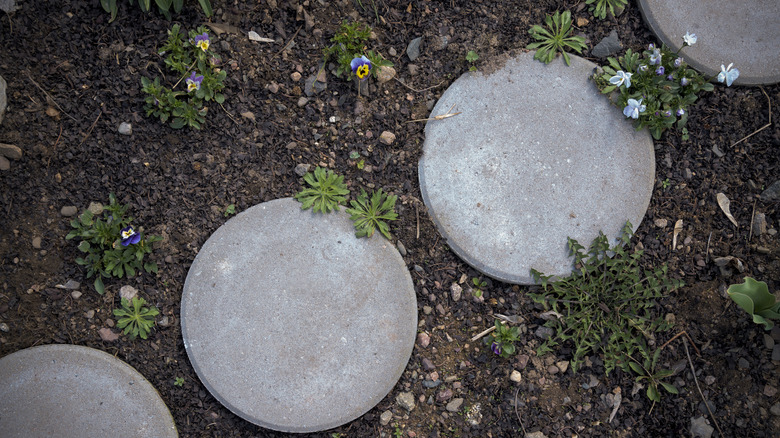
Ground covers can be a lifesaver for homeowners who want to spend less time mowing, weeding, or mulching. Once established, they can fill bare spots, while also reducing erosion and limiting weeds. For folks who are tired of tending to traditional turf, some ground covers can serve as clever alternatives to grass for a no-mow lawn. With so many varieties to choose from, determining the right one for your yard can be difficult. Additionally, choosing the best ground cover for your climate conditions can be especially challenging, since considerations like how much sun your landscape gets and determining what plant hardiness zone you live in can be critical considerations. One plant you may want to consider: creeping mazus (Mazus reptans). It thrives in much of the United States, growing well in USDA Zones 5 through 8.
A member of the snapdragon family, creeping mazus hugs the ground, reaching only 3 inches tall. But a single plant covers 6-12 inches and can withstand light foot traffic, making it a good choice for filling in spaces between stepping stones, along pathways, or in spots where grass just won't grow. Additionally, creeping mazus is a perennial, meaning it will return year after year. In spring and early summer, it produces delightful lavender-blue or sometimes white flowers to add a splash of color to your yard. Another plus — it's semi-evergreen in most regions, so your yard won't go completely barren, even in the winter. While it doesn't normally need to be mowed, you can set your mower to about 3 inches high to trim it for an extra tidy look if you prefer. Don't worry: The plant can take it and will rebound quickly.
The best ground cover for many climates
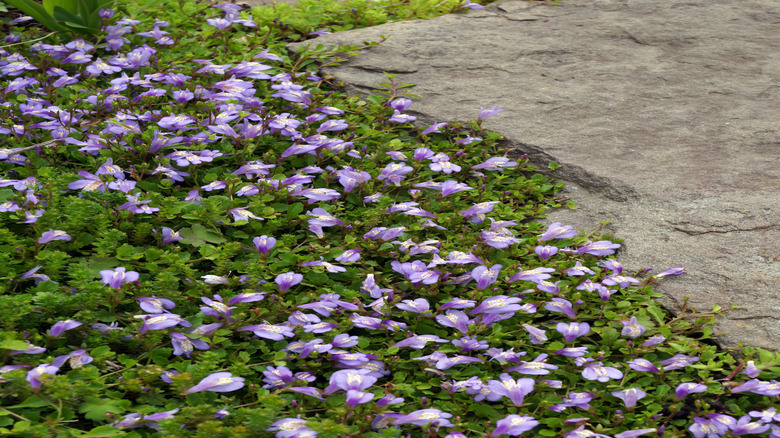
Apart from its colorful charm, creeping mazus is not the least bit fussy. It can adapt to a wide variety of growing conditions, from full sun to partial shade and stays attractive for much of the year, even in less-than-perfect soil. Unlike other gardener favorites, it's not classified as invasive (a similar species, Mazus miquelii, however, is considered invasive in some northern and northeastern states). While it's not native — it originally hails from the Himalayan mountain range — it rarely overruns natural areas. However, if you'd like to keep it from spreading to other landscaped areas, you could erect low physical barriers, such as garden edging of brick, metal, or stone, to keep it neatly contained.
Another reason you may love creeping mazus is how rapidly it grows. This ground cover establishes quickly, spreading to form a dense mat. Given favorable conditions and room to grow, it can blanket bare soil or a slope within a short season. Despite being quite undemanding, creeping mazus will benefit from at least a little TLC. A slow-release fertilizer in the spring will give it an extra boost, and weekly waterings during hot spells will allow the foliage to stay lush. It generally doesn't need much attention over the winter, but if you live somewhere extra cold, transform your fall leaves into mulch layer for warmth. Just be careful not to overwater it, as you may wind up with root rot, which can compromise its health.