

What To Know Before Planting Hostas During The Fall Months
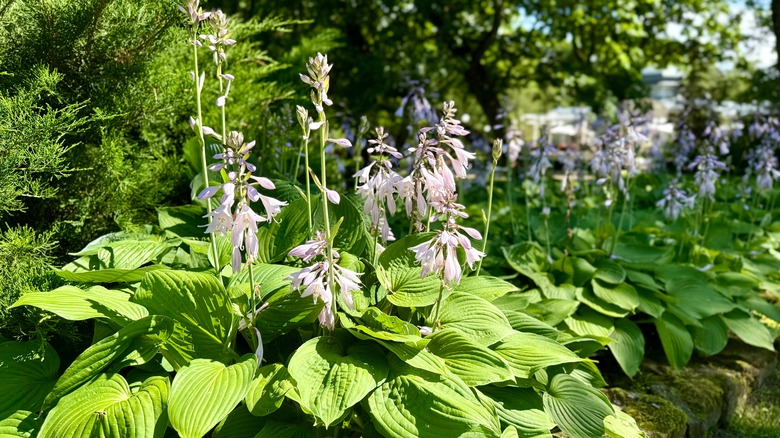
Hostas (Hosta spp.), prized for their lush foliage and ability to brighten up a shady garden, are a plant you may want to consider adding to your landscape this fall. Although spring is another favorable time to plant them, cooler temperatures and ample soil moisture make this season ideal for getting these plants established before winter's harsher conditions arrive. Add a hosta to your landscape several weeks before the first frost, and the perennial's rhizomes, or underground stems, should have enough time to establish themselves, ensuring a healthy start come spring.
Hostas can even be placed in containers to brighten a porch, balcony, or patio. Their wide range of leaf shapes, sizes, and colors — from deep greens to striking variegated patterns— makes them a standout addition to almost any shady corner. Additionally, hostas' tall flowering stems can even have hummingbirds flocking to your yard.
But while hostas are hardy and adaptable, there are several important things to know before planting them to give them the best possible start. Factors such as soil quality, watering needs, and plant spacing also play a role in helping hostas thrive. Understanding these considerations from the get-go can save you frustration and ensure that your new plants will flourish and be full of vibrant foliage. With a little preparation, you can enjoy the beauty and low-maintenance charm of these perennials that will never leave your garden.
Tips for growing happy hostas
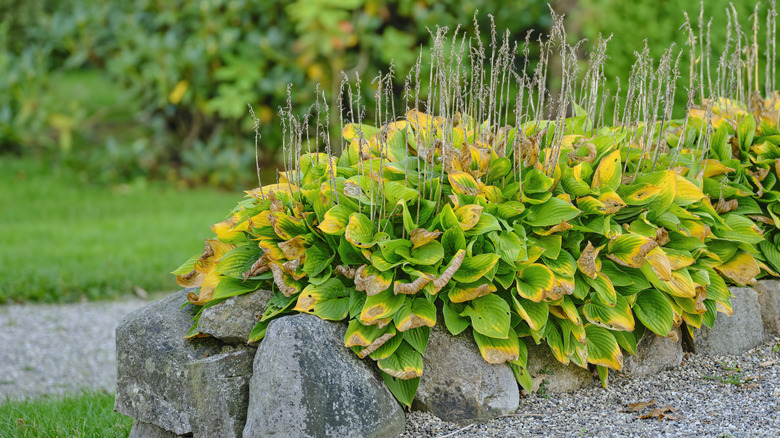
Hostas feature a wide variety of foliage, with hues ranging from blue to green to yellow, making them a stunning choice for adding interest and color to shady areas of the garden. They grow in attractive clumps that are often accented by elegant white, pink, or purple blooms in late spring or summer. These versatile perennials can be reliably grown across most of the continental United States, thriving in zones 3 through 9.
While these graceful, Asian-native plants are quite hardy, they perform best in full shade. They can adapt to partial shade as well, but when placed in full sun, their leaves are prone to scorching. Wait to fertilize the plant until spring, when they'll need the nutrients to spark new growth. Water them as needed to provide them with a good start, taking care to ensure they have plenty of water before the first freeze, but not to overwater them, which can promote rot. If adding them directly to your garden, be sure to loosen the soil about one foot deep and dig a hole twice the width and depth of the root ball. If planting multiple hosta plants, space them 1 to 5 feet apart. This will give their roots room to grow and ensure enough space for them to spread as they mature.
These beauties are surprisingly adaptable and can even be planted in pots if you would like to add pops of greenery to a balcony, deck, or patio. Keep in mind, however, that potted ones will require extra care to survive the winter and return strong in the spring. To allow them to overwinter well, use sturdy, frost-resistant containers, store them in an unheated shed or garage, and they should happily return in the spring.