

The Tiny Yet Destructive Invasive Beetle To Look Out For On Your Ash Trees
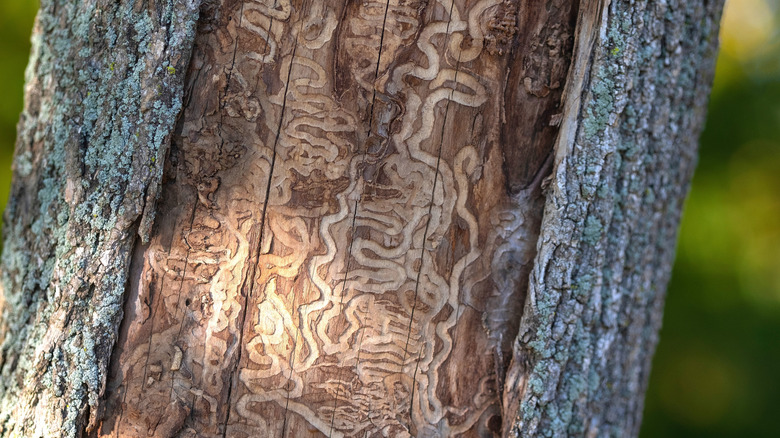
Bark beetle infestation is a leading cause of tree death in the United States, and as the climate warms, trees weakened by drought are more and more susceptible to being taken out by a growing plague of these little pests. The emerald ash borer (Agrilus planipennis) is one of the most destructive beetles to plague American forests in the last two decades, causing billions of dollars in economic damage and creating backyard safety hazards out of dead and dying trees. Control and eradication of this beetle has become a priority for federal agencies like the U.S. Forest Service as well as state and local forestry departments. If you have an ash tree in your yard, you need to be on the lookout for damage from this beetle so you can take action and stop the spread.
With its bright, metallic green body growing up to ½ inch long, the emerald ash borer is an undeniably gorgeous beetle. But unlike beneficial garden insects you'll want to think twice before killing, this little villain deserves no mercy if ash trees are to survive. The beetle attacks all 16 species of ash trees native to the U.S., which are prolific throughout forests and urban areas alike. Species like green, white, and Oregon ash trees are a popular urban and backyard staple, providing natural shade and privacy with their wide-spreading, leafy branches. Cities like St. Louis and Boston have thousands of ash trees lining their public streets and parks. The Denver metro area alone is estimated to have 1.45 million ash trees.
All of these public and backyard trees are subject to damage from the emerald ash borer. Originally from northeast Asia, this insect was first discovered in the northeastern U.S. in 2002 and has now spread west as far as Portland, Oregon, leaving millions of trees dead or dying in its wake.
Signs of emerald ash borer infestation and what to do about it
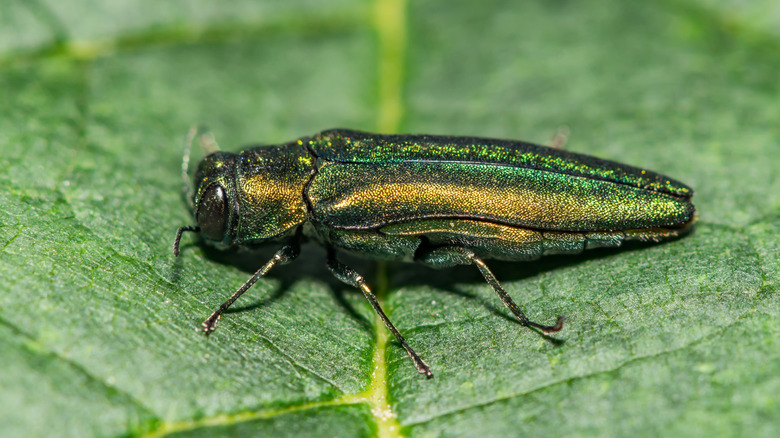
The U.S. Department of Agriculture tracks the emerald ash borer and even has an online map you can check to see if your local county has a known infestation. However, if you're outside looking for tell-tale signs, an ash tree with a beetle problem will have areas of split or missing bark, with grooves snaking through the soft wood underneath and "D-shaped" exit holes from the grooved area. The grooves are not made by adult beetles, which simply nibble on the green leaves of the ash. Instead, emerald ash borer larvae are the big problem, tunneling through the soft wood and eating the inner layers. They impact the tree's ability to circulate nutrients and water, leading to eventual death. Infected trees will also show signs of thinning branches and dying crowns, and they may be riddled with woodpecker holes.
Death by emerald ash borer can take years, and you have a chance to intervene if you spot problems early. Treatment with an insecticide is necessary for trees in the early stages of infestation. You can hire a professional arborist to apply insecticide treatment, or do it yourself at home by carefully following treatment instructions. Otherwise, you'll need to cut down the tree to eliminate the possibility of the infestation spreading to others in your yard or neighborhood. Ash trees can grow up to 100 feet or more, and removing a large tree isn't a backyard project you want to do by yourself. Hiring a professional is your safest bet.
The Emerald Ash Borer Network publishes information on who you can contact in your state if you see signs of infestation. By keeping an eye on your trees and taking action early, you can help stop the spread of this devastating beetle.