

A Must-Know Rule That'll Help You Find A Safe Campsite
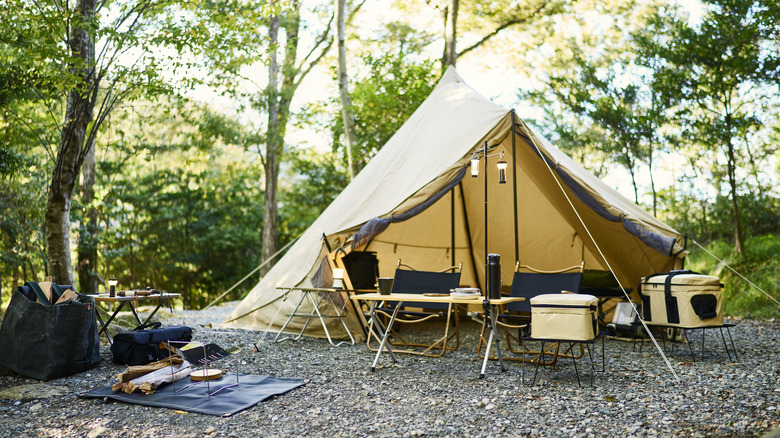
Camping offers an affordable vacation and an adventure that's fun whether you're going on a solo trip, taking a romantic excursion, or the whole family is going along. No matter where you go camping, there are all sorts of adventures to be had, whether you're simply enjoying nature, fishing, hiking, or experiencing your first winter camping trip. When setting up your campsite, consider that it's more than just placing a tent; there are some safety measures to keep in mind. Before erecting your tent, picking a spot for your campfire, or even parking your vehicle, look up. The trees hovering above your chosen area could prove fatal hazards when it comes to your time spent in Mother Nature. Consider this another one of the most forgotten camping essentials.
There are benefits to camping under trees — they offer extra shelter and shade. But if you park yourself or any of your belongings under a tree that is dead, has broken branches waiting to fall, or looks as though it could get knocked over by a slight breeze, you're risking both your items and your life. There are several key factors to consider when finding a safe camping space among trees.
What to look for while you're examining the trees around your campsite
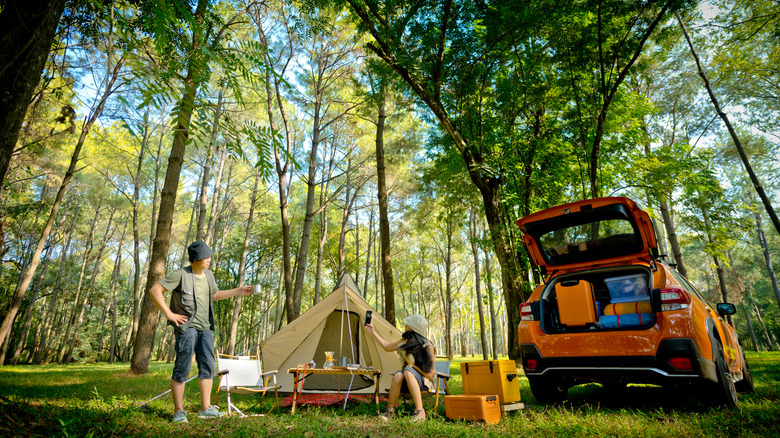
Look up in the area where you want to set up and see what the trees and their branches look like. Are there any dead limbs, or any that look like they're about to fall? Don't set up camp under dead trees — even if the tree is only partially dead. If you're unsure whether a tree is dead or dying, check the brittleness of its branches. If a small branch can easily break off and is extremely dry, then bigger branches may fall just as easily. A tree with no leaves, especially in the warm months, may be dead and therefore a hazard. Look for peeling bark or the base of the tree lifting out of the ground, as these signs indicate a tree is dying, which could also make it dangerous to sleep under.
A small crack in a seemingly sturdy branch can grow quickly if it's exposed to winds or rain while you're camping. Even if you're not expecting high winds, heavy rain, ice storms, or snow, you'll still want to be aware of any loose and hanging branches and limbs that are no longer attached to the tree and just hanging out waiting for the right squirrel to leap across and knock it off. Even a small tree limb falling from a high height can cause significant damage to a person and their belongings. Any trees leaning too far to the side that give you unease are worth setting up far away from as well. While not all leaning trees pose an immediate threat, if you don't know the reason it's leaning, it's better to be safe than sorry.