

Why You Should Consider Waiting Until After It Rains To Pull Weeds
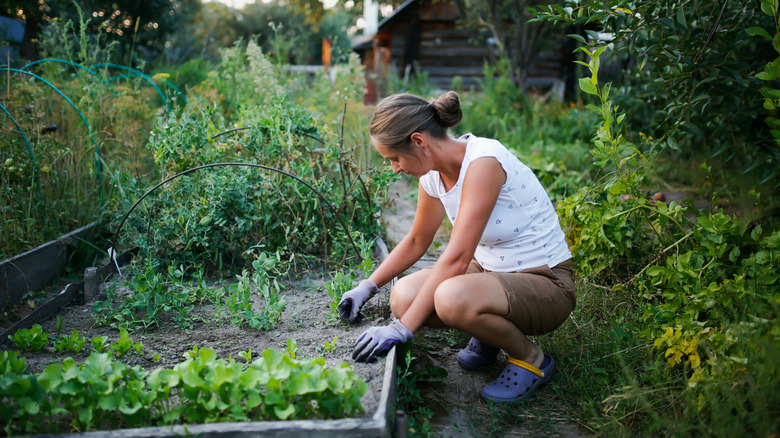
Weeds can upend the best-laid plans for a garden, especially if they've started dispersing seeds. Strategic mowing is an effective way to control many lawn weeds, but this approach won't work with most flower beds or vegetable gardens. Instead, pulling weeds by hand is often the way to go. It's safer than using some chemical herbicides, and it doesn't take long if you have just a few to remove. The removal process may be frustrating, though, especially if the plants you're targeting break as you yank them or get stuck in the soil. Breakage is a big problem with weeds that form lengthy taproots — for example, dandelions and Canada thistles. New weeds can sprout from pieces of these plants that are left in the ground. Your best shot at pulling weeds easily and completely is after a rain shower, when the soil is damp but not soggy.
Gardens that have recently gotten wet are the easiest to weed because the soil doesn't cling as tightly to plant roots. This means that plants with relatively shallow roots should slide out of the earth without too much protest. Chickweed and some other common offenders become particularly easy to pull when the ground is moist. Try to figure out what types of weeds are present before going on a yanking spree.
There are a few weeds you shouldn't pull from your garden, particularly pollinator-supporting milkweed and goldenrod. Keep in mind it's also best to pull weeds when they're young because their roots are smaller, so don't wait for them to reach maturity before yanking. Plus, you may be able to get rid of them before they spew seeds into your garden's soil.
The best ways to remove weeds from wet ground
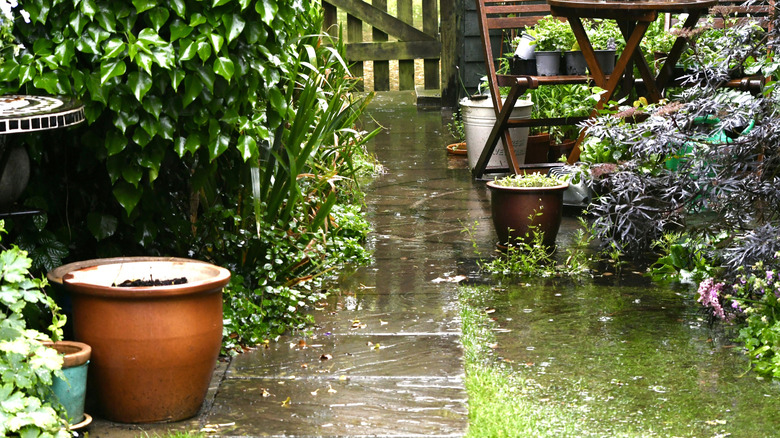
Though weeding after a rainstorm tends to be easier than doing it during a dry spell, there are a few things to keep in mind before putting on your galoshes and trudging into a wet garden. Most importantly, if your garden is filled with puddles, wait until it's not sopping wet before tackling weeds. In addition to getting messy, you may spread soil-borne pathogens if mud splashes onto plant foliage. Likewise, if the ground is wet but frozen, wait until it thaws to pull weeds by hand. Otherwise, the weeds will be hard to remove completely.
If there's no rain in the weather forecast but you need to pull weeds soon, give your garden a thorough watering before diving in. Spend less than 10 minutes soaking your garden with a hose or watering can, and then give the water about 2 hours to reach the plant roots. After that, grip each weed near its base and slowly guide it out of the ground.
Also consider how many weeds you're dealing with before launching a post-storm pull-a-thon. If you have a huge patch of them, a different weed-control method may be a better fit. For example, you could try suppressing garden weeds with repurposed mulch bags. The mulch from these bags can also keep many weeds at bay if applied properly. That's because it prevents weeds from accessing the sunlight they need to grow. Have you decided to use a chemical herbicide or a sugar hack that kills certain kinds of weeds? For maximum effectiveness, wait until the ground has dried before proceeding.