

Bring More Pollen-Loving Critters To Your Garden With A DIY Pollinator Pot
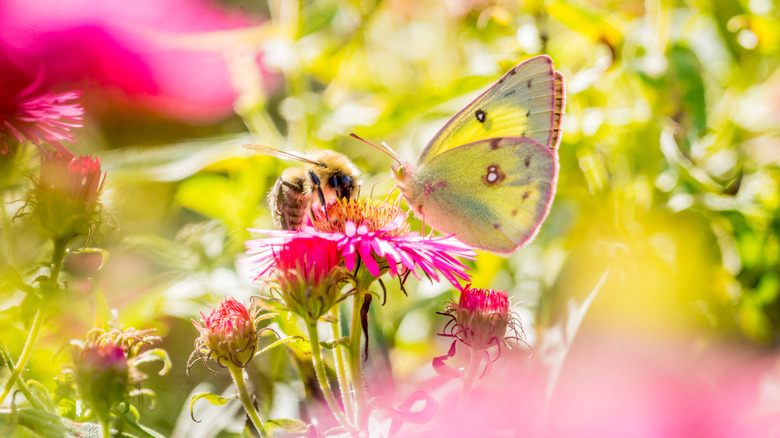
If your garden ever feels like it's missing a little life, the solution might be as simple as inviting pollinators to the party. These tiny visitors, including bees, butterflies, moths, beetles, hummingbirds, and even the occasional bat, are nature's ultimate garden helpers. While they're busy hunting for nectar or pollen to snack on, they transport pollen between flowers, helping plants produce fruits and seeds. In fact, many plants can't reproduce without them. Imagine a world without flowers, strawberries, or apples. That's the reality you'd be facing if pollinators disappeared. By drawing them to your yard, you're not only boosting the beauty and productivity of your garden, but you're also playing a small part in supporting global biodiversity.
Unfortunately, pollinator populations are under stress across the country. Habitat loss, pesticide exposure, and climate change have all taken a toll, shrinking the numbers of many species. You've probably heard about honeybees struggling or bats battling disease, but the problem extends across the pollinator world. Without enough pollinator-friendly plants, these species simply don't have the food they need to thrive.
The good news? With a little effort and knowledge on how to create the perfect container garden for hummingbirds and other pollinators, you can transform your outdoor space into a buzzing, fluttering hub of life that looks good and does good at the same time. Even something as simple as planting a dedicated pollinator pot filled with nectar-rich blooms can create a much-needed pit stop for pollinators passing through your neighborhood. In fact, it's one of the 12 tips to make all the bees come buzzing to your garden.
How to make your own DIY pollinator pot
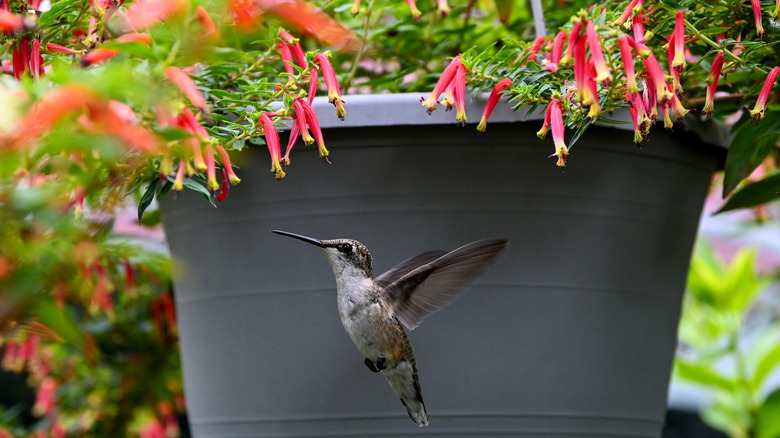
Think of a pollinator pot as a living buffet with year-round appeal for the buzzing, fluttering, and flitting wildlife you want to attract. Building one is easy – start by finding the perfect plant pot for your garden. Pollinator-friendly plants don't like "wet feet," so make sure there are plenty of drainage holes. To help balance moisture, start with a layer of wood chips, then pile on about 6 inches of soil or compost.
Now comes the fun part: arranging your plants. When it comes to choosing your plants, New England Wild recommends thinking in terms of "thriller, filler, and spiller." A thriller is your bold centerpiece plant that stands tall and catches the eye, a filler adds lush texture to round things out, and a spiller drapes gracefully over the edges, softening the pot and creating movement. Together, this trio creates a pot that's as beautiful as it is functional.
When it comes to plant choices, native perennials are the gold standard. They require less fuss than annuals and are magnets for local pollinators. For your thriller, butterfly weed is a standout, bursting with fiery orange blooms, but it's also a host plant for monarch caterpillars, so don't panic if you notice some leaf nibbling — that's nature doing its job. For a filler, try mountain mint. While its flowers may be understated, they churn out nectar that bees and butterflies adore, and the aromatic foliage is a bonus. Finally, finish your pot with a spiller like coral honeysuckle. This native vine is a hummingbird favorite. The end result is a DIY pollinator pot that's eye-catching, low-maintenance, and brimming with life.