

The Popular Vegetable That You Can Plant In September And Still Be Able To Harvest In The Fall
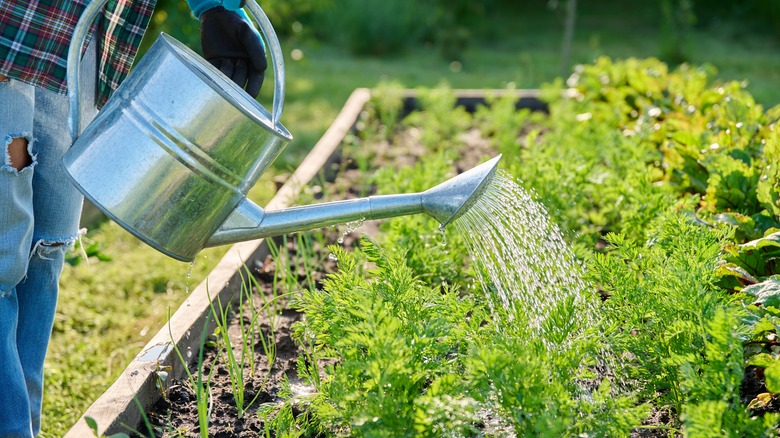
Once autumn begins to roll around, it can feel like your days of enjoying the various health benefits of gardening — and the fruits of your labor (literally) — have come to an end for the year. And, if you didn't spend your summer planning plants for a fall harvest, it can feel like you're out of options for enjoying fresh, homegrown produce during the latter months of the year. Don't give up yet, though — if you live in a warmer climate, there is one vegetable you can plant in September and harvest in just a few weeks.
Depending on the variety you choose, you can harvest carrots anywhere between 55 and 80 days after planting. Paired with the fact that they're a cold-hardy vegetable, this means that squeezing in one last harvest before winter can be possible if you're in the right location. Still, while you may be able to plant carrots in September and still enjoy a late fall or even early winter harvest, there are a few things to keep in mind. This includes your climate as the seasons shift and the care needed to successfully grow carrots.
How to grow carrots in September
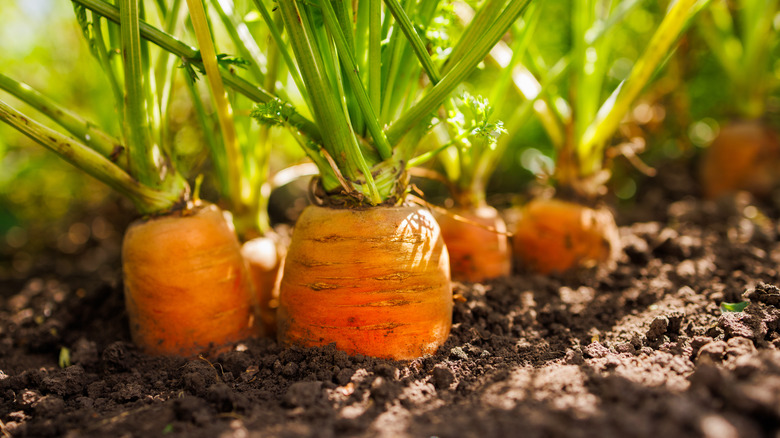
Carrots can thrive in USDA zones as low as 4 and as high as 11. As a result, depending on what kind of weather you're experiencing in September, you want to choose a variety that can withstand your regular temperatures, but that's only one piece of the puzzle for a late fall harvest. You'll also want to opt for a fast-maturing variety. "Shin Kuroda" carrots can reach maturity as soon as 58 days after sowing your seeds, while other varieties like "Purple Haze" and "Yellowstone" take just over 70 days.
Once you have the right carrot variety for your circumstances on hand, the next step is giving it the right supplies for healthy growth. Although they can hold up to cooler temperatures, it's important that carrots receive plenty of sunshine each day. This vibrant vegetable is a full sun crop, and they do best with 6 to 10 hours of sunlight each day. When picking the perfect spot, you'll also want to keep the soil in mind, especially if you're DIYing garden beds. Carrots need well-draining soil that supports their root growth. You want to provide adequate water without overwatering your carrots or leaving water pooling.
For best results, you may also want to consider adding a carrot companion plant to your garden: radishes. Just like carrots, radishes can be planted in September and harvested in just a few weeks, depending on your region. Plus, they can help reduce some of the problems that can prevent your carrots from germinating, such as soil crusting. Lastly, be careful not to make common gardening mistakes like under-watering or over-fertilizing, which can impact whether or not your carrots are ready to harvest in time this fall.