

How To Keep Yellowjackets From Nesting In Your Yard
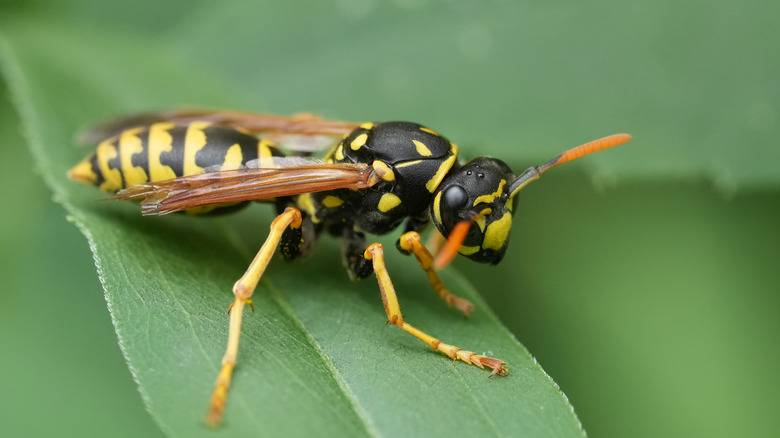
By the time the dog days of summer roll around, homeowners are likely already exhausted trying to keep pests out of the garden. From aphids and slugs, which infest gardens in the spring, to caterpillars and beetles that nest in plants, there's a variety of invaders to watch out for. Unfortunately, the hard work of battling these creepy crawlies doesn't end as summer winds down, as yellowjackets tend to be at their most active during late summer and fall.
The brightly-colored flying insects are classified as social wasps, which means they tend to live together in fairly large groups. As a result, you might find nests all around your property, or even in between the gaps of your home's vinyl siding. While this can be a real headache, the most common nesting strategy of yellowjackets is even harder to combat — these wasps love taking up residency in underground burrows, which have been carved out and subsequently abandoned by rodents. These underground lairs can be frustrating to fight against and extremely dangerous to humans, especially if you count yourself among the unlucky few with an allergy to their painful stings.
If you do find yourself inundated with these dangerous types of wasps and you're having trouble driving them away, be sure to read ahead. We'll outline a few common causes for yellowjacket swarms and identify a couple of helpful methods for eliminating their residences. Yellowjackets generally tend to stick close to home, so be sure to note exactly where you're spotting them. Furthermore, you'll want to do your best to rid the area of any food sources, which might be inviting them to create even larger nests. With any luck, you'll have everything you need to banish the yellowjackets and keep them from returning next year.
How to keep yellowjackets away
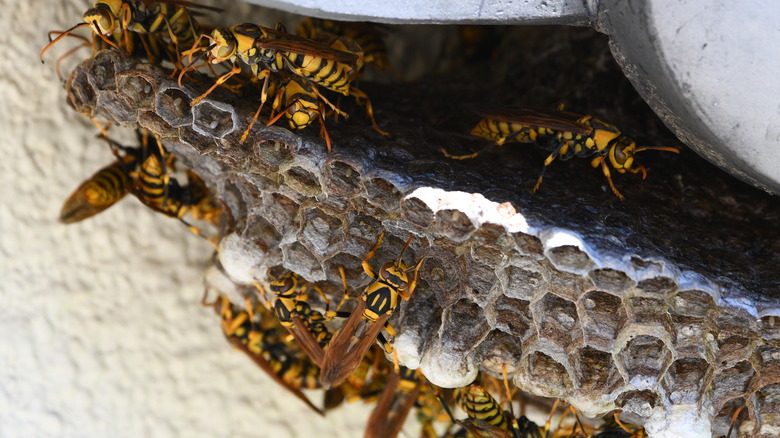
Before your yard becomes a veritable community center for yellowjackets to populate, the invasion begins with a single queen. The queen will generally arrive in the spring and search high and low for a dark, quiet location with plentiful food sources. Yellowjackets aren't especially picky with their food, but they'll always opt for something sweet or protein-rich when given the chance. If you have a garden party during the spring, be extra careful not to leave any fruit, juices, candy, or meat scraps lying around. Open beverage containers, especially those that contain sugary sodas, are an especially appealing flavor to them.
Even if you do manage to seal up your trash and compost, the yellowjackets might raid your garden or locate wild berries and fruits. So, once you're sure that your lawn is free of any food scraps or party detritus, you can begin your search and destroy mission. Locating the hive is usually as simple as watching for the wasps and following their activity. They tend to make a "beeline" back to the hive once they've retrieved their nutrients for the day, typically between the hours of 10 a.m. and 4 p.m.
If you're really intent on removing the hive because it's close by (or even on your house), or you're genuinely concerned for your safety, the best method is to treat the nest with insecticide or call a professional exterminator. However, if the hive is far enough from your home that it doesn't pose an immediate threat, the best course of action is to leave the yellowjackets alone, allowing the nest to die out in winter. That's because, although their sting can pack a powerful punch, these bugs won't go out of their way to attack human beings when unbothered.