

A Vibrant, Cascading Perennial That'll Look Stunning In Any Garden
Perennial ground cover plants often outperform mulch in flower beds for a couple of reasons. In a nutshell, they regulate soil temperature and suppress weeds, but don't often need to be replaced as long as they stay healthy. Plus, their care needs are minimal once they've acclimated to their environment. Whether you're seeking a natural weed fighter for your flower garden or simply want an ornamental plant to spill over the edge of a rockery, basket-of-gold (Aurinia saxatilis) should be in the running. This evergreen perennial loves stony and sandy landscapes since it hails from the rocky mountains of central Europe. It's also a good choice for drought-prone areas, as it can handle dry soil and water shortages.
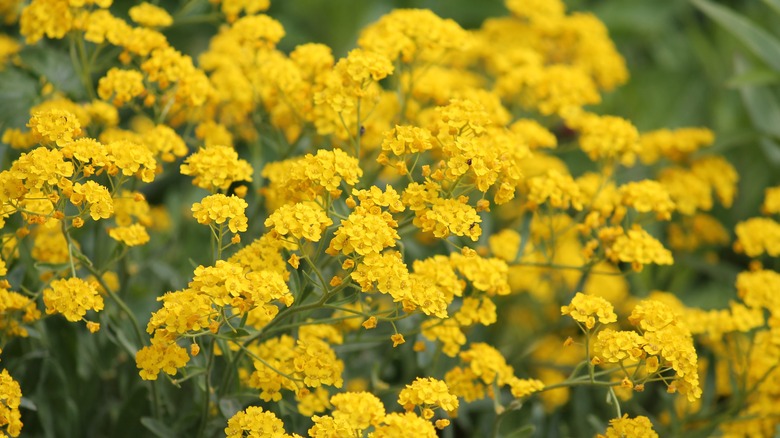
As a member of the Brassicaceae family, basket-of-gold is related to broccoli — although it looks much more elegant. This plant is known for its cheery yellow flowers and cascades of velvety foliage. Its tiny blossoms open in the spring and brighten up their surroundings for a month or more. It also attracts bees and butterflies, which can help pollinate your fruit trees and vegetable gardens. Sometimes called yellow alyssum or gold-dust, basket-of-gold is typically wider than it is tall, maxing out at a height of 1 foot and a width of 1.5 feet. Sowing its seeds first thing in the spring is ideal, but you can also divide mature specimens in the autumn to get more of these beautiful plants.
How to care for basket-of-gold plants
Basket-of-gold isn't especially fussy, but it does require a few specific growing conditions. First and foremost, give it well-draining soil and avoid overhydration, a common garden-watering mistake. This plant won't tolerate soggy ground, which sets the stage for root rot. Heavy clay soil tends to hold more moisture than basket-of-gold can handle, so choose a growing site with an average-to-sandy soil texture. If that's not an option, amend clay-rich soil with compost to prevent waterlogging. Alternatively, you could reuse old potting mix to improve your garden's clay soil. Since it's adapted to USDA hardiness zones 3 through 7, basket-of-gold is accustomed to frosty temperatures. That said, make sure the plant doesn't get too hot. Though it makes the most flowers when grown in full sun, it appreciates a bit of afternoon shade in regions that experience steamy summers.
When deciding whether to grow basket-of-gold in your landscape, keep in mind that it can peter out after a short period of time, especially if it experiences too much heat or humidity. Aphids are also drawn to this plant, and a severe infestation may lead to ill health. This means that you may need to dig up dead specimens and replace them. Luckily, basket-of-gold is easy to grow from seed if you encounter this problem. In fact, gardeners who live outside basket-of-gold's preferred hardiness zones often treat it as an annual, sowing new seeds each fall to enjoy the plant's springtime burst of sunny blossoms.