

How Daylight Savings Affects Your Garden And How To Use It To Your Advantage
We may receive a commission on purchases made from links.
Daylight Savings Time (DST) encompasses the period between March and early November, and is usually associated with more hours of sunlight and a frustrating period of adjustment at work and school. DST, however, might not only affect you but also your plants, thanks to the changing sunlight. It's worth noting that switching to DST does not magically grant more daylight hours, though it may feel like it. Nature does not generally accept time as we see it, and there is no sudden change from the day before DST to the day after. However, because it encompasses the summer months, your garden experiences longer days, more sunlight, and warmer temperatures. But the shifted clock may affect how you interact with your plants, which can have an impact.
While longer, warmer days are a boon for many plants, there are also potentially a few negatives associated with DST. While most outdoor plants are influenced more by nature's changes rather than your behaviors, there are still cycles that your actions create, such as watering times or movement of shades or potted plants. As you adjust to the time change, you also adjust when you do things throughout the day. It may be the same hour on the clock for you, but not for your plants, which can cause temporary disruptions.
However, while you struggle to adapt your circadian rhythm to the time change, you may also find yourself being a little less productive. Gardening might be good for your health, but trying to wake up with the clock can make you feel miserable in the moment. On the plus side, it's much easier to garden outside, both mentally and physically, when there is more light. You do get another hour of light in the evening for gardening.
Work with Daylight Savings Time to keep your garden healthy
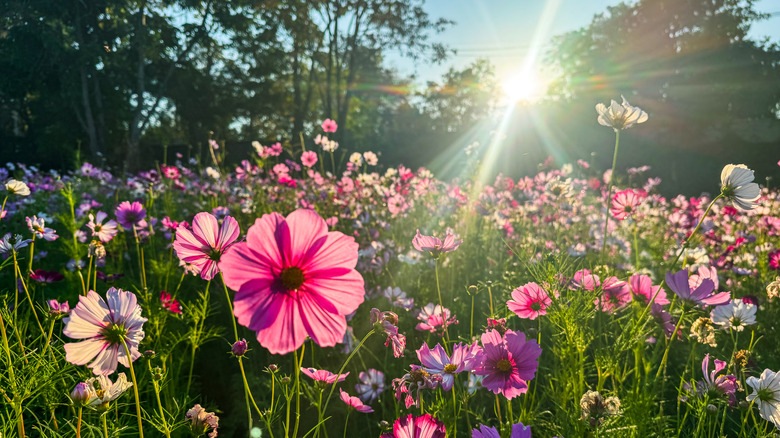
The reason summer is summer is because the planet tilts on its axis: The northern hemisphere is angled a little closer to the sun. So shade-loving plants that were happy with the amount of light they received in spring could end up too hot or even receive a sunburn thanks to the sun's intensity. DST can serve as a reminder to keep an eye on your plants during the summer and ensure they're still happy with their living conditions. As the sun shifts the sky, plants that were once in full sun are now in the shade, or vice versa. For example, some of Martha Stewart's favorite outdoor plants you should add to your garden tend to enjoy full sun. If the sun's shifting path means they are now partially shaded throughout the day, they might not do as well.
If you want to mitigate the annoying change in your schedule because of DST, the best plan is to slowly adjust leading up to the change. Since you will be pulling your clock back an hour, try and wake up a few minutes earlier every few days. Likewise, you can also gradually adjust your daily plant care schedule as well. Another option is to automate certain things, like watering your lawn using a sprinkler timer. Even if you use a set up with a hose, you can schedule when it goes off with a programmable water timer like the one from Rainpoint programmable sprinkler timer. These timers aren't smart and don't adjust to DST. Do so manually, and you can still water your lawn at the best time of day. Just as importantly, remember to shift your plant care schedule once again as the clock falls back in early November.