

How To Choose The Best Layout For A Thriving Vegetable Garden
We may receive a commission on purchases made from links.
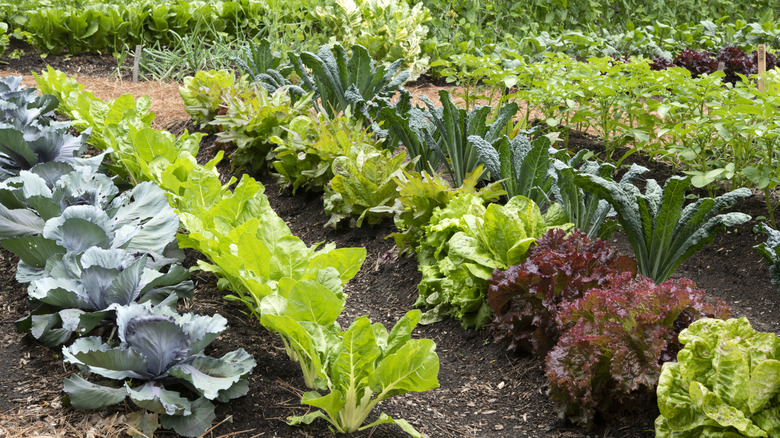
There are a variety of reasons gardening is healthy for you. However, being able to enjoy healthy meals of homegrown vegetables starts with having a good layout for your vegetable garden. Aesthetics and personal preference can certainly play a role in this decision. But, to ensure a successful harvest, choosing the best layout for a thriving vegetable garden should be predicated on the variety of vegetables being grown, along with the available space and characteristics of that area.
The first step in this process is to select a suitable site. This is no small consideration, as planting in the wrong spot is one of the most common gardening mistakes. If your yard is large enough to present you with options, be sure to pick a spot that gets plenty of sunlight, has good-draining soil, and is close to a water source. Ideally, the garden site is near enough to your house so that it is convenient to monitor the conditions of your garden throughout the year. In a smaller yard, you may just have to deal with whatever area is available. In either instance, you should observe and assess your chosen site, paying particular attention to how much sun each portion of the plot gets throughout the day.
Next, make a list of the plants and vegetables you want to include in your garden plot. In addition to just naming the vegetables, take notes of things such as ideal growing conditions, how they grow, and what they can or cannot tolerate growing next to them. For example, you should never plant potatoes and tomatoes together. Conversely, parsley is an ideal companion plant for tomatoes. These notes will be of great value for plant placement when you begin planning the layout.
Consider geometric configuration and types of plants in your vegetable garden
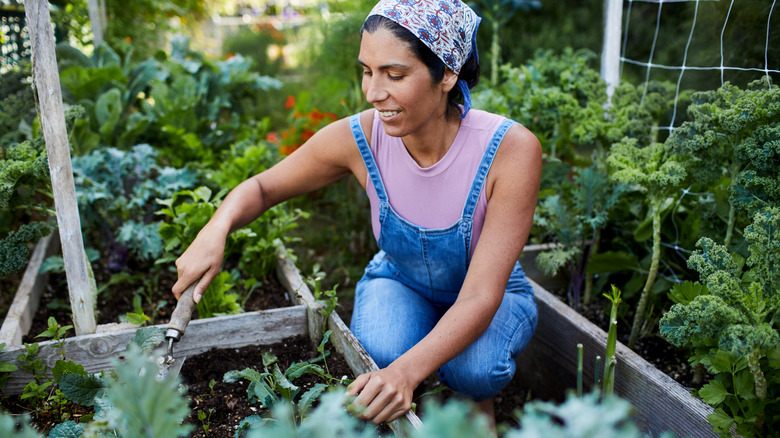
Armed with the size, shape, and characteristics of your garden plot, along with the notes on your intended crops, you can begin planning your layout. As you prepare to do so, consider whether you want to utilize blocks or traditional rows, as well as if you want to incorporate any vertical structures such as trellises or hanging baskets. Square-foot gardening, which has become increasingly popular in recent years, is another possibility.
Generally, traditional rows are good for ensuring all plants get equal sunlight. Utilizing rows also makes soaker hose irrigation much simpler. Keep in mind when laying out the rows, they should be done in a north and south direction, to prevent plants from shading one another during the day. Plants in rows should be arranged with the shortest in the south and the tallest in the north. Blocks tend to be more efficient, as they allow for more plants to be grown in the same amount of space. You can also use a combination of rows and blocks, depending on the plants you grow. Square-foot gardening involves laying your garden plot out in 1 foot by 1 foot squares and planting as many of one type of plant as possible within that square for maximum efficiency. The total number of plants is determined by the mature size of each plant.
Besides the geometric configuration, consider the nature of the plant. Sprawling plants such as squash, for instance, should be planted along the edges so they don't encroach on other plants. Crops you constantly need to access should also be positioned close to the edge. Climbers like beans, peas, and cucumbers present an opportunity to maximize garden space by allowing them to grow along vertical structures like this Lalahoni Cucumber Trellis. Just be sure these objects are positioned so as to not shade other plants.
Draw your garden layout on paper or in apps
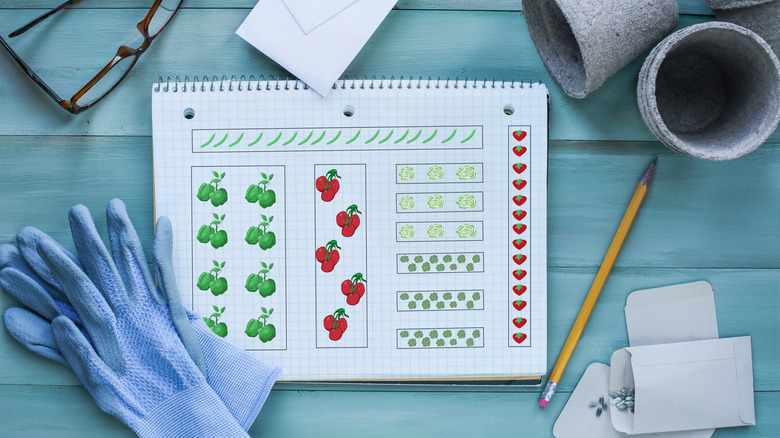
As you draw out the blueprint for your garden layout, also consider the recommended spacing for each plant. If you planted in this same plot last year, you will also need to take into account what type of plants were in which spaces in the past and rotate those crops accordingly. Additionally, reflect on last year's harvest as to which crops may or may not have produced a good yield in a certain portion of the garden.
Drawing the garden on paper, utilizing exact scale measurements, coupled with plant placement, will give you an accurate idea of how the planted garden will look. However, don't feel locked into your initial draft. Once it is all on paper, assess the results and consider relocating any block, row, or section of plans to enhance the overall garden. Given that changes will likely be made, it's a good idea to make all your drafts in pencil. Additionally, those who want an even more efficient way to alter their garden layout should consider utilizing apps such as Garden Manager, Smart Gardener, or the GrowVeg Garden Planner.