

What To Do If You Find A Baby Hummingbird In Your Yard
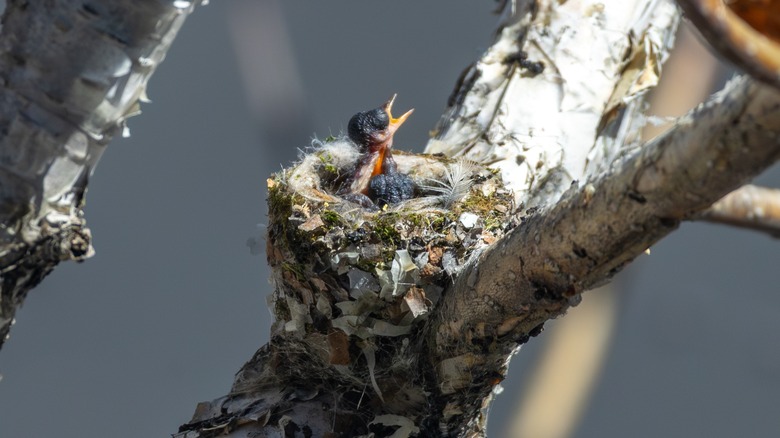
If you've made your yard inviting to hummingbirds by putting up a feeder or planting flowers that attract hummingbirds, you might be thrilled to notice some nesting in your yard. Soon you may even hear baby birds chirping in the morning! But what should you do if one day you step outside to find that one of those hatchlings has fallen out of the nest?
First, assess the situation from a distance. If you have pets, make sure they are secure and indoors. Even a well-behaved dog can scare or injure a bird, and you want to avoid stressing it any more than necessary. If there are no obvious threats or dangers, observe the baby hummingbird without touching it. Does it have feathers? A fully-feathered but small hummingbird is likely a fledgling. Learning how to fly isn't easy, and it's normal for young birds to spend some time on the ground until they figure it out. Observe from a distance, but only intervene if other animals or people try to bother it.
If the baby hummingbird doesn't have all of its feathers, it most likely fell out of the nest. Carefully inspect the area to see if you can find the nest it came from. If you can, place the hatchling gently back into it. If you cannot find the nest, the nest was obviously destroyed by a predator, or the hummingbird is obviously injured, call a wildlife rehabilitation center.
What to do if the hummingbird is injured
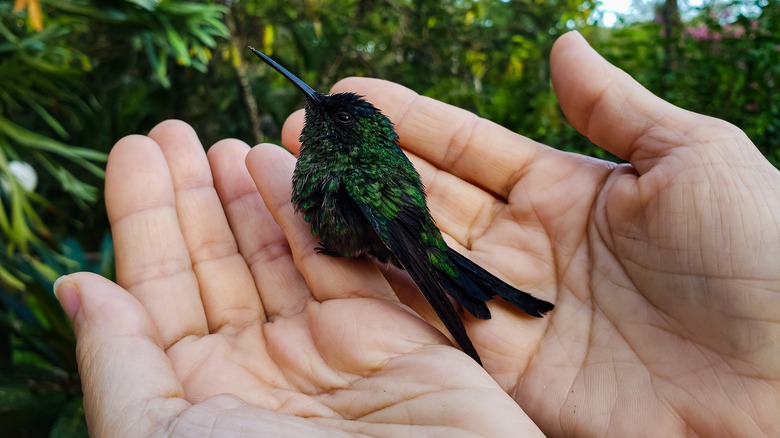
Hummingbirds are delicate and difficult to care for, so your little feathered friend will be better off in trained hands. Call a wildlife rehabilitation center and follow their instructions. If there aren't any near you, you can also call other organizations that work with animals. Only wildlife vets can take wild animals, but regular vets may know of other licensed rescues.
To keep the bird safe until a professional can take it, start by preparing a nest. Take a small cup or bowl and line it with soft paper, like tissues. Do not use fabric — it might be softer, but the threads can become tangled around the hummingbird's talons and injure it further. Gently place the bird in the center, and put the nest under a lamp to keep it warm. If you're worried the bird may try to fly away and further injure itself, you can place the makeshift nest into a paper-lined shoe box. Poke holes in the lid before you place the hummer into the box for ventilation.
If directed by the rehab center, you may need to feed the hummingbird before bringing it in. The diet of hummingbirds is more complex than you might realize, but they can survive on sugar water alone for short periods of time. The ratio is one part sugar to four parts water. Mix it well and feed it to the bird carefully with an eyedropper. Only use white sugar, and avoid using other sweeteners for hummingbird nectar, like honey or brown sugar.