

The Surprisingly Dangerous Snail You Won't Want To See In Your Garden
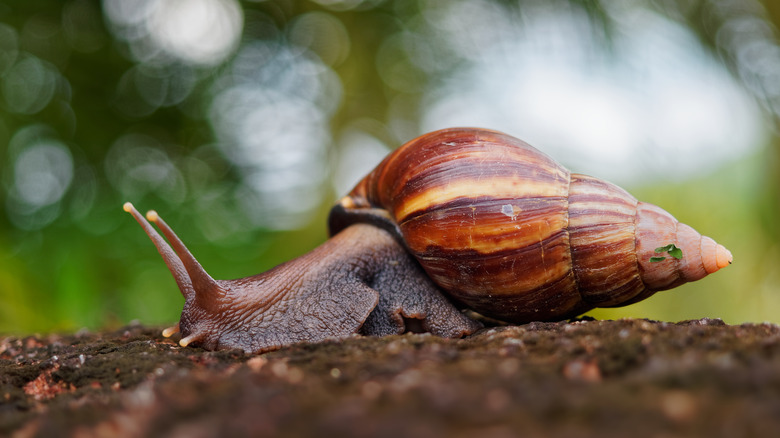
Most snails that visit your garden are pesky, but they aren't typically a threat to your health. If anything, some snails are more helpful than harmful, aiding the composting process and providing sustenance for birds. One glaring exception, however, is the giant African snail (Lissachatina fulica). This invasive species is found in Florida and Hawaii, where it has become a costly problem for farmers, homeowners, and the environment.
In addition to damaging plants, these snails sometimes transmit dangerous pathogens and parasites — such as rat lungworm, which can lead to meningitis infections in humans. In other words, do not touch this snail with your bare hands. If you absolutely must handle it, wear disposable gloves and wash your hands thoroughly afterward. That said, the better option is to make no contact at all. Snap a photo of the snail, write down where you found it, and contact your state's department of agriculture for assistance right away.
Fully grown giant African snails are easy to spot, since they're pretty large. Some grow as long as 8 inches and expand to a diameter of 5 inches. They're also identifiable by their striped, conical shells and soft bodies, which are grayish-brown or white in color. Giant African snails can lay over 2,500 eggs in a single year, too, which means you could end up in a lot of trouble quite quickly — especially if you fail to notice the immediate signs of a pest problem in your yard.
How to keep giant African snails out of your garden
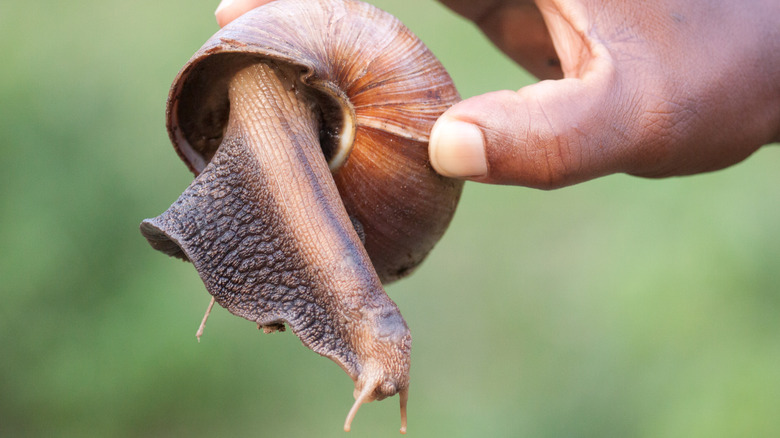
Giant African snails usually come out at night, leaving slimy trails and hole-filled leaves in their wake. They also have incredibly broad palates: In addition to chowing down on more than 500 types of crops and ornamental plants, giant African snails eat the build material stucco, which means their feasts can compromise the structural integrity of buildings. They tend to hang out near the plants they've been devouring too, so proceed with caution if you're standing by foliage with visible damage.
Luckily, some methods of deterring typical garden snails may also ward off giant African snails. Introducing garlic to your garden can help keep out several pests, including snails. Try growing it beside plants that snails like to eat, as its pungent odor can send these slimy invaders packing. Or, you could make a garlic-and-water spray and apply it to your plants. Likewise, you can use wood ash to repel snails and other pests. Just sprinkle a circle of it around the bases of any plants that snails like to munch. You can also use crushed eggshells or copper bands as additional snail barriers.
It's also worth tweaking your garden to make it less appealing to pests. Like many snails, giant African snails seek out damp environments, which means that enhancing your garden's drainage could make it less inviting to these creatures. Clearing out piles of pulled weeds can help, too, as can adding snail-repelling items such as citrus peels to your compost pile.