

How To Keep Strawberries Plump And Hydrated (Without Overwatering)
We may receive a commission on purchases made from links.
When growing strawberries, you'll be looking to produce the tastiest fruit on the block. If you've noticed your strawberry crops looking a bit lackluster, however, it could be that they're feeling dehydrated. The leaves or fruit might be drying out, or the plants may not be producing fruit when they should be. This could be because you're not watering your strawberry plants enough, or the ground might be drying out too quickly between waterings in the heat. Luckily, you can employ some gardening tricks to help prevent your strawberries from becoming dehydrated.
Mulching is an excellent way to keep your strawberry plants healthy, but it's important to make sure you choose the right kind of mulch. You also need to know how to water your plants properly and when to water them. After all, overwatered plants are just as bad as underwatered ones; in either case, you won't end up with the harvest you're hoping for.
How to mulch your strawberry plants
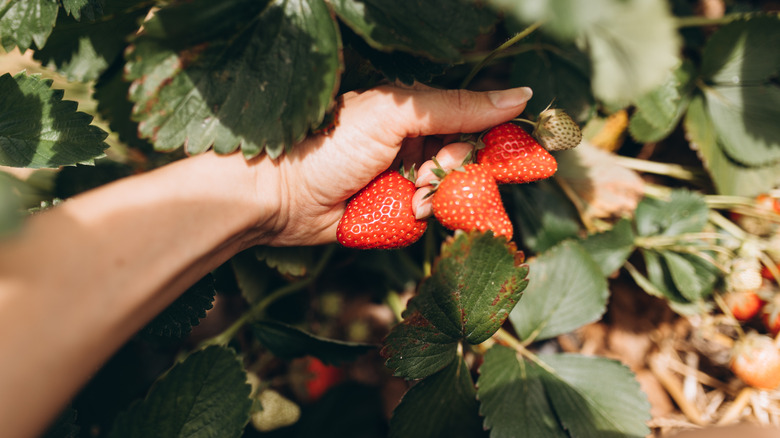
With so many options out there for mulch, you may be wondering which is best for your strawberries. You want to consider a mulch that will feed the soil and keep it moist without waterlogging your plants. Horticultural wool is one option: While you can use raw wool, pellets are also available, such as the Agricas wool pellet organic fertilizer from Amazon. Sprinkle the pellets around your strawberry plants, and they'll not only help retain moisture, but also add nitrogen to the soil.
Some gardeners claim that hay is a great mulch to use for strawberries, because it aerates the soil and quickly breaks down. It does get a bad rap because weed seeds are sometimes found in it, but that's not enough to stop many growers from using it. Other gardeners believe that straw is best and suggest avoiding using hay altogether. Bark mulch and wood chips hold water in the soil without making it too moist; they also keep slugs away and can add a natural and clean look to your strawberry garden.
How to water your strawberry plants
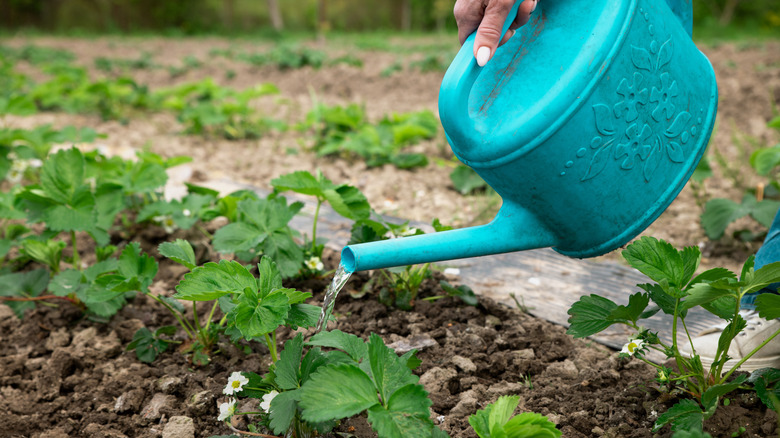
While mulch can keep your strawberries moist and protected, you still need to ensure you're watering them properly. The first step in proper plant watering is to do it first thing in the morning. This gives your strawberries a much-needed drink before the sun starts drying out the soil. It also ensures that any water on the leaves will dry before nighttime — wet leaves can lead to diseases.
As for how much water to give your plants, strawberries do best with a total of 1 inch of water a week. If you're getting that in rain, you won't need to water them, but you'll want to monitor it using a rain gauge. If you live in an area with limited rainfall, a drip irrigation system or soaker hose can prevent your strawberries from drying out or becoming too waterlogged. These types of watering system also keep water off leaves and help prevent other major mistakes you might make when watering your garden. Remember, wet leaves on strawberry plants might stop them from drying out, but they can cause plenty of other issues with your crop.