

The Low-Maintenance Ground Cover You'll Wish You Never Planted In Your Garden
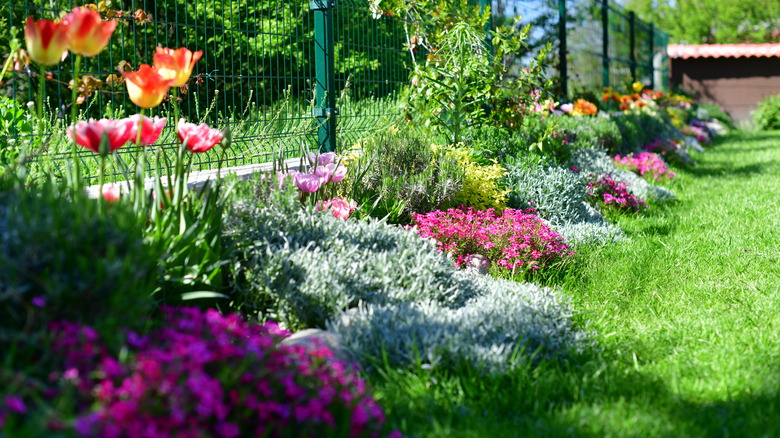
Periwinkle, a low-growing evergreen plant with glossy, elliptical leaves and delicate springtime flowers that range from blue to purple to white, may seem like the perfect choice for your garden. After all, this beautiful, low-maintenance ground cover grows equally well in both full sun and shade, fills in bare spots, and can create a vibrant carpet in your planting beds or lawn. It's also ideal for suppressing weeds, attracting pollinators, and reducing rainwater runoff, all wonderful things for your yard and garden. Despite its charms, periwinkle's downsides are serious enough that you may ultimately regret planting it.
This lush beauty has two main types in the United States — big leaf periwinkle (Vinca major) and lesser periwinkle (Vinca minor). Vinca major, also called greater periwinkle, and vinca minor, also known as creeping myrtle, both got their start in Europe and Asia. They were first introduced to the United States as ornamental plants in the 1700s, but have since become what's called "invasive." In other words, they can escape the boundaries of your garden and spread into natural areas, where they may smother native plants and disrupt ecosystems. Both types of periwinkle can be problematic because they can kill off essential native plants, which are key to creating a pollinator-friendly garden and supporting local ecosystems. Your neighbors likely won't be thrilled either when this aggressive spreader gets into their yards.
Ground cover alternatives to Periwinkle
If you've already planted periwinkle, you may want to consider pulling it up and substituting it with something non-invasive. And if you were thinking of cultivating this ground cover, it's wise to opt for a less aggressive alternative. For example, you could consider purple dragon lamium (Lamium maculatum), another ground cover with stunning purple flowers. This lush perennial will form a beautiful, dense carpet of foliage and flowers. Additionally, it thrives in many conditions, including filtered sun, partial shade, or full shade.
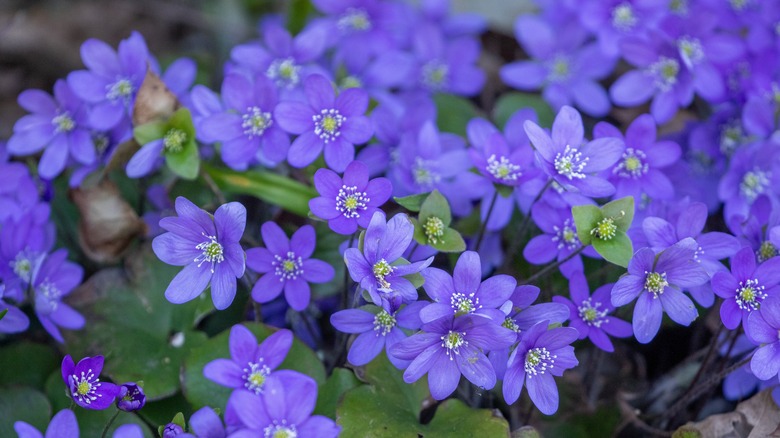
However, when choosing the best ground cover for your yard, you should also consider other factors, such as how much sunlight your yard gets and your USDA plant hardiness zone, since these conditions can determine how it will fare in your climate. For instance, purple dragon lamium grows best in zones 4 to 8, which covers much of the United States. However, with extra care, it can also survive in southern locales. Another equally pleasing alternative is liverleaf (Hepatica nobilis), a native spring-blooming perennial with delicate flowers in shades of purple, white, and pink. It is best planted in part to full shade in zones 5 to 8, but may also be suitable for zone 4 with extra TLC.
If you live in a warmer and drier region like California, Florida, or the Southwest, Japanese stonecrop (Hylotelephium sieboldii) is a resilient and fuss-free plant option that thrives in virtually all climate zones. As a succulent plant, it's well-suited to hot and arid conditions. It offers cheerful pink flowers in spring, flourishes in full sun, and tolerates light shade. If you're not sure what would be best for your garden, consult with a local nursery or extension service, which can recommend the best plants for your area.