

We Tried Using An Ancient Irrigation Technique In Our Garden. Was It All It Was Cracked Up To Be?
We may receive a commission on purchases made from links.
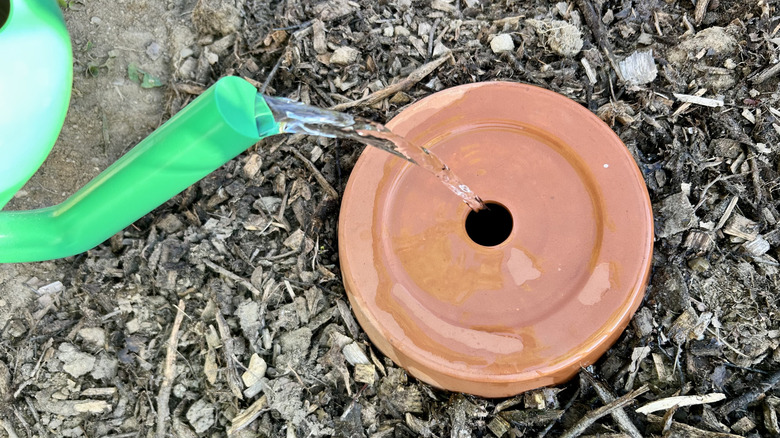
Admiring gorgeous gardens and trying to grow one of my own are among my favorite summer pastimes. Truth be told, admiring is easier than growing since I spend more of my summer working and traveling than weeding and watering. I'm also a bit stubborn: When I go out of town, I hope for the best rather than asking neighbors to water my plants. I figure their lives are busy enough, and I know how easy it is to make mistakes when watering a garden. Sometimes I use self-watering spikes to hydrate my favorite plants when I'm away from home, but I only have a handful of them. My Tuzinano terracotta garden spikes are a clever twist on ollas — water-filled clay pots that help quench a plant's thirst when buried nearby. After watching TikTok user @sydneyxmastree fashion ollas out of terracotta flower pots, I decided to see if this ancient irrigation method is the answer to my modern-day watering conundrum.
There are a few ways to make ollas with terracotta pots. One method involves attaching a pot to a saucer. Another involves gluing together the rims of two pots. I went with the first method for my backyard experiment, but I'd choose the second if I wanted my olla to water a tree or other large plant. In most cases, two pots will hold more liquid than one-pot-plus-a-flipped-over-saucer. Whichever route you take, the goal is harnessing the power of porosity. Unglazed terracotta is porous, so water travels through it if left in place long enough. That's why farmers in what is now the American southwest have been planting terracotta reservoirs beside their crops for centuries.
Gathering materials and assembling my olla
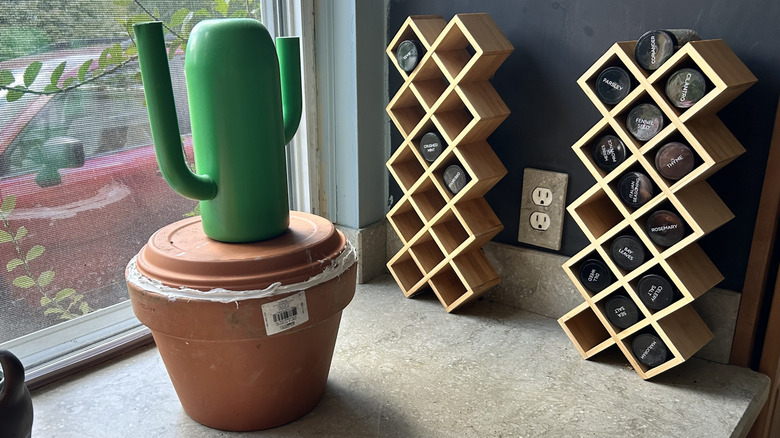
Creating an olla from a flower pot doesn't require many materials, but there are a few variables to consider when shopping. Be sure to select a pot and saucer made of unpainted, unglazed terracotta since most other planter materials aren't as porous. A pot with thin walls is best since thick walls are harder for water to penetrate. I purchased a Pennington indoor-outdoor terracotta pot ($12.98) and a matching saucer ($9.74) from Lowe's. My pot has a diameter of 10.63 inches at the lip, a height of 7.48 inches, and a saucer that's 10 inches wide. I also bought Tool Bench all-purpose white caulk ($1.25) at Dollar Tree. This was fine since I knew I'd be watering flowers with my olla, but I would have chosen a food-grade adhesive such as Silco RTV 4500 high-strength silicone sealant if I were placing the olla near my fruit trees or vegetable garden. To keep pests from sneaking through the olla's refill hole (the already-included drain hole in the bottom of the pot), I found a rock to serve as a cover. For a touch of whimsy, I decorated the rock with waterproof acrylic paint I already had on hand.
My pot and saucer accumulated some mud while sitting in my garden, so I cleaned their rims and interiors before assembling my olla. Once both items were completely dry, I lined the saucer's rim with a generous helping of caulk, then flipped the saucer over and pressed it onto the pot's rim. A filled watering can weighed down the saucer as the adhesive cured. Sealing the seam where the saucer meets the pot seemed wise, so I caulked this portion of the olla's exterior.
Designing my experiment and navigating pitfalls
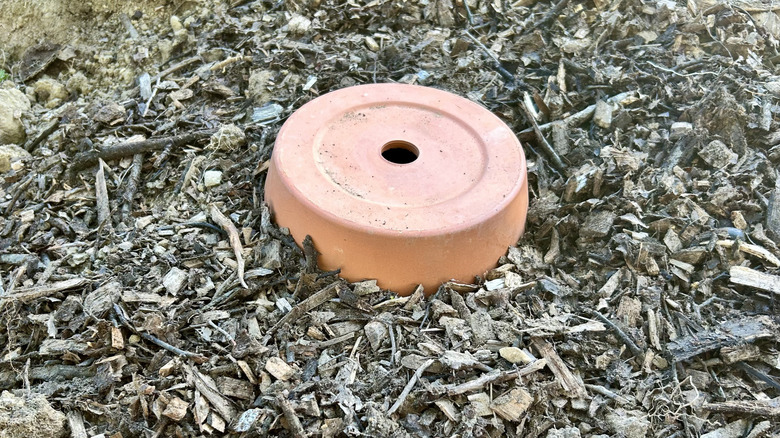
I put my olla in an in-ground garden, beside a row of sunflowers. As recommended by the Los Angeles Community Garden Council, I buried it so roughly an inch of its top remained above ground. I knew the olla's water should travel at least as far as its pot's width, so flowers within about 10 inches of it were my experimental group. Flowers far from the olla's reach were my control group. All flowers I tracked for this experiment grew from the same packet of seeds, and they received similar soil and sunlight access.
Though I planned to evaluate just one olla, I needed to create a second one because the first cracked. I don't know why, but I have a few theories. The first is that temperature changes weakened the olla. Terracotta pots are most likely to break when weather goes from hot to cold, especially if they're wet. My first olla cracked when my yard experienced unseasonably cold weather after a series of hot, humid days. A second theory is that constant moisture exposure made the olla's walls brittle. Terracotta loses strength when it's too wet for too long, so keeping water in the olla indefinitely may have done it in. Fortunately, my second olla remained intact throughout the experiment.
I also learned the importance of covering the olla's hole soon after setting up my new watering system. Though I knew water could escape through this opening, I didn't account for pests moving in. Seeing mosquitos fly out of the hole grossed me out. It also inspired me to make my painted-rock cover, which looks like — you guessed it — a sunflower.
This hydration hack is helpful but not failsafe
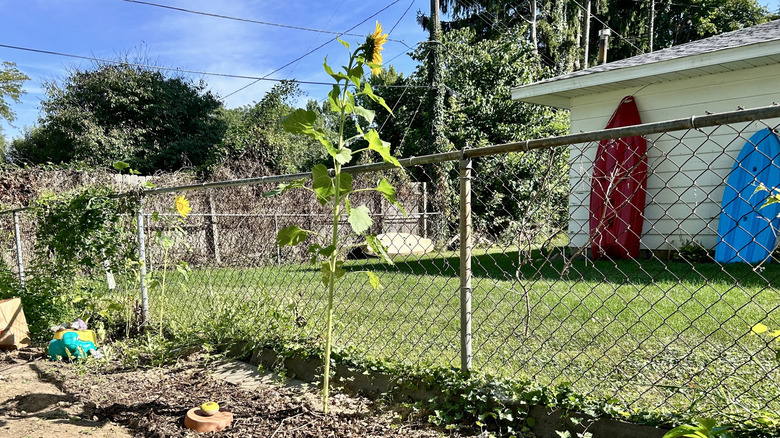
My second olla helped nearby plants stay hydrated, especially when I took a week-long trip. The flowers in the experimental group needed fewer visits from the watering can than those in the control group. They were also the tallest of the bunch. A lush patch of weeds, mainly water-loving black nightshade, also sprouted in the olla's vicinity. These interlopers were a pain to pull but suggest that the olla was delivering consistent moisture to soil 6 to 12 inches from its installation site. Overall, I think turning a terracotta pot into an underground water reservoir is worth a try as long as you can find inexpensive planters. If you're thinking of building an olla, search for secondhand containers at thrift stores or from online buy nothing groups before shelling out more than $20 for new planters that may break.
When I learned of wet terracotta's tendency to crack, I wondered if DIY ollas are quite what they're cracked up to be. After all, a fractured pot is unlikely to hold water properly or deliver it to plants in a gradual way. I'm curious to see if the breakage problem arises again. To make temperature-related cracks less likely, I'll dig up my olla before the ground freezes and store it inside my house. It's also possible that my first olla was cracked all along and I only noticed the problem when it worsened. Therefore, next time I buy terracotta flower pots for making ollas, I'll inspect them more carefully. I may use the "thud method" for finding the best plant pots, which involves knocking on clay planter rims to locate hard-to-see fractures.