

The Best Method For Fixing Cracks In Your Birdbath
We may receive a commission on purchases made from links.
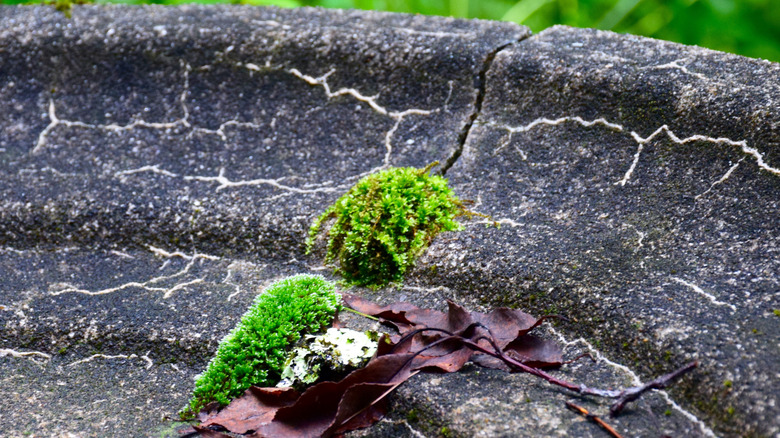
If you own a birdbath, there's a good chance you leave it outside year-round (after all, it's one of the simplest ways to get birds to flock to your yard). But that means it's exposed to the freezing and thawing cycles of winter. If there are small cracks appearing in the surface of your concrete or stone birdbath, ice can work its way in, and, over the years, those cracks can expand. Your birdbath could eventually start leaking or even break apart. If you want to continue to attract songbirds to your yard, you need to make sure you mend those cracks as you see them, rather than letting them become a problem.
You can always just move your birdbath indoors during the winter (if it's not too heavy), but there are plenty of non-migratory birds that might like a sip of fresh water or to wash their wings during the colder months. You can regularly refill your birdbath with warm, not hot, water to prevent it from freezing over, but this isn't a practical solution for most busy people. That's why homeowners who live in cold environments should learn how to repair these avian water features.
To repair a birdbath, all you need is some vinegar, a scrub brush, and some epoxy or exterior-rated silicone caulk. Use a sealant that is FDA food-safe approved, like Silco's RTV 4500 silicone seal. This is a crucial step because some sealants can poison the water and harm the birds that come to drink from it.
How to repair cracks in your birdbath
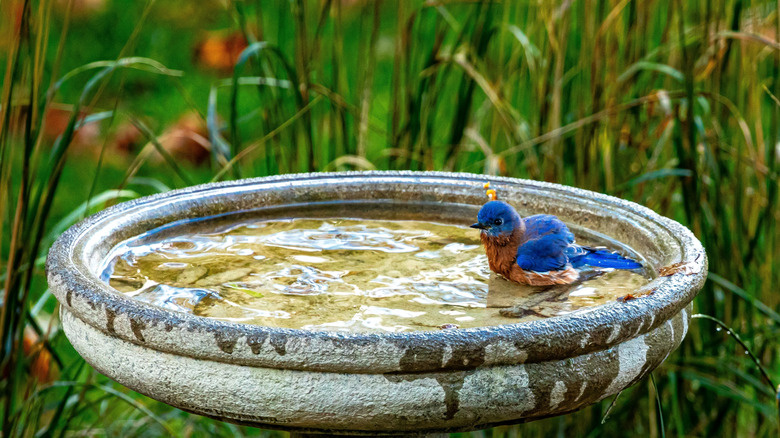
First, scrub the dirt and grime off of the bath and let it dry. Create a 10 percent vinegar cleaning solution by mixing vinegar with water and let it dry completely. If you skip this step, the sealant will have a hard time sticking. Then select your sealant. You can use silicone caulk, hydraulic cement, or epoxy. In a warm, dry space, fill the crevice then use a paint scraper to even out the surface of the birdbath before it dries. Make sure to wait a few hours before you refill the bath with water.
You can also weatherproof the bath with marine-grade polyurethane, especially if it's been painted. This coating gives your birdbath a glossy finish that allows it to stand up to UV and ice damage. It's important to check labels to make sure that the polyurethane sealant is non-toxic. The sealer from Eco-Poly is one option. You can also coat the inside of your birdbath in beeswax or a beeswax-linseed oil mix, a safe substance that will wick away water, protecting the inside of your birdbath from ice. Once you complete this project, you can plant two delicious fruit bushes that'll have songbirds flocking to your yard.