

How To Dog-Proof Your Fence To Keep Your Furry Friend Safe In Your Backyard
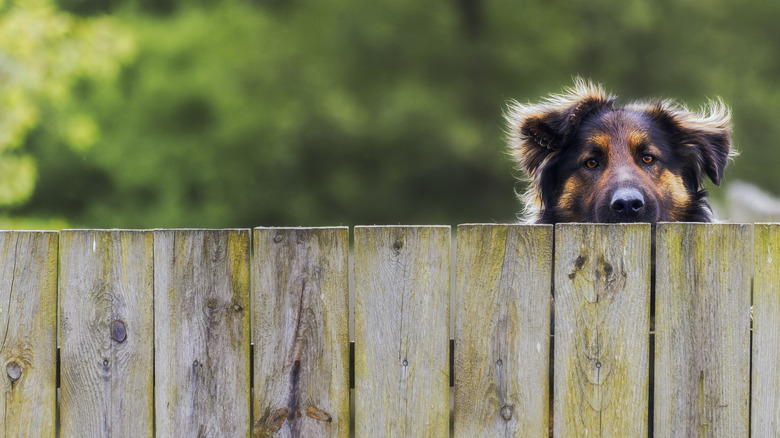
Few things are better than enjoying the peace and sunshine of your backyard with your dog. However, the joy of soaking up the sun with your furry friend can be quickly dampened if you're worried about them escaping through your fence. Whether your dog is a chronic escape artist, or is suddenly agitated by a prey animal or fellow pup, it's important to learn your dog's attempted or regular escape routes, to best thwart those dogged plans. Fortunately, there are steps you can take to increase your fence's security, reducing the likelihood of egress.
There are two main ways in which you can create a better dog-proof fence: Make climbing over more difficult and prevent them from digging under. Stopping a dog from escaping over your fence may be a bit more complicated, especially with experienced jumpers. After clearing potential climbing aids, you can extend your fence with a header or lean-in (those inwardly-angled extensions you see around storage lots and junkyards). Alternatively, invest in coyote rollers: Spinning metal bars installed along the top of a fence that keep your dog from finding a footing. Finally consider redundant fencing. The fence-inside-a-fence not only creates doubt about sticking a landing, but it can block a dog's view so they're less tempted to chase after a squirrel or another dog. It also reduces so-called fence fighting where a dog runs along a fenceline barking at a perceived threat, which lead to a climbing or leaping escape.
A natural version of redundant fencing involves getting creative with your landscaping by adding bushes inside the perimeter of your fence. Just make sure to avoid plants that aren't safe for dogs. This comes with an added bonus for bird-watchers, as living fences are a great way to attract birds to your yard.
Extend the fencing to prevent digging escapes
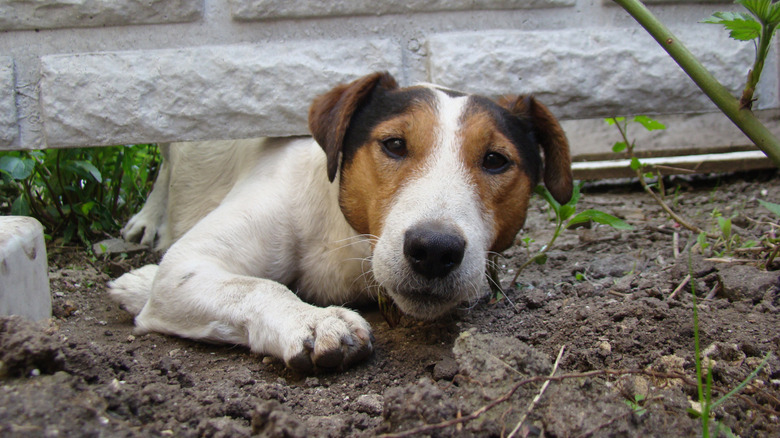
Addressing digging under a fence often involves fewer steps than targeting climbers, as there aren't as many factors to consider. Instead of worrying about moving trash cans or other items that your dog may use to scurry over the fence, you can reduce digging by adding a footer. Essentially you're extending the fence down and along the ground or buried a foot or so under. An L-footer (also known as dig wire) made of chicken wire or hardware fabric can be helpful, especially for the part-time dig enthusiast. If digging becomes a consistent issue, or your dog is strong enough to move the wire footer, you may want to tackle the problem with a more permanent solution, such as adding a concrete footer beneath your fence. You can make this footer as deep as needs be to stop your Shawshank shepherd.
Of course, no method offers guaranteed results. Even with a combination of deterrents, your dog may still find a way to make a break for it. Supervised yard time can help you keep tabs on your pet without sacrificing their love for the fresh air. Targeted training may also be necessary. Undergoing dog training for the outdoors, such as perfecting their recall, can be helpful in the event that they do escape.