

Planting This Vegetable May Be The Key To Keeping Snakes Out Of Your Yard
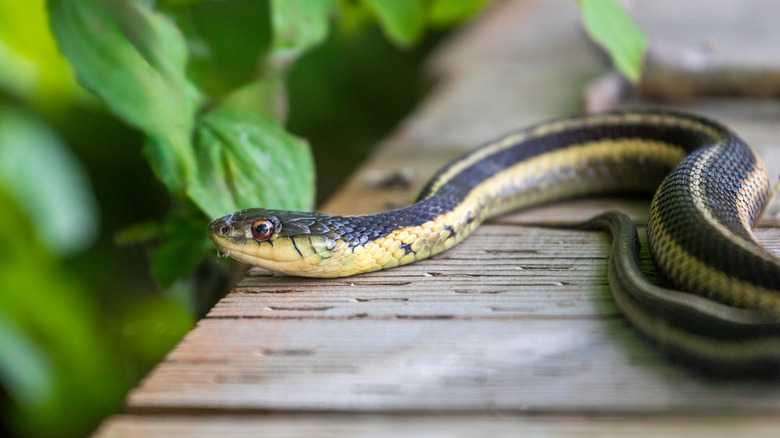
Finding a snake in your backyard can be a startling experience, but it's not necessarily a problem. Attracting certain snakes to your yard is wise because they hunt insects that are plotting to infest your garden and mice eager to nest in your house. Garter snakes are especially helpful because they offer these benefits but don't produce venom. Even if you don't want to invite snakes into your yard, it's best not to kill them (it may even be illegal, depending on the snake and where you live). Instead, try deterring them with onions. Snakes aren't fond of the pungent, sulfur-rich aroma that radiates from these vegetables. In fact, growing onions in your garden may pack enough of a punch to make snakes slither to a different hangout. If cultivating these plants isn't in the cards, you can make an onion-based repellant to apply to strategic locations on your property.
Snakes possess a well developed sense of smell, so several potent scents tend to bother them. Onions, garlic, chives and other members of the allium family are all on their list of dislikes, as is cinnamon. That's why some campers carry cinnamon oil to keep snakes out of their tents. Though the scent of onions is a handy tool for shooing away snakes, remember that it's not a complete solution. To fortify your efforts, pair onions with one of the other natural substances known to deter snakes. The evidence base is strongest for cinnamon oil and clove oil, so you're best off adding one of these to the mix. That said, if your yard is overrun with snakes or you've spotted a dangerous species, reach out to a licensed wildlife removal service.
How to use onions as a snake repellant in your yard
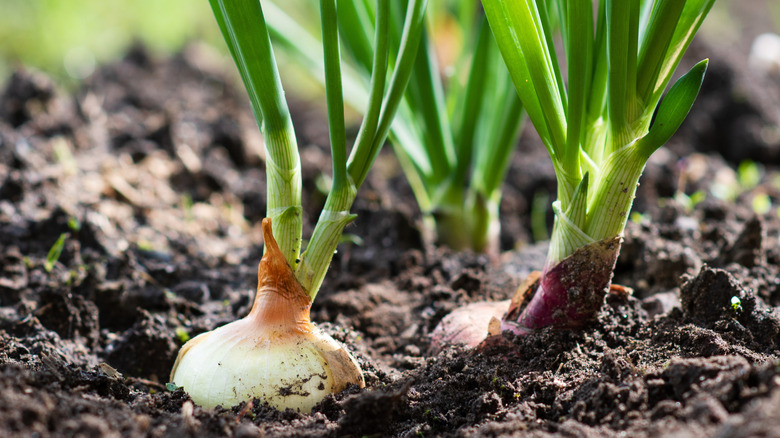
When using onion plants to repel snakes, consider where these creatures congregate as you select growing sites. Several of the most common places for snakes to hide are near water sources and shelters such as porches and cluttered sheds. Growing onions in the vicinity of these hideouts is a smart move, and so is planting them around the perimeter of your garden. If onions won't flourish in some of the spots you've targeted, try growing chives instead. They produce a similarly snake-deterring scent but don't need much underground space. Or, plant onions in containers near snake-prone areas if the ground is too wet to support them. In general, you'll need containers that are at least a foot deep to grow a healthy crop of onions. While you prepare your yard for onion plants, see if you can remove some other snake magnets: Two common ones are piles of brush and patches of tall grasses.
What about parts of your yard that are too shady to support plant life but are still attractive to snakes? Leverage the power of chopped onions. Toss scraps of onions and any other alliums you have on hand — garlic and leeks for instance — in boiling water for several minutes, let the pot cool, then spray the resulting liquid in parts of your yard you'd like snakes to avoid. If you have leftover onion water, pour it on plants that could use a nutrient boost since it doubles as a fertilizer tea.