

The Deadly Perennial You Won't Want To See In Your Yard
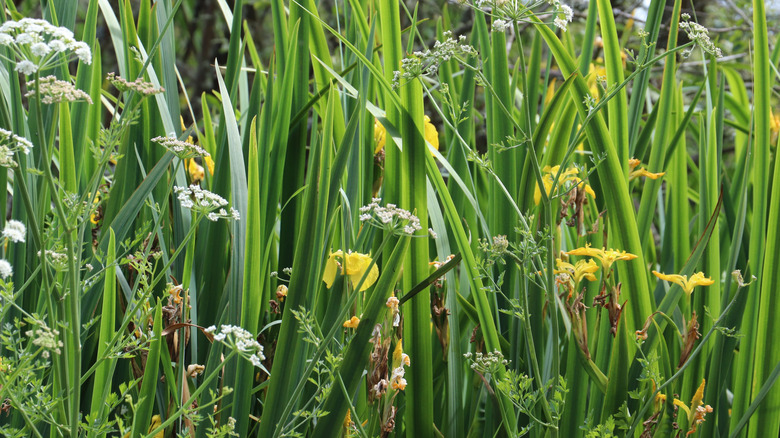
There are plenty of gorgeous but dangerous plants that make their way into homes and gardens, including some you may not know are deadly. Few are as poisonous as water hemlock (Cicuta maculata), an extremely toxic native perennial that can be found along streams and roadsides. The flowers are beautiful, and they're great for attracting pollinators. Black swallowtail butterflies lay their eggs on water hemlock, and birds will sometimes snack on their fruits.
However, every part of the plant is toxic to both humans and mammals. Water hemlock is full of cicutoxin, and ingesting even a small amount can be disastrous. Symptoms of water hemlock poisoning range from stomach pain and nausea to vomiting and seizures. It can be fatal. If you or a loved one has ingested water hemlock, seek emergency medical treatment as quickly as possible. Since it's so dangerous, it should be removed from areas where people and pets can easily come into contact with it, even though it's native. This is especially true if the plant is in an area where children play or walk past.
Water hemlock is sometimes confused with its cousins, Queen Anne's lace (also called wild carrots) and water parsnips, as well as yarrow. All four plants have tall stems, feathery leaves, and clusters of tiny white flowers, but only water hemlock has forked veins at the end of each leaf. Additionally, it has a strong, unpleasant smell, particularly around the leaves.
Safely removing water hemlock
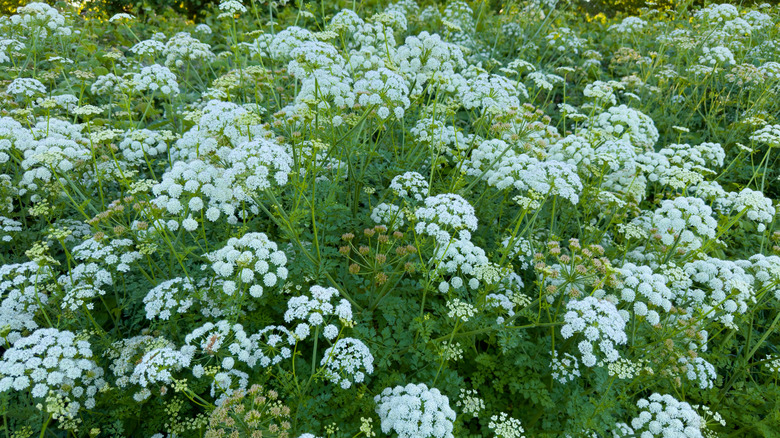
Once you've identified the water hemlock, start the removal process by gearing up. While it usually doesn't cause problems on contact, you still want to avoid getting oils from the plant in any cuts, as well as in your mouth and eyes. Wear gloves and long sleeves, and wash your hands thoroughly after contact to be safe. Avoid using machinery that might send seeds or particles into the air, such as mowers or fires. Breathing in water hemlock isn't safer than eating it!
Dig the water hemlock up at the roots using a shovel or long-handled weeding tool. If the stems are too tall, you may need to cut them first, then dig up the roots separately. Be sure to remove all parts of the plant; if you leave flowers or roots lying in your yard, the plants could regrow. Place them in bags and contact your local poison control center to see where you can safely dispose of it. Disinfect your garden tools, and consider planting safer native wildflowers to replace the plant you've removed. It's good for the environment, and it also keeps hemlock from moving back into the empty spot.