

Don't Throw Away Extra Landscaping Fabric — Use It To Shade Your Garden
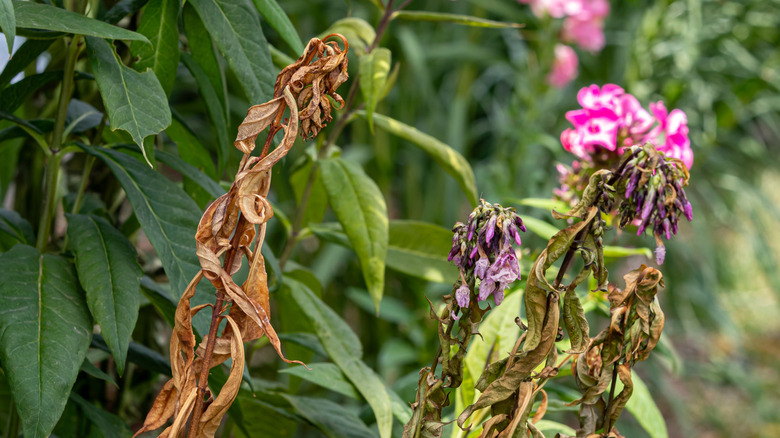
Gardeners usually seek out sunlight to help their plants thrive, but this isn't always the case. If your plants are exposed to too much sunlight, they can dry up, and eventually perish. Clear signs that your plants are getting too much sun include withered leaves or crispy, sunburned spots. But before you move your garden to the shady part of your yard, consider reusing old landscaping fabric to place a cost-effective awning over those plants. This will protect your plants from the harsh sun without restricting airflow.
To build this garden shade, you'll make a lightweight PVC frame to support your landscaping fabric. You don't need to be a DIY expert or use any fancy equipment, as this project only requires two basic tools: a hammer and a PVC-cutting saw.
Your primary material is PVC pipe, but the number of pipes and their length depends on the amount of space you're planning to cover. It's a good idea to keep the lengths of each piece of pipe no longer than three feet so that your frame won't sag. For this specific guide, we're aiming for a frame that's roughly three feet tall, three feet wide, and six feet long. This requires 13 three-foot PVC pipes and six cross tee PVC connectors. You'll also need six pieces of rebar (about three feet per piece) and some string. If this seems somewhat daunting, you can also just save a lot of time (but probably not money) by buying a canopy to shade your garden.
How to build a plant cover out of landscaping fabric and PVC pipe
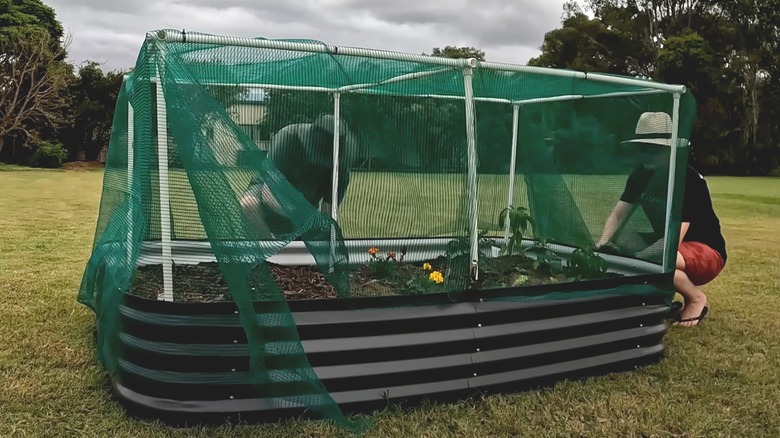
The first thing you need to do is plant your rebar in the ground. Each rebar spike should be equally spaced within three feet of the closest rebar. You need two parallel lines of three rebar spikes. Pound each piece of rebar deep enough that it is stable, while leaving about one and a half feet of rebar sticking out of the ground. Next, place a piece of PVC pipe over each piece of rebar so that you have six pieces of pipe standing upward. Make sure they are sturdy before you proceed.
The next step is to attach your cross tee PVC connectors to the tops of each PVC stake, and then you can link your remaining PVC pieces into the connectors. At this point, you should have a frame that will stand well on its own. The last step of the process is to put up your fabric shade. Simply lay this fabric across the top of the PVC frame and tie it off using the string. When you fasten your string, make sure to use a slip knot so that you can undo it easily when it's time to water or harvest your plants. If your plants still aren't getting enough shade, you can double-layer the landscaping fabric.
Once you've completed this project, you might have to deadhead some of your flowers if they've dried up. This will help the plant to pump energy into new blooms. If your plants still don't seem to be improving, something else may be going on. For example, you might be making major mistakes while watering your garden.