

Tomato Leaves Curling? Here's What You Can Do To Save Your Plant
We may receive a commission on purchases made from links.
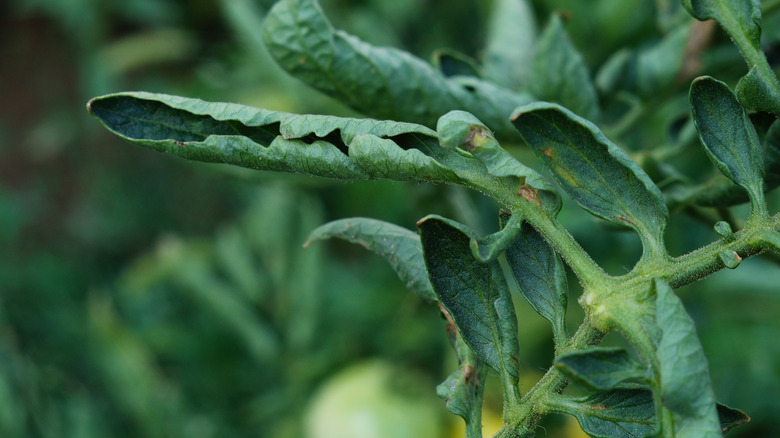
Tomatoes are the most common and popular plants grown in backyard gardens in the U.S., in large part due to the fact they are fuss-free plants that are great for gardening beginners. However, despite the fact they are a relatively simple plant to tend to, there are some issues which can crop up with tomatoes. One of the more prevalent is a condition known as tomato leaf curl. While the symptoms of this issue are pretty much self-explanatory, the reasons it occurs are quite varied, including sun, heat, wind, water, nutrition, insects, herbicide, and disease. Given that each underlying cause requires different corrective actions, it is essential to identify the problem in order to solve your leaf curl problem.
The curling of leaves is essentially a defensive mechanism on the part of the tomato plant. This occurs when the plant is attempting to protect or preserve itself from any number of threats. The vast majority of the reasons behind tomato leaf curl have very simple resolutions. Perhaps the most complex is when the situation is caused by disease and viruses such as yellow leaf curl virus, tomato mosaic virus, and curly top virus. These diseases are spread by various insects and, for the most part, are either uncurable or very difficult to cure. Maintaining sanitary gardening practices and actively limiting insects are good preventative measures. However, once the plant is infected it is typically best to remove it in order to prevent the spread.
While disease may be the end of the plant, there are several other causes from which plants can recover. One is herbicidal drift, which happens when overspray from herbicide contacts the sensitive tomato plant leaves or soil around the plant. To solve this problem, remediate the soil and rinse the plant thoroughly.
Sun, heat, and wind can cause leaf curl
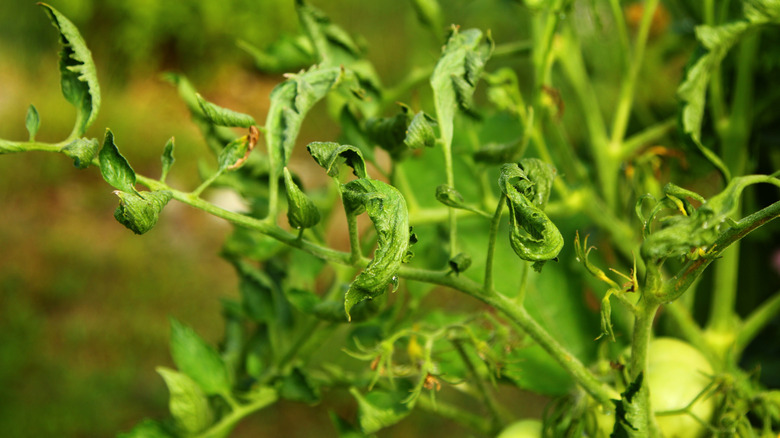
There are a number of environmental conditions that can cause leaf curl. Some of the more common are excessive exposure to direct sunlight, heat, and high winds. This is typically a result of placing the garden in the wrong spot, a common mistake for beginner gardeners. While sunlight is usually good for plants, as it allows them to photosynthesize, constant exposure to direct sunlight can be too much of a good thing. This is typically indicated by the leaves appearing yellow, dry, and beginning to curl upwards. Basically, they are sunburned. If your tomato plants are in a container, you can simply move them. If they are planted in the ground, you can create a DIY sun shade for your garden to provide some protection from the harsh sunlight.
When it comes to excessively hot temperatures, there isn't a lot that can be done, other than keeping plants hydrated. Utilizing that same sun shade, which can be easily made from material like the Cool Area sun shade cloth mesh tarp, can at least help reduce the intensity of the heat by partially blocking the sunlight. Ditto for dealing with high winds. If the winds are temporary, such as those associated with an approaching storm, the curling will abate once the winds die down.
If you've happened to plant your tomatoes in a high wind corridor, your only options are moving the plants if they are in containers or providing some sort of wind break, with a sun shade or similar material. For long-term wind protection, it's a good idea to construct a wind wall or fence that allows for some airflow while diminishing the force of the wind. You should also utilize tomato cages to help support your plants.
Leaf curling can result from water and nutrition issues
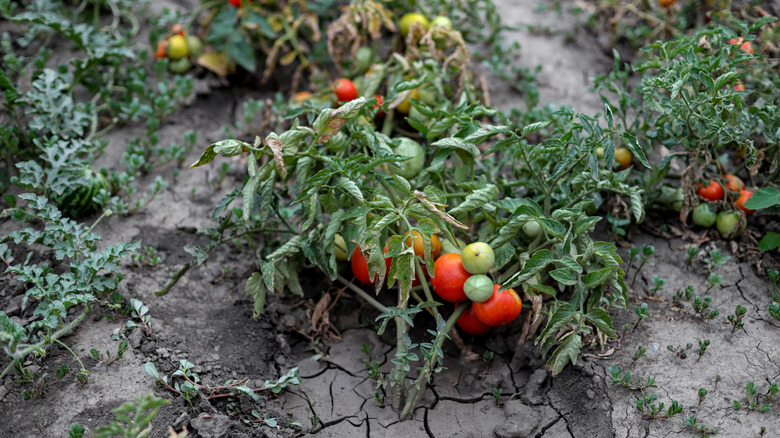
The nutritional makeup of the soil, as well as the amount of water your tomato plants receive can also cause leaf curling. When the plants are underwatered, they will begin to dry out. As they do so, the leaves curl upwards to minimize how much of the leaf is exposed to sunlight, as exposure exacerbates dehydration. The simple solution here is to monitor how much water your plants receive to ensure adequate hydration, typically up to 2 inches per week. Excessively hot or dry conditions can temporarily up the amount of water your tomato plants need. You can also add a layer of top dressing, such as hay or mulch, to help keep the soil moist around the plant.
On the flip side, too much water can lead to issues as well, including root rot. Typically, an early indicator that your plant is overwatered is the leaves curling downward or sagging. If this is temporary, such as from an unusually heavy rain, the problem will usually self-correct in time. However, if the soil your tomatoes are planted in does not drain well, you will need to be cautious about how often you water. Waiting until an inch of topsoil is dry before watering will usually help.
With nutrition, the same "too much or too little" problem exists. If the soil has too little nutrition, the plant's growth will often be stunted and the leaves will begin to curl. On the other hand, if you are adding too much fertilizer, the tomato plants will overproduce leaves. With more leaves than it can support, the plant will sag and leaves will curl downward. To make sure you maintain a balance, test your soil regularly and amend as necessary.