

What To Know About The Little Seeds That Stick To Your Clothes While Hiking
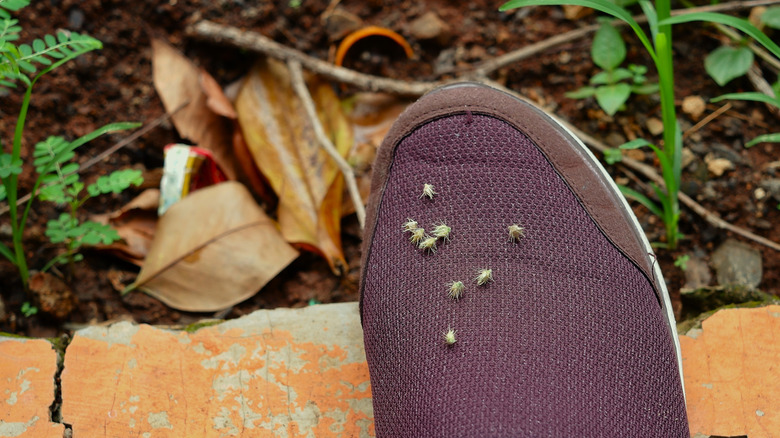
Have you ever gone for a hike, only to look down and find you've picked up a straggler on your clothes? These little spike balls that seemingly appear out of nowhere just to end up hooked to the fibers of your clothes (or your pet's fur) are known as burrs, (or burs), and they actually come from plants. While it may appear like their only purpose is to give you the after-hike task of plucking each spiky burr one-by-one, they are actually an essential part of reproduction for certain plants.
While you may only see it's rough exterior, burrs actually contain delicate plant seeds. Interestingly enough, burrs serve a strategic reproductive purpose. Burrs are a method of seed distribution. As animals (or humans, in your case) pass by these plants, the pods latch to your clothing (or fur) and are carried away. So just discarding these spiky pods by picking them off can lead to more burr-producing plants, which means more burrs to end up tangled in clothes and fur. Most plants don't produce burrs, but identifying the ones that do can be helpful if you plan on hiking in an area where they're common. With that in mind, you can learn more about the plants that rely on burrs below.
A number of plants produce burrs
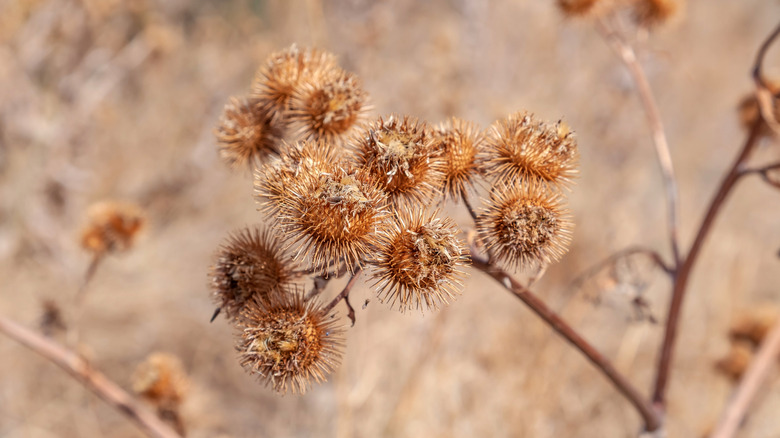
Now that you know why plants produce burrs, it's worth knowing which plants produce these spikey pods — if only to avoid them as you plan out your next hiking route. Several different species can produce burrs, although there are some variations in appearance. For example, the American lopseed (Phryma leptostachya) grows little hooks at the ends, while the rest of the pod appears smooth, like a mini-cucumber. The white avens (Geum canadense), however, has a round pod, with hooks and fine hairs that flair out in a starburst pattern to ensure a secure latch to any passing animals. The American lopseed and white avens are only two examples. Other sticker-seeds include the downy agrimony, sweet cicely, different species of cockleburs, enchanter's nightshade, and the pointed leaved tick trefoil.
Even with knowing what plants to look out for, you may still find yourself picking up seed hitchhikers on your next wilderness adventure. Thankfully, removing them can be an easy process once you know what to do. Make sure to wear protective gloves to avoid injuries, then use tweezers or tape to remove the occasional burr. If you've picked up a large number, you can wash and dry your clothes first to loosen the burr's hold. For burrs caught in pet or human hair, try detangler spray, baby oil, and pet shampoo.
If you plan on camping during your hike, you may want to keep burrs in mind when packing the hiking essentials you should keep on hand for an emergency. It's also important to know how to properly dispose of burrs, such as by burning the seed pods themselves after removal, to avoid the seeds germinating in your yard — although there are easy ways to get rid of grass burrs in your lawn.