

If You Have A Snake Problem In Your Yard, This Shrub May Be The Culprit
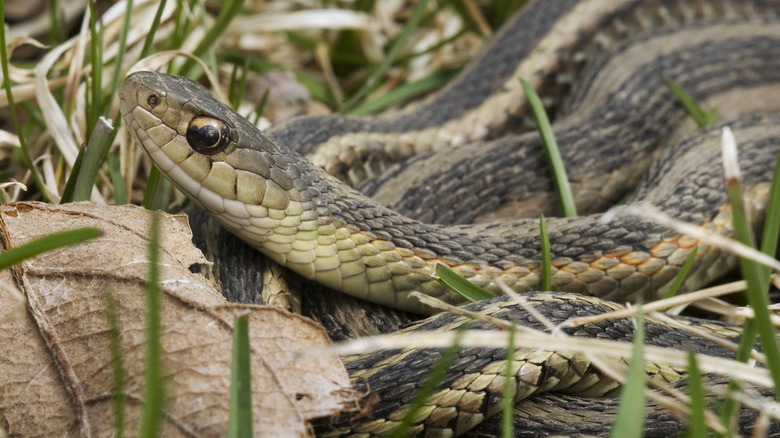
It might be fascinating to spot snakes on a sunny trail, but seeing them slithering across your backyard is a much less welcome experience. These reptiles are masters of camouflage, blending into their surroundings and slipping into hiding spots in your yard. As ambush predators, they gravitate toward areas where food, water, and shelter are readily available. And in addition to lurking in obvious areas such as shaded crevices and woodpiles, there's one landscaping option that stands out as especially attractive to snakes: the creeping juniper shrub.
With its dense, low-growing branches, creeping juniper creates an ideal hideaway, offering both shelter and a convenient hunting ground for snakes. Its thick foliage is perfect for small mammals, frogs, and insects to nest or forage, which draws snakes in search of an easy meal. Unlike more open plants, creeping juniper forms a mat-like cover close to the ground, making it difficult to spot what lurks beneath until you're right on top of it. While it's understandable that many homeowners may see this plant as a culprit behind unwanted snake sightings, ripping it out may not be the right first step. Before taking action, it's important to understand why snakes are so drawn to this shrub.
Creeping juniper and its snake appeal
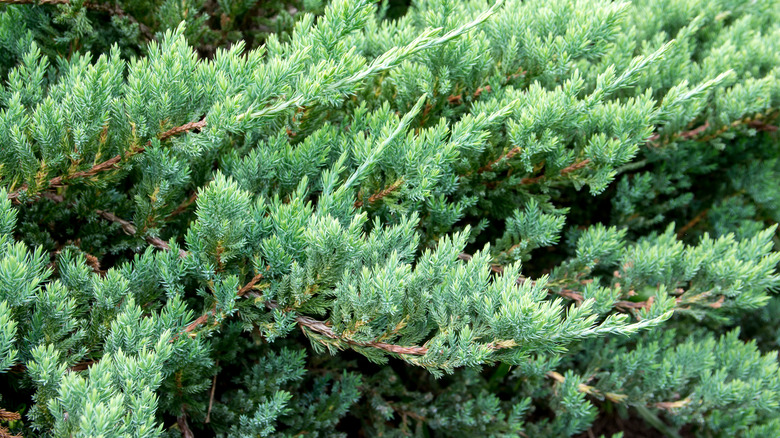
Creeping juniper (Juniperus horizontalis) is a hardy, low-growing evergreen shrub often used as ground cover because of its ability to spread quickly and tolerate poor soil. Its dense, mat-like growth habit provides excellent erosion control and weed suppression, making it a popular landscaping choice in many regions. Creeping juniper is great for sloped yards, and it thrives in full sun and dry, rocky soils, creating a thick carpet of foliage that can reach up to about 2 feet in height and spread around 8 feet across. While these characteristics make it an effective and attractive plant, it also creates the kind of shelter that snakes find appealing. Creeping juniper provides hunting grounds for non-venomous snakes like garters and rat snakes, and in some areas, even venomous species take cover there.
That said, removing creeping juniper is not a guaranteed solution to keeping snakes away. Snakes are highly adaptable and will move to other available shelters and food sources on your property. Even if juniper is gone, tall grass, piles of wood or debris, foundation cracks, or dense shrubs can still attract them. This is why snake management works best when approached holistically: reduce rodent populations, keep lawns trimmed, prune shrubs to reduce cover, and seal up potential entry points near your home. Creeping juniper may play a role in attracting snakes due to its density, but addressing only that factor won't eliminate the problem entirely. Instead, focus on a combination of strategies, such as regular maintenance, rodent control, and even planting snake-deterring plants like marigolds or lemongrass — a low maintenance plant to grow if snakes are taking over your lawn – to make your yard as unwelcoming as possible to snakes.