

Unexpected Ways You Could Be Using Hydrogen Peroxide In Your Garden
We may receive a commission on purchases made from links.
While its chemical make-up might seem familiar, H2O2 — otherwise known as hydrogen peroxide — actually contains one additional atom of oxygen. Big deal, right? It's basically water. Except that it's not. That additional atom actually makes a huge difference, helping to breakdown — or oxidize — organic compounds, thus making hydrogen peroxide a key ingredient in myriad household products, from mold remover to mouthwash.
You probably have a bottle of hydrogen peroxide stashed away at the back of your medicine cupboard. And while its once-common use for disinfecting cuts and grazes is no longer recommended, there's no reason to allow that bottle to continue gathering dust. Especially if you're hoping to up your gardening game, you'll find that hydrogen peroxide is surprisingly useful outdoors.
As you might expect, these applications include sterilizing gardening tools and disinfecting plant pots. But hydrogen peroxide can also help in a nifty number of other ways, proving useful for horticultural headaches such as pest control, poor seed germination and even root rot.
Encourage your seeds to germinate
You've spent the winter planning your planting scheme, purchasing all of the seeds months in advance, and come spring, planting them with the kind of giddy hope that only months of anticipation can build. And then nothing. Weeks go by, seeds left patiently beneath a few millimeters of soil, only for you to brush it back weeks later and find them enveloped in mold or mildew.
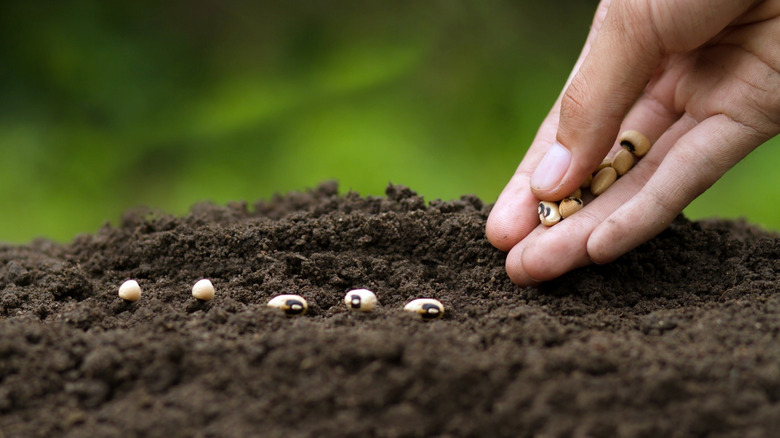
If this sounds familiar, then give your seeds a short soak in a solution of water and hydrogen peroxide. This is one of a few simple steps that can't be skipped when starting seeds, and can make an enormous difference to their success rate. The peroxide works to eliminate any mold, mildew and other pathogens that may already be present on them. It also helps to defend them against further mold build up during those crucial first days and weeks. It's particularly useful for seeds with long germination periods, like coffee, lavender, and asparagus.
To do this, mix up a weak solution of 3% hydrogen peroxide to water at about a 1:32 ratio, till you get about a .1% solution. Most H2O2 for home use is the 3% solution. You only need to soak them for between 30 minutes to an hour (this also softens their outer coats), after which you'll need to rinse them with clean water before planting. Try not to soak them for any longer than an hour, as continued exposure to hydrogen peroxide could lead to damage.
Prevent root rot and improve nutrient absorption
Realizing you've over-watered your plants is one of those classic "kick yourself" moments most gardeners face at one time or another. In fact, over-watering is one of the major mistakes you can make in your garden. Unfortunately, when paired with poor soil drainage, over-watering often leads to root rot. When the soil can't drain properly, it remains saturated, providing the optimal conditions for dormant mold spores to burst into life and start waging war on your roots.
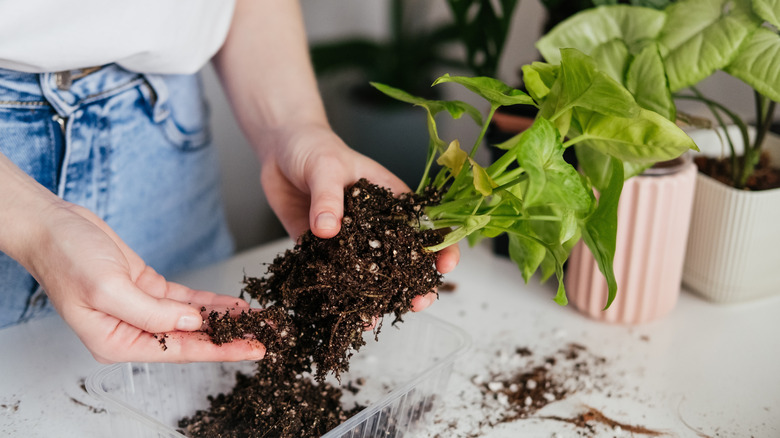
Fortunately, if caught early, root rot needn't spell doom for your plants. The first thing you'll want to do is remove the root ball, being careful not to remove too much soil, and cut away damaged roots. You may want to rinse the healthy roots with clean water. Next, mix up a weak 3% solution of hydrogen peroxide to water. This has two functions. The first is cleaning your pot, disinfecting it of any mold and other pathogens that might be present. Once clean, add some more soil to the bottom of the pot and replace your root-pruned plant on top, being careful not to compact it down too much.
The next step — and the second use for that peroxide solution — is to incorporate a small splash of it with every two to three irrigations. This will help to oxygenate the soil, and in turn promote nutrient absorption by your plant. It will also treat any residual pathogens that may still be present after you've removed the worst-affected roots.
Guard your plants against mold and mildew
You may already know that hydrogen peroxide is used in a number of interior cleaning products, including mold and mildew sprays. But it can also be a boon to gardens and plants that are prone to those same fungal afflictions. Powdery mildew is a particularly common type that can appear on plants in most climates. Poor air circulation in densely planted areas is a common cause, as are leaves that are wet for prolonged periods of time. Another is high humidity, which often leaves gardeners who live in warm, subtropical climates scratching their heads about how to overcome this particularly annoying ailment.
One simple (and literal) solution is hydrogen peroxide and water. Specifically, a mixture of 3% peroxide to water. Stronger horticultural-grade solutions (some up to 35%) are available, however, at that strength it will do more harm to your plants than good and must be diluted down to between 1% and 3%. A good rule of thumb here is that if it'll burn your skin, there's a good chance it'll damage your plants. Instead, you can buy a 3% solution like Swan hydrogen peroxide, and water it down further. Generally you only need two teaspoons per quart of water to do the trick.
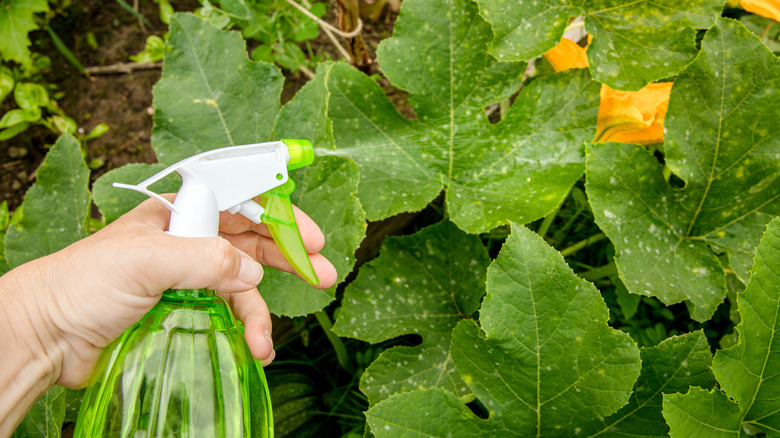
As for how to use hydrogen peroxide on powdery mildew, it's a simple case of spraying affected leaves. Try to do it when the leaves are completely dry, as this ensures the solution makes direct contact with the mildew.
Pest-proof your plants
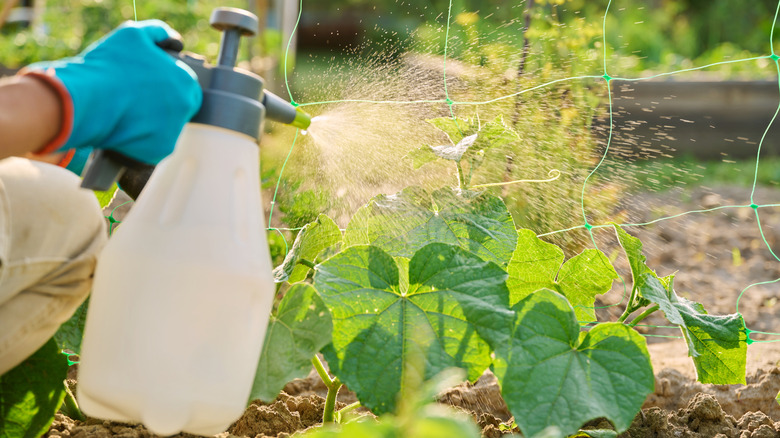
There's nothing worse than checking in on your plant babies only to find them crawling with pests. Fortunately, there are a number of simple ways to prevent unwanted invasions of bugs like fungus gnats and aphids.
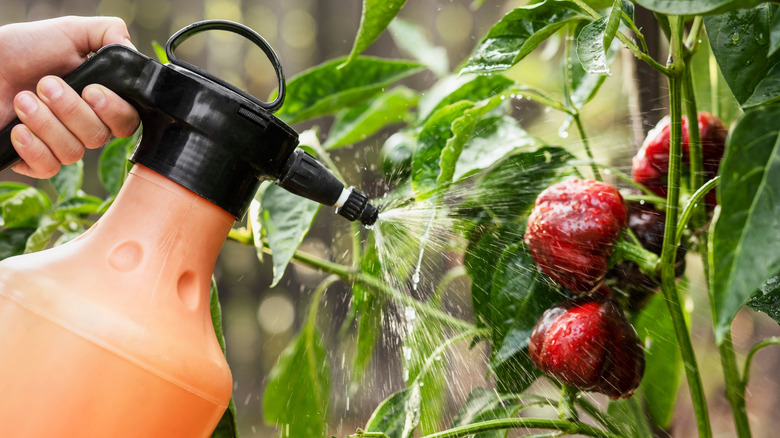
The use of hydrogen peroxide is one. A weak mixture of around 15ml of 3% hydrogen peroxide with one liter of water — about 4 teaspoons per gallon — can be sprayed onto the leaves, deterring any critters that might otherwise come sniffing around your plants. in fact, a 1% solution is a treatment approved by the U.S. Environmental Protection Agency. It's important to remember that prevention is always better than cure. Once established, bugs like aphids will reproduce extremely quickly, thus perpetuating the problem and causing long-term damage to your plant. Repelling them with a periodic H2O2 spray means they won't get a chance to populate.
However, if you happen to find that the pests have already taken root, so to speak, don't panic. Hydrogen peroxide can still be effective. Start by spraying the affected leaves with a slightly stronger solution. You may need to do this a number of times to start seeing results. And if this doesn't work, then you can try soaking the entire plant, soil and all. Do this outside in a bucket filled with a weak hydrogen peroxide solution, and only for a few seconds, before allowing the plant to dry in a bright and airy spot. This step isn't recommended for plants with fuzzy leaves like African violets or some daisies, as trapped water micro-droplets could cause rot.
Encourage healthy hydroponic plants
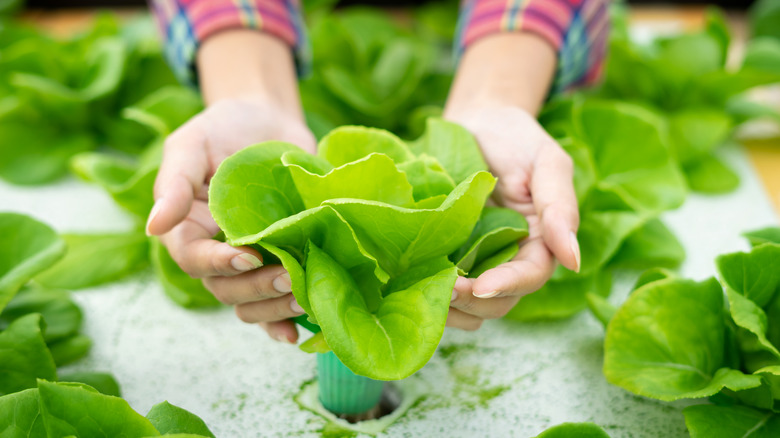
If you're rearing plants in a hydroponic environment, then you don't need to worry about more traditional problems like soil drainage. However, this method is not completely without its drawbacks. The build up of powdery mildew is common in more humid environments. Poorly oxygenated water systems can lead to root rot, and pests like aphids and fungus gnats don't especially care about the substrate your plants are rooted in.
By now, you know that hydrogen peroxide can help mitigate against all of these issues. But the methods of application in hydroponic gardening are slightly different. For example, instead of oxygenating your soil with a few simple sprays of a weak hydrogen peroxide solution, you'll need to add it to your system's nutrient reservoir. There it breaks down into water and oxygen as it does its work, both useful in hydroponics.
What's more, the benefits of adding it to a hydroponic system are perhaps greater than in soil-based applications. Not only does hydrogen peroxide oxygenate the roots and therefore improve nutrient absorption, but it also prevents the build up of things like algae, fungus and other pathogens that tend to present themselves in hydroponic gardens. Since many such systems use tap water, hydrogen peroxide can also be useful in neutralizing and removing chlorine, thus minimizing its potential harm to your plants.
Restore your dirty garden pots
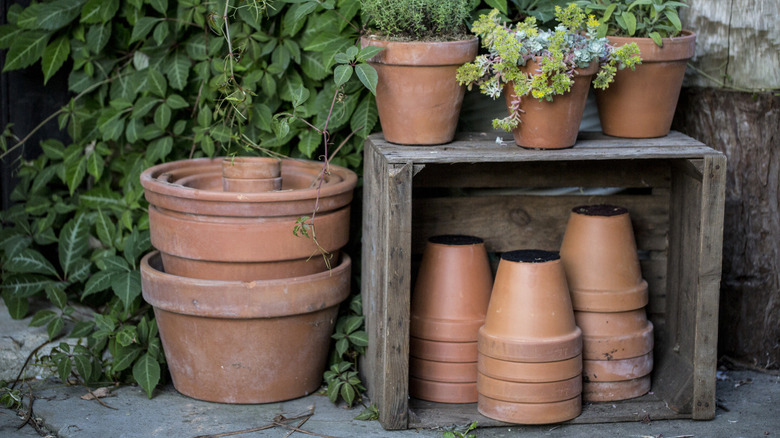
Given its reputation as a staple ingredient in myriad household cleaning products, it will come as no surprise that hydrogen peroxide can also be very useful for cleaning your plant pots. What you might not know, however, is that hydrogen peroxide does more than remove slime and mold from your garden.
By cleaning out your pots with hydrogen peroxide, not only will you restore them to their former beautiful glory, but you'll also disinfect them of any harmful mold, fungus and other pathogens that could risk harming the plants you plan to put in them.
In order to clean those grimy old pots, the first thing to do is grab a 3% hydrogen peroxide and mix up a 1:1 solution with water. This sounds strong, but remember that the goal here is to clean — and kill — any harmful pathogens that could damage your precious plants. The next thing to do is simply soak your pots for as long as is needed. Those that haven't had a clean in a few years will likely need longer. Once ready, the grime should easily lift off with just a little elbow grease. Just be sure to wear protective gloves and eye protection, as a strong hydrogen peroxide solution can cause irritation. You may decide you want to rinse the pots with clean water when you're done, but you don't need to.
Sanitize your garden tools
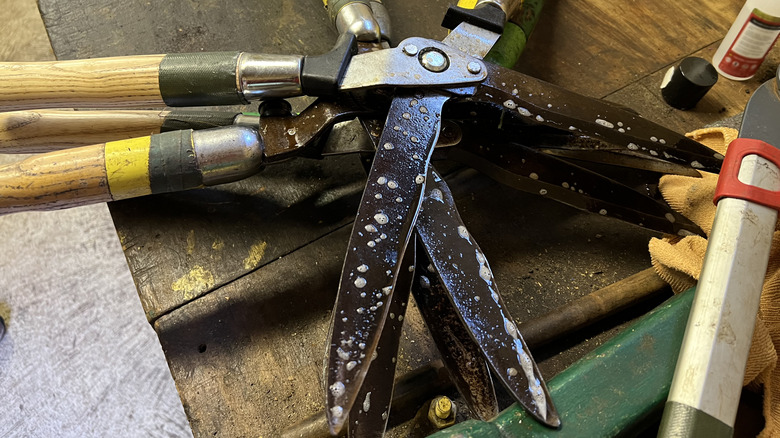
If you're already going to the trouble of mixing up a batch of 1:1 hydrogen peroxide to clean your plant pots, you might as well use it to clean your gardening tools. Doing so serves the same purpose, and while you may not think dirty tools pose much threat to your plants as grime-laden pots, it's not the kind of lesson that you want to learn the hard way.
Pruning tools — including saws, shears and anything else that you might use to remove stems, leaves or branches from your garden — should absolutely be disinfected. Especially if you have trees or bushes in your garden that tend to become unruly each spring, disinfecting your tools ensures that you don't accidentally infect the pruned branches.
Most trees are hardy enough to self-heal any wounds that come as a result of pruning. However, dirty tools can easily spread infection, fungus, and disease, which can lead to extensive and lasting damage. In other words, a quick wash with a hydrogen peroxide solution can save you plenty of horticultural heartache in the long-run.
Remove stubborn weeds from your garden
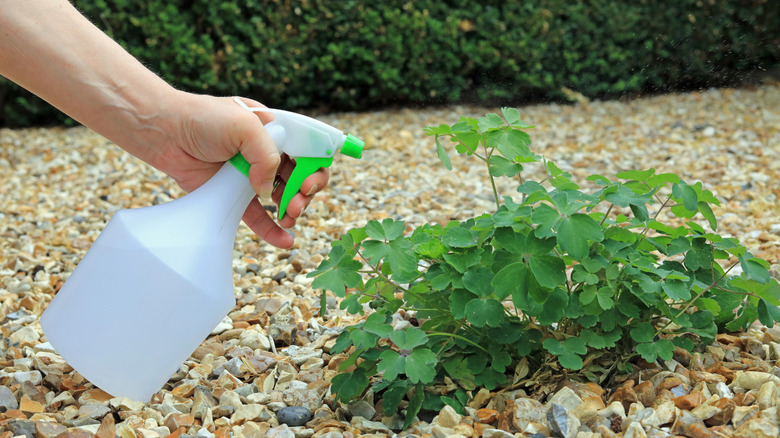
Ask any casual gardener about their biggest pet peeve and they'll likely tell you it's weeds. After all, who wants to spend hours at a time on their knees pulling them out? Luckily, with hydrogen peroxide, it can be made much easier.
Now, it's worth noting that, since the chemical can't distinguish between plants that you do and don't like, you should proceed with caution when using it to kill weeds. A good example of when hydrogen peroxide can be extremely handy is when trying to keep your gravel areas weed-free. Since there are unlikely to be other plants that you want to keep in the middle of a gravel patch, spraying weeds here is a good option.
In order for this method to be effective, you'll need to mix up a stronger solution than that which you'd use to aerate your soil or remove pests. Aim for a 10% solution. Here you'll likely want to purchase the very strong 35% solution and water it down to "proof." This will kill any plant that it comes into contact with. You'll notice that the solution effectively scorches the weeds' leaves. Once the leaves have died back, you can pull them up, then spray the affected area again to minimize the number of weeds that return.
Freshen up a patio and garden furniture
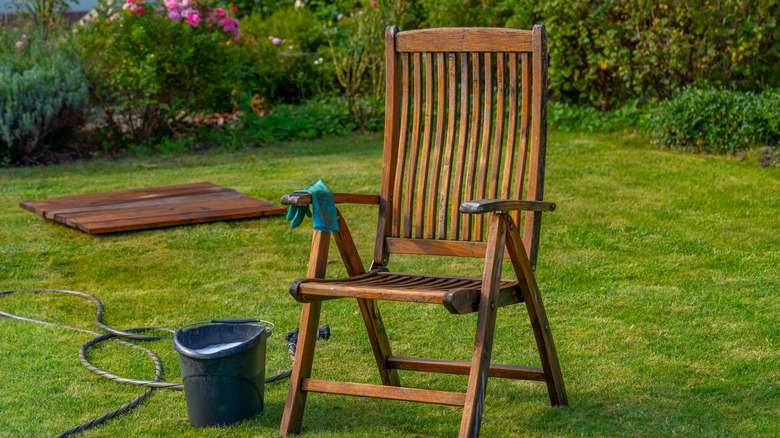
Hydrogen peroxide's potential cleaning applications seemingly know no bounds. It can be used to clean grimy plant pots, to disinfect garden tools and even to effectively clean your driveway without a pressure washer. It can also be used to great effect to remove a winter's worth of grime from your garden furniture and patio.
This is thanks to hydrogen peroxide's chemical make-up. Essentially being water with an additional atom of oxygen, it's able to oxidize and make light work of those green algae stains that typically accumulate in the colder months. Simply whip up a mix with water in a spray bottle and allow it to soak into the affected areas. Five to 10 minutes is usually enough, but if the stains are particularly tough, you can leave it longer or try multiple treatments. After each spray and soak, work at the stains with a brush, then (literally) rinse and repeat.
Disinfect your potting soil
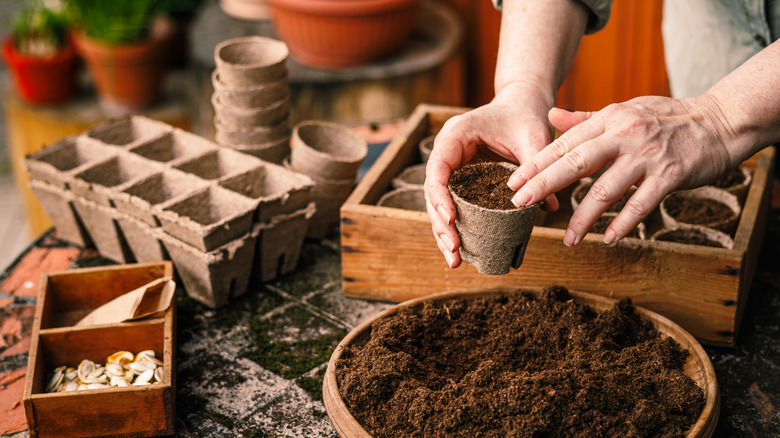
The use of hydrogen peroxide on your plants before you even sow the seeds can be the difference between poor results and beautiful, bountiful growth. Not only can you sterilize your seeds to remove and protect against the development of mold, fungus and other pathogens, but you can also do the same with your potting soil.
Now, bear in mind that this method should be reserved for small-scale sterilizations. The last thing you want to do is cause severe, lasting damage to the soil of your entire garden. But if you have a bag of potting soil you intend to sow seeds with, the use of hydrogen peroxide can be well worth the effort. It will kill fungus and bacteria, and even helps boost the soil's nutrient absorption capabilities.
In order to ensure your soil is both rich and free from harmful pathogens, the first thing to do is to mix up a hydrogen peroxide and water solution. A good ratio is half a cup of peroxide for every gallon of water. That's a 1:32 ratio. Next, spread some of the soil on a plastic sheet and saturate the soil with a sprayer, before layering a sheet of parchment paper on top and repeating the process. Think of it as a kind of earthy lasagna. Finally, give the soil a few hours for the peroxide to work its magic and for the soil to dry out.
Clean your harvest after picking
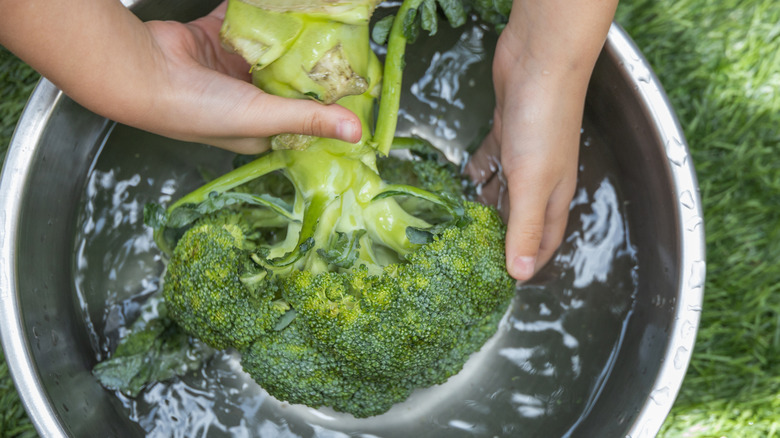
In the excitement that inevitably comes with growing your own vegetables, it can be tempting to rush the cleaning process in order to get to the best bit — eating them. But it's an important step, one that's worth taking your time over. While you may not be able to see them, freshly-picked fruits and vegetables can host a whole world of potentially harmful bacteria, which makes a thorough clean well worth the effort.
For small-scale growers, simply running produce under clean water is usually sufficient. However, if you're planning to clean a bumper harvest, or if you regularly grow produce on a larger scale than the average hobby gardener, it's worth considering the use of hydrogen peroxide. Not only is it super effective at removing bacteria, its use can potentially keep your hard-grown fruits and vegetables fresher for longer.
You'll need to use food-grade 3% hydrogen peroxide — which is almost certainly not the same stuff you used to clean your concrete patio. As for the amount you'll need, if you're washing vegetables, mix 50ml with a sink's worth of cold water. For an even more effective sanitizer, combine hydrogen peroxide with white vinegar to create peroxyacetic acid. Once you've washed your produce, it's important to then rinse it off with clean water.
Clean up your water features
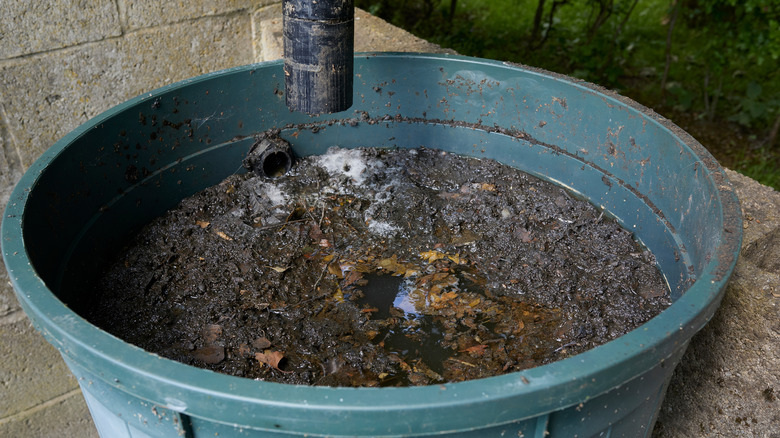
If you're furiously scratching your head and wondering why your yard is swarmed with mosquitoes, chances are that there is some standing water somewhere, that needs a good clean. Even if you're fortunate enough to not have a mosquito problem, untreated water — be it in a well, rainwater barrel, birdbath, or a natural pooling area in your garden — can take on a nasty, sulfuric smell, particularly during the warmer months.
With this in mind, treating water in your garden with hydrogen peroxide can potentially solve two problems at once. One is that it'll oxidize the bacteria causing those awful smells, helping you to stop offending the noses of your summer cookout guests. The other is that, since hydrogen peroxide is thought by many to naturally repel insects, it may discourage mosquitoes from laying their eggs in your yard's water collection areas. Just note that evidence for this is largely anecdotal and that more scientific research is required to verify hydrogen peroxide's mosquito-repellent properties. What's more, if you do decide to use it, be careful not to do so in features like birdbaths or ponds where aquatic life is present. Instead, consider filtration systems that regularly cycle fresh water. In fact, adding a spraying or gurgling water feature not only reduces mosquito infestations, it's a simple way to attract more songbirds to your yard.