

The Best Method For Building A Stackable Retaining Wall In Your Backyard
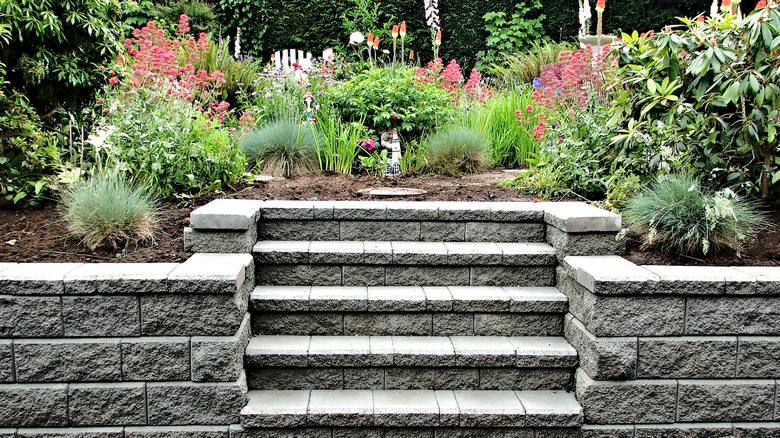
There's a lot to love about a stackable retaining wall in your backyard. If your yard has an uneven slope, a retaining wall can add usable space to your outdoor areas and increase the value of your home. Stackable retaining walls are a great way to add support for the edge of your driveway or to build a raised bed on a budget (though you may want to reconsider using cinder block for a raised bed). They're also the perfect solution for preventing erosion and improving drainage.
No matter how you do it, building a retaining wall is a lot of work. By far, though, the easiest way is to use pre-cast, stackable concrete blocks. They're DIY-friendly for several reasons. First, they don't require mortar, so installation is much faster and easier. And they're made with an interlocking design that has built-in lips or grooves to keep them in place, making it almost impossible to screw up the installation. Since they're engineered, the end result is more durable, so your retaining wall requires less maintenance and lasts longer.
With other materials, it can be hard to achieve straight lines or stylish curves. In contrast, stackable blocks make it easy to build tiered designs and smooth, flowing shapes that follow the natural contours of your property. You also have a variety of colors, textures, and styles to choose from, so you can get exactly the right look for your backyard. On top of that, stackable blocks look great with patio pavers if you want to take your landscaping to the next level.
Make a plan for your stackable retaining wall
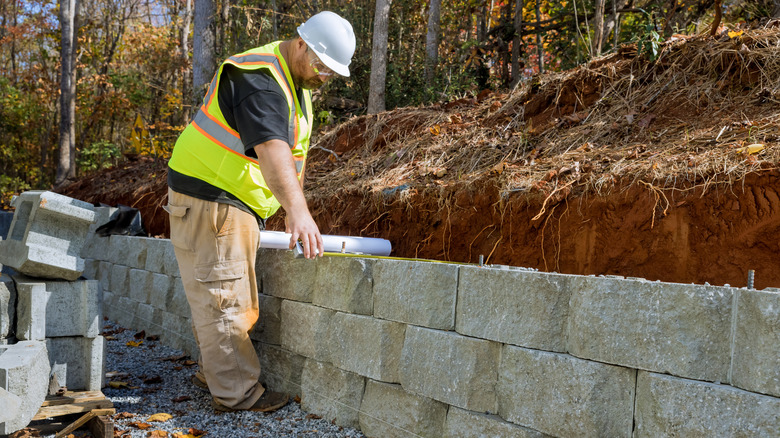
For DIYers who want to build a low retaining wall in their backyard, the process is simple and straightforward. But first, you need to start with a plan and determine the location and design of your retaining wall. If it's under two to three feet tall, you may not need a permit, but it's always best to check first (in the city of Renton, Washington, for example, walls under 48 inches don't require a permit as long as they aren't load bearing). And remember, always call 811 to locate underground utilities whenever you're digging in your backyard.
After you have a solid plan and have acquired any necessary permits, mark the area with stakes and string or paint. Calculate the materials you need by measuring the length and height of your wall, then order slightly more blocks to ensure you have enough. Once you have everything in place, you're ready to break ground.
Start by excavating a trench that's slightly wider than your blocks. Fill this trench with at least three inches of gravel to create a solid base for your retaining wall and ensure proper drainage. Make sure your base is level before you start stacking the blocks, or you could end up having problems later on. After laying the first row, consider adding a French drain or using gravel or sand to backfill and prevent water from pooling near the wall. Continue stacking the blocks until you reach the desired height, then finish it off with cap blocks for a polished look.
Important factors to consider before you build a retaining wall

While many stackable retaining wall projects are DIY-friendly and affordable, there are important caveats. In some cases, retaining walls are one of those outdoor renovations you shouldn't do yourself. There can be significant safety, erosion, and permitting issues for this type of outdoor building project. Additionally, retaining walls that are too tall, support a surcharge, or lack adequate drainage can collapse, creating dangerous situations and leading to costly repairs down the road. It's especially important to keep these tips in mind when building a garden retaining wall on a budget.
Soil type, groundwater, and wall height are the most important considerations when you're building a retaining wall in your backyard. Certain types of soil require extra stabilization, especially for taller walls or steeper slopes. When water drainage and erosion are your primary reasons for building a retaining wall, you'll likely need professional assistance to engineer the right solution for your backyard.
While it's important to have fun with the design of your backyard projects, it's best to stick to straight walls if this is your first time. Curves and corners on stackable retaining walls can be hard for beginners to get right, so don't attempt them on your first try. And while tiered walls means you might be able to avoid permitting issues by sticking to shorter walls spaced far enough apart, designs like this present other challenges for beginners, especially on steep slopes.