

How To Create Natural Shade And Privacy In Your Backyard With A Tree Canopy
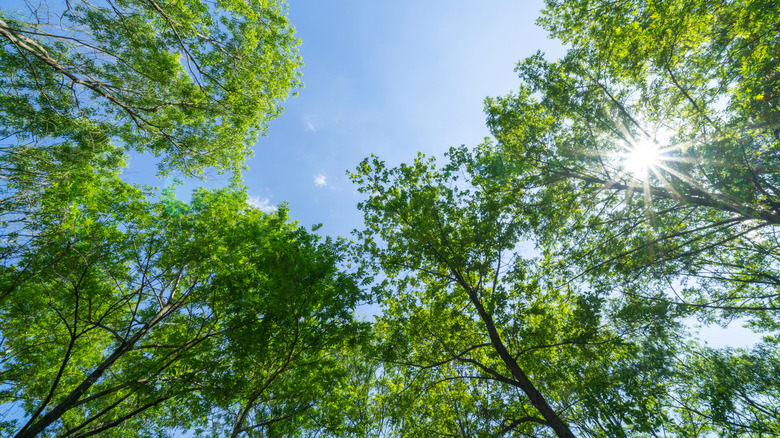
You aren't imagining things, those dog days of summer are getting hotter. Longer, hotter heat waves are becoming the norm, and keeping cool in your backyard is becoming more challenging. Higher temps bring higher AC bills, more time spent watering the garden, and extra work to keep your lawn healthy in the summer heat. Adding shade by creating a natural tree canopy is a great way to bring down the temperature in your yard, but planting one is a bit more complicated than throwing some saplings in the ground.
Fortunately, a little research will ensure that you make the right choices. Key considerations include choosing the right tree species, planting them correctly, making sure you're following local regulations, and doing proper ongoing maintenance. In addition to cooling off your yard, a tree canopy has the added benefit of enhancing privacy. Splashing in your pool, sipping a summer cocktail with friends, lounging in your hammock — you don't need nosy neighbors watching your every move, and a well thought-out tree canopy can shield prying eyes as well as provide much needed shade. Additionally, many cities and counties encourage residential trees because of the benefits they provide to cooling urban environments, sequestering carbon, and adding to quality of life, so it's a win-win for everyone.
Building the right canopy in the right spot
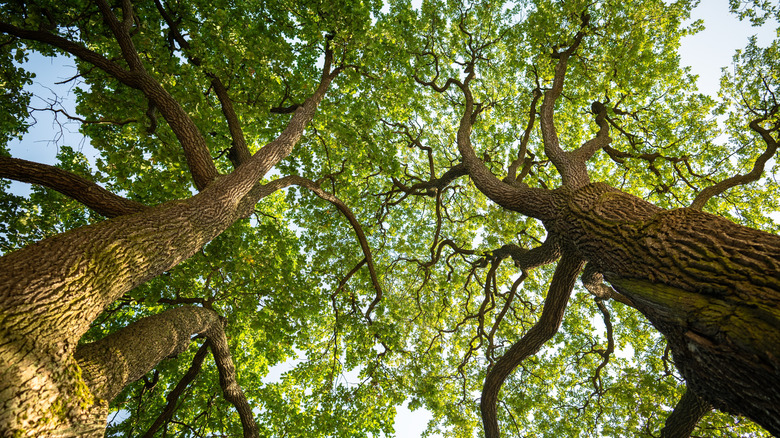
Before you go searching for trees to plant, you'll want to first figure out where you should put trees to maximize summer shade. If you don't already have a tree or two showing you where the shade is, you can put a long stick in the ground to track shade patterns through the day and season. Once you know where you want to plant your trees, you need to figure out what species will grow best in your yard. Your tree canopy needs to be made up of trees that are hardy in your particular growing region and appropriate to an urban or suburban environment. Maples and oaks are go-tos for backyard shade canopies, providing wide-spreading, leafy branches that can cover a lot of yard. Hickory and beech trees are also great for shade.
But not all trees that are good for shade and privacy can grow in all backyards. For example, while a bigleaf maple is an excellent shade tree, don't try to grow one in a place with especially harsh winters. The USDA has an interactive map where you can find your plant hardiness zone by zip code. The Arbor Day Foundation goes a step further with its online Tree Finder Wizard that combines information about your hardiness zone with information about your soil type, your desired tree height, and other factors you're seeking for your canopy.
Layering other regional species below your tallest trees is a great strategy to create a lush, shady canopy year-round. Good trees to plant underneath include dogwoods, which thrive in the dappled light under a canopy, and larger shade-tolerant shrubs like azaleas and hydrangeas, which add to your privacy by filling out the understory.
Ongoing maintenance and planting rules for your tree canopy
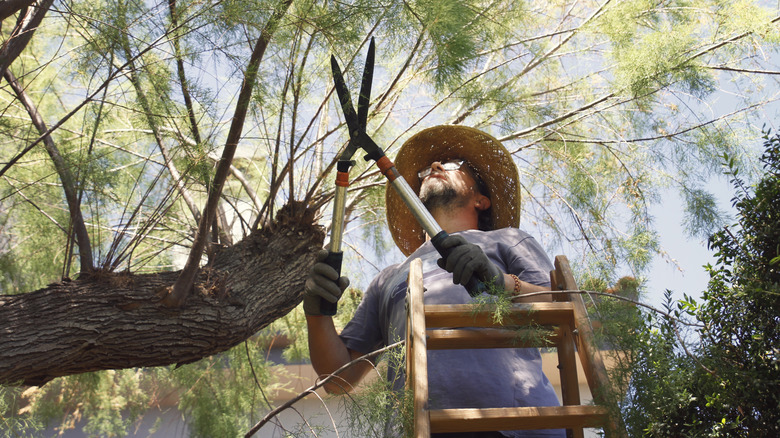
The privacy and shade your new tree canopy provides comes with responsibility. Any tree can become a hazard if it isn't planted in the right spot or maintained correctly, and you don't want branches falling on you or your neighbor. Starting your saplings right will make for a healthy canopy down the road that will need less maintenance. American Forests has a handy tree-planting guide with tips about spacing, mulching, and watering to see your saplings successfully grow into the canopy you want. Your local extension office is also a wealth of information on the trees that thrive in your particular environment and can provide you information on their planting and spacing requirements.
Once grown in, make sure you're regularly inspecting your trees for signs of disease or weakness, including not only dead branches but other telltale indicators like leaning, cankers on the trunk, and tree crowns that are droopy. And remember that some trees that seem perfect for shade and privacy may be maintenance nightmares down the road. For example, poplars are fast-growing trees you may want to reconsider planting in your yard, even though they're common shade trees found in cities. Because their wide-spreading roots can lead to cracked foundations and sewer lines, they need to be planted far from your home and require careful pruning and control of suckers so they don't take over your space. And those leafy maples that provide a lovely broad canopy all summer will have you dealing with piles of dropped leaves all fall.
Finally, don't forget to check on local tree planting rules. Some cities, counties, and even HOAs may be particular about the trees you plant in your back yard. This is because some species are more susceptible to wind throw, dropping branches, and even elevated fire risk. Make sure you understand these local rules before investing in your canopy.